China has gained a military and economic edge over the United States during the ongoing Iran conflict, according to a classified US intelligence assessment obtained by The Washington Post. The confidential report details Beijing maximizing its advantage over Washington across multiple fronts while America remains focused on Middle East operations.
The intelligence document, circulated among Pentagon leadership on Tuesday, outlines how China has accelerated naval deployments in the South China Sea by 40% since April while expanding trade partnerships with 17 African nations that previously maintained stronger US ties. Beijing has allocated an additional $85 billion toward military modernization programs during the three-month Iran conflict period.
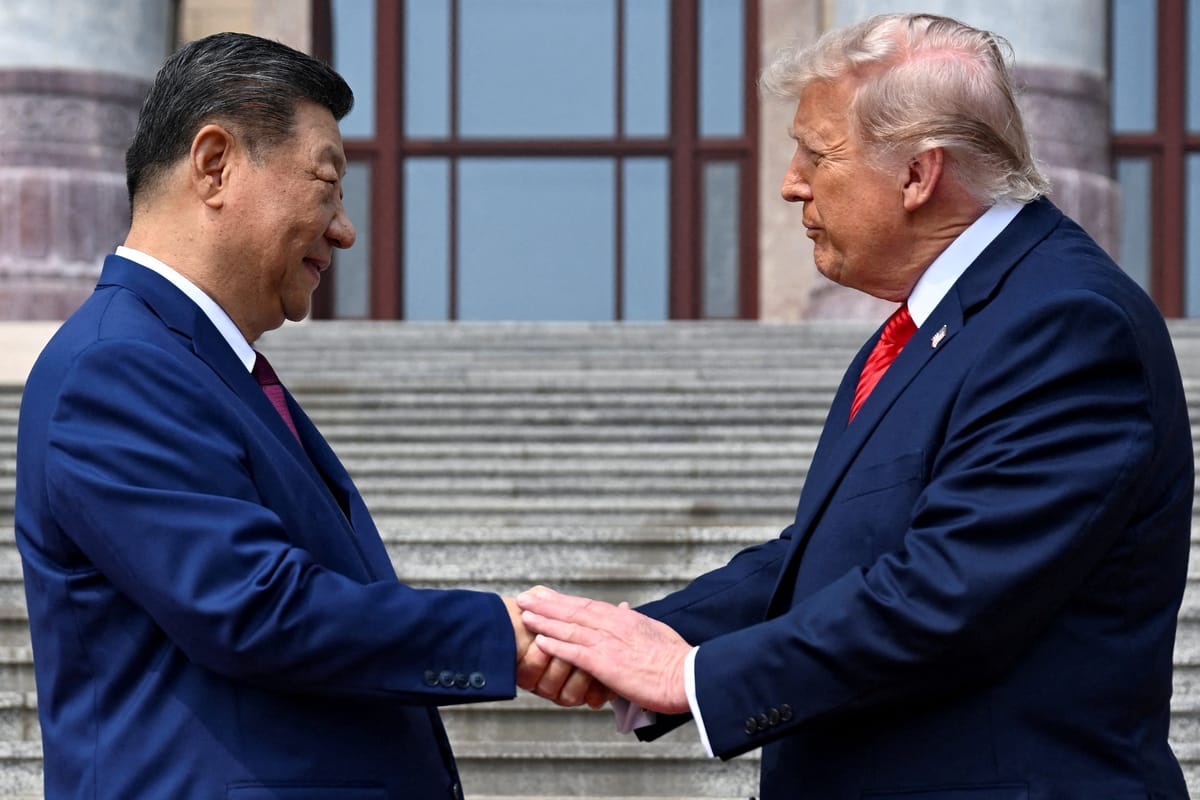
President Donald Trump arrived in Beijing Thursday for high-stakes talks with Chinese leader Xi Jinping that will cover trade disputes, Iran policy, and Taiwan's future. The summit comes as Taiwan fears Trump may trade the island's security for better economic terms with Beijing.
Strategic Timing as US Resources Stretched
The intelligence assessment comes at a critical moment for US foreign policy. While American resources remain tied up in Middle East conflicts, Beijing has expanded its military capabilities and diplomatic influence globally. The timing puts Trump in a weaker negotiating position as he seeks to address trade imbalances and Taiwan's security guarantees.
This pattern mirrors China's strategic patience during previous US military engagements. Beijing similarly expanded its territorial claims in the South China Sea during America's Afghanistan withdrawal in 2021, while building economic partnerships across Southeast Asia as Washington focused on counterterrorism operations. The current Iran conflict represents the largest sustained US Middle East commitment since the Iraq War, with 47,000 American personnel now deployed across the region.
Chinese military analysts have publicly described the Iran crisis as a "strategic opportunity" to reshape global power dynamics while America remains distracted. Beijing has signed new defense cooperation agreements with Russia, North Korea, and Pakistan since the conflict began in April.
Global Energy Crisis Hits Cuba
Cuba's Energy Minister Liván Arronte Cruz announced the communist nation has completely run out of fuel, directly blaming the US blockade on the Strait of Hormuz. The Caribbean island joins several countries worldwide grappling with energy shortages as the strategic waterway remains contested.
The fuel crisis represents a direct consequence of American military operations in the Persian Gulf, where US naval forces have restricted shipping to pressure Iran's regime. Cuba typically imports 80,000 barrels of oil daily from Iran and Venezuela, but shipments ceased entirely on June 15 when insurance companies stopped covering tankers transiting the Strait.
Arronte Cruz told state television Wednesday that Havana has implemented emergency rationing measures affecting 2.3 million residents, with rolling blackouts lasting up to 8 hours daily. The crisis has sparked protests in Santiago de Cuba and Holguín provinces, where demonstrators demanded government action on fuel shortages.
Israel Violates Lebanon Ceasefire
Israeli forces killed and wounded more than a dozen people overnight and early Thursday, violating the fragile ceasefire ahead of new peace talks scheduled in Washington. UNICEF reported 59 children have been wounded or killed in Israeli attacks over the past week alone.
Since the ceasefire began on April 17, Israeli operations have killed 23 children and injured 93 others, according to UN data. Armed Israeli settlers launched separate attacks across the West Bank Wednesday, killing one teenager and stealing 700 sheep during a raid in Sinjil conducted under Israeli military protection.
The overnight strikes targeted Beirut's southern suburbs and Tyre, with Lebanese officials reporting 8 dead and 19 wounded. Israeli military spokesman Colonel Amnon Shefler defended the operations as "defensive responses to rocket fire," though UN monitors recorded no projectile launches from Lebanese territory in the 48 hours prior.
What Comes Next
Lebanon and Israel are expected to hold new peace talks in Washington today, though overnight violations cast doubt on Israeli commitment to existing agreements. The talks will test whether diplomatic solutions can succeed while military operations continue on the ground.
Trump's Beijing summit will continue through Saturday, with trade negotiators scheduled to present final proposals on Friday afternoon. Taiwan's defense ministry has placed forces on heightened alert pending summit outcomes, while Congress prepares for potential hearings on any Taiwan security agreements reached with China.