Four centuries have passed since the Safavid cannibals terrorized Iran; the cannibals are gone, but their machinery of fear still rules the country.
The Safavid dynasty lasted for 235 years, ruling from 1501 to 1736. During this sinister era, which ended 290 years ago, the country’s official religion was changed to Shiism, and bizarre forms of torture became customary.
These were horrifying methods of torture—unmistakable displays of the savagery of the Safavid sultans. Criminals were eaten alive or subjected to other forms of punishment, such as being thrown before man-eating dogs. (Sutherland, The World’s Religions, 362) (Barzegar, Mughal-Iranian Relations, 211.) The Chigins were a group of approximately forty to fifty violent men or captured Uzbek warriors kept at the Sultan’s court. Whenever Shah Abbas wanted to punish or terrorize someone in the worst possible manner, he would hand the victim over to this group. Like predatory beasts, the Chigins would descend upon their victim, tear him apart alive, and devour him.
Islamic terrorism took shape there, three centuries ago. Perhaps, had Nader Shah the Great not emerged, this humiliating and agonizing era would have continued. Under Safavid rule, eating enemies alive and using their skulls as drinking vessels became customary. There existed a group of cannibal executioners who, on the Shah’s orders, devoured offenders alive. (Baraheni, The Crowned Cannibals, 22.) This band of cannibals, maintained at the court of Shah Abbas, was known as the Chigins, or “Chik Qurchis.” (Yelda, A Persian Odyssey, 325.) Even Shah Abbas’s forty-man force of cannibals accompanied him wherever he went and devoured their victims. (Simpson, Behind Iranian Lines, 309.) Many of these acts were justified under the banner of spreading Shiism and Islam. More broadly, the Safavids sought to justify the legitimacy of their own rule, and that of their successors, through Islam and Shiism.
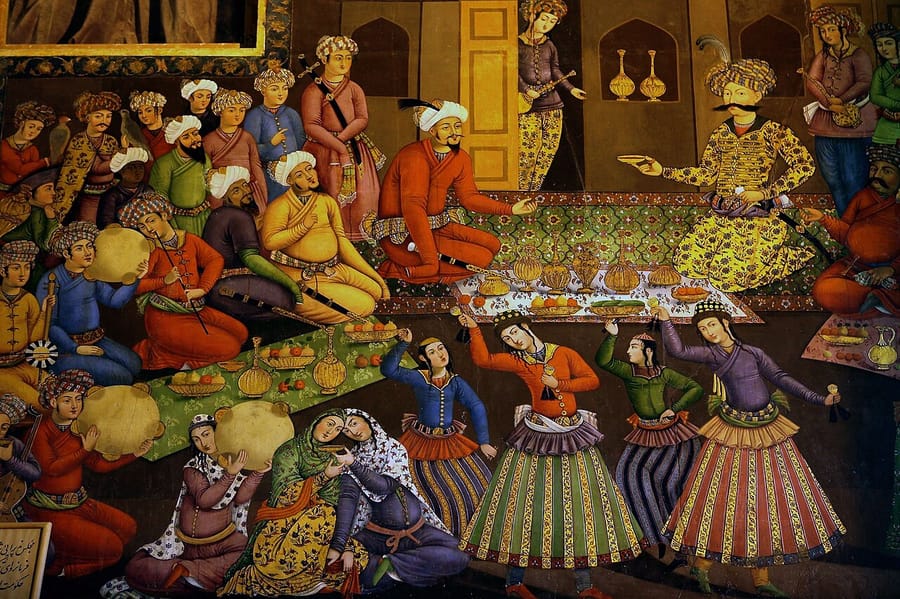
Other forms of torture and punishment under the Safavids included skinning criminals and opponents alive and stuffing their skins with straw, hanging opponents, or throwing them before man-eating dogs. Mutilating opponents, pouring molten lead down the throats of criminals, boiling them in oil, placing gunpowder inside a criminal’s clothing and detonating it were among the other forms of torture commonly practiced during that era. (Mazzaoui, Safavid Iran and Her Neighbors, 126.) The accused could also have their eyes gouged from their sockets or their tongues pulled from their throats. (Abisaab, Converting Persia, 2004.) These instruments of terror were used to instill intense fear in opponents, rebels, and foreign ambassadors.
For example, on the orders of Shah Ismail II, most of those who participated in the religious ritual of sabb—the uttering of curses—were cut to pieces as punishment. Peasants, too, were treated like slaves and, under official policy, were forbidden to leave the agricultural lands on which they worked. Large landowners commonly turned to the government to bring runaway peasants back, and peasants who attempted to escape were punished.
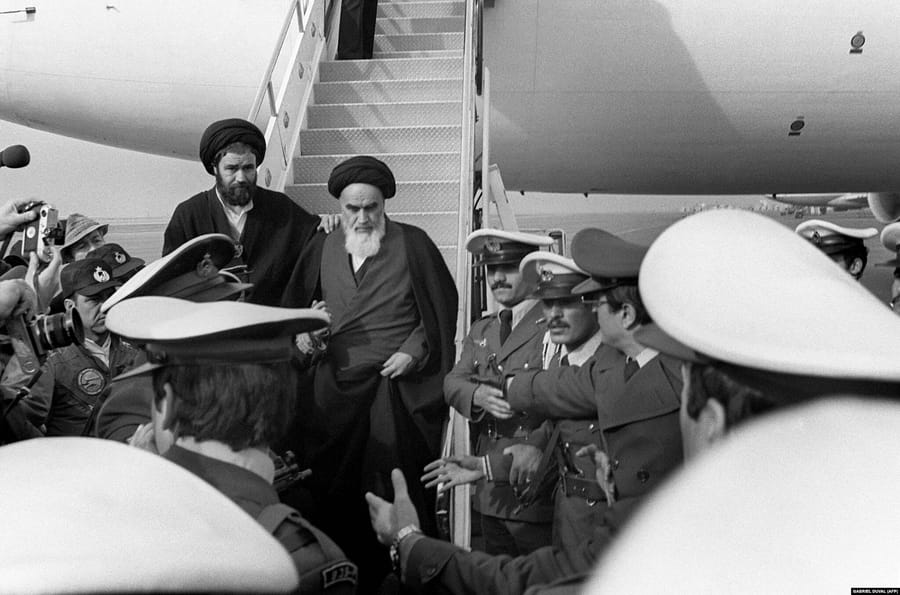
Since Khomeini came to power in 1979, opponents have been torn to pieces in ways reminiscent of the cannibals at the courts of the Safavid sultans, while hundreds of horrifying stories have been buried in the soil of Iran. These crimes evoke the horrifying accounts of the “Chigins,” the cannibals of the Safavid court; yet the truth of these stories has remained concealed from the people of the world.
To recount such abnormal, inhuman, predatory, terrifying, and horrifying conduct is enough to make one’s hair stand on end. In this era, much as in the Safavid period, few historians dared to provide an accurate account of what transpired behind the closed doors of the Islamic Caliphate—the religious dictatorship of the Shiite mullahs. What happened was censored out of fear of death. Under the Safavids, too, events were inscribed between the pages of historical texts, waiting for the day when a perceptive researcher would hunt them down and lift the veil from secrets that had remained unspoken. One Iranian writer—Nasrollah Falsafi, author of The Life of Shah Abbas I—recounted those horrifying events.
Eating people alive was a Mongol custom, but the practice of raising and maintaining the Chigins began during the period of Mongol rule in Iran and continued into the Safavid era. (Khulasat al-Tawarikh, by Qazi Ahmad ibn Sharaf al-Din; Rawzat al-Safaviyya; and Tarikh-e Abbasi)
During the reign of Shah Abbas I, this group of Chigin executioners was headed by Malek-Ali Sultan Jarchi-Bashi, one of the trusted men of the Shiite Sultan and one of those whom Shah Abbas used to inflame his hatred toward others. Without any exaggeration, Jarchi-Bashi genuinely bore such a responsibility: in the presence of Shah Abbas, he was required to ridicule those who had incurred the Shah’s wrath and, through his words, inflame the Shah’s wrath to such an extent that he would order the criminals to be put to death in the most horrific manner.
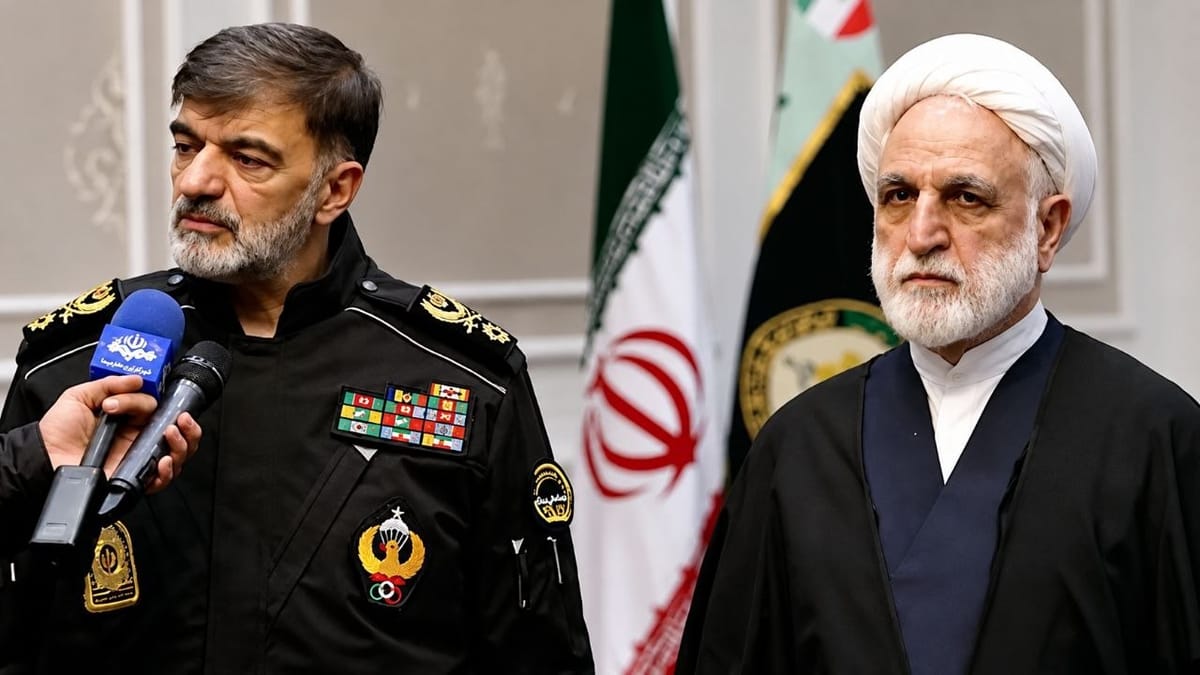
In Iran today, within the criminal Islamic regime, one of these murderous criminals is Ahmad-Reza Radan, a figure within the circle of Islamic terrorism in Isfahan. Alongside someone such as Eje’i, he performs in the twenty-first century the same function that the Chigins once performed.
Ahmad-Reza Radan is no ordinary police chief. He is a street thug in uniform—a ruthless regime enforcer whose career has been forged through intimidation, humiliation, coercion, and violence. From crushing protesters to policing women’s bodies and suffocating public life, Radan has never represented law, order, or public safety. He represents the naked brutality of the Islamic Regime: a system that rules through fear and sends men like him wherever intimidation, repression, and public degradation are required.
The United States, the European Union, and Canada have sanctioned Radan over serious human-rights abuses. He should therefore be seen for what his record represents: not a conventional bureaucrat, not a legitimate police officer, but one of Tehran’s most notorious instruments of tyranny—a hardened enforcer helping to keep a repressive regime alive through fear and force.
After the bloodshed of January 2026, Radan became, for millions of Iranians, one of the most detested faces of the machinery of repression. They were counting the seconds until the day his power collapsed and the apparatus he served was finally destroyed. In their eyes, he was no longer merely a police commander; he had become the human face of a system of coercion, brutality, and terror. The fall of men like Radan would therefore mean more than the removal of an official. It would mark the destruction of an instrument of repression—and the end of an era in which men of violence could terrorize a nation from behind the insignia and uniform of the state.
Ahmad-Reza Radan, commander-in-chief of the country’s Law Enforcement Command, thanks the regime’s supporters and those who favor its survival, while describing 200 nights of “Islam parties” in the middle of the streets and displays of vulgarity as an achievement—or as evidence of the people’s presence and solidarity with the regime. He deliberately describes the country as being under “wartime conditions,” because wartime conditions provide the Islamic Caliphate regime of Velayat-e Faqih with an opportunity for repression and a display of savagery. At the same time, he deliberately invokes 500 armed thieves as a pretext and cunningly declares: “We do not compromise when it comes to the security of the people, and in the event of danger and armed confrontation, we will stop them with bullets, and the police will act decisively.”
For the regime, armed action and confrontation with its officers have become a nightmare, while cooperation between the police and the judiciary is equally apparent. Radan appears pleased with the deployment of 2,450 police patrols across the country. Ultimately, however, the operational focus of the police under this kleptocratic regime is not reducing theft; it is preventing the emergence of nuclei of rebellion. It is here that the word “security,” in the regime’s vocabulary, reveals its real meaning: not security against crime, but the security of the regime against a society that may rise against it.
Radan speaks with fear, alarm, and contradiction: “In the third war and even in the first war, our border units, from observation towers to posts and border regiments, were struck, and this demonstrated that the enemy had extensive plans for the Islamic Republic.” His language then shifts from fear to threat: “Our conditions are wartime conditions, and if anyone, responding to the enemy’s call, seeks to create insecurity inside the country, we will confront them, and we will show no leniency whatsoever toward agents of insecurity.” He continues: “One of the enemy’s extensive plans was to create, on the last Wednesday of the year, a situation resembling the events of Dey, but this did not happen, and the people came onto the scene and defended their revolution. We believe that the people of Iran are sufficiently discerning not to be deceived by the enemy.”
The contradiction lies within the narrative itself: on one side stands a regime claiming popular support and the defeat of the enemy’s plans; on the other stands a police commander who continues to regard the country as being under “wartime conditions” and speaks of expanding the machinery of control and repression.
Radan sees himself, alongside the terrorist institutions of the IRGC, the army, and the Basij, as prepared for repression, and says without disguise: “We do not forget the rioters and coup plotters, and we continue to monitor and confront them. So far, more than 6,000 of these individuals have been arrested. We are not joking with these people, we will not overlook their actions, and we will not let them go—unless some of them come forward, express remorse and repentance, and correct their path.” In this vocabulary, even arrest is not the end of the matter: the regime demands from its opponents not merely silence, but remorse, repentance, and the “correction of their path.”
He continues with exaggeration and convoluted rhetoric: “Our colleagues belong to a school whose members are followers of the Velayat and are ready to sacrifice their lives; one could even say that they are those who would sacrifice themselves for the self-sacrificers. The enemy is still seeking to strike the country, and we must not neglect its plans and movements. The third war is not yet over, and the enemy has not abandoned us; the enemy will cease its confrontation only when we have the upper hand.”
Yet in the end, he reveals the central anxiety of the apparatus of repression more explicitly: “The enemy seeks to create chaos in one part of the country or throughout the entire country, and issues such as livelihoods, gasoline, the economy, and unemployment can become pretexts for these actions.” It is precisely in this admission that, behind all the rhetoric of “enemy,” “war,” “security,” and “chaos,” one fundamental fear reveals itself: the regime’s fear that poverty, economic crisis, unemployment, and social discontent may ignite a rebellion that even 2,450 police patrols will no longer be able to contain.
The Chigins belong to history; the machinery that created them still rules Iran.