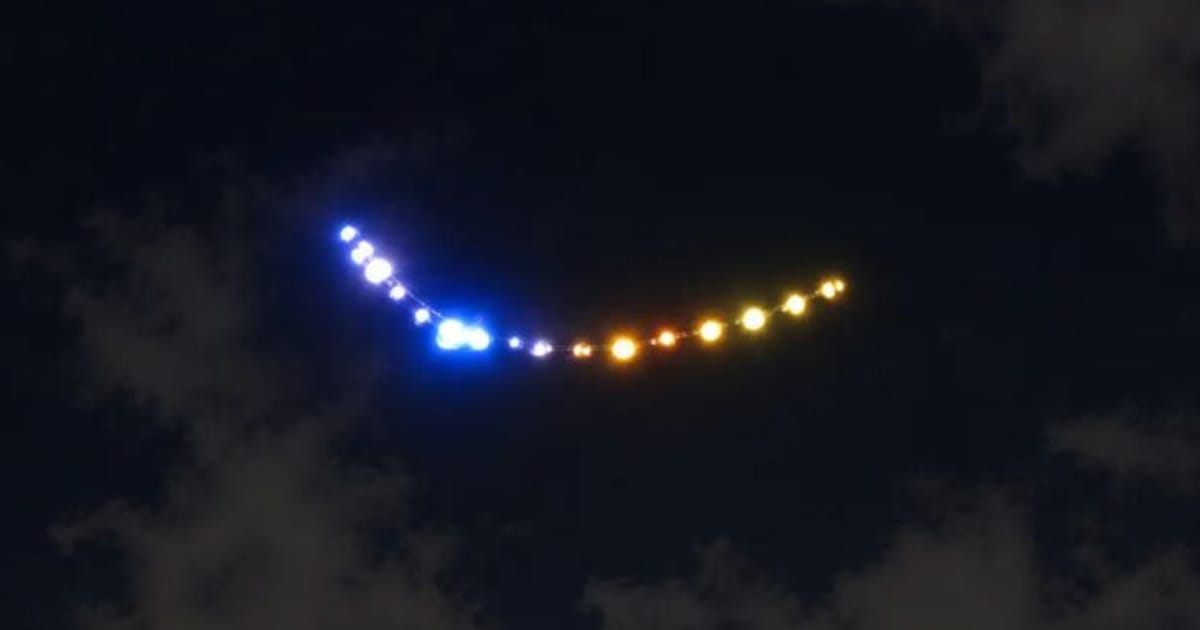
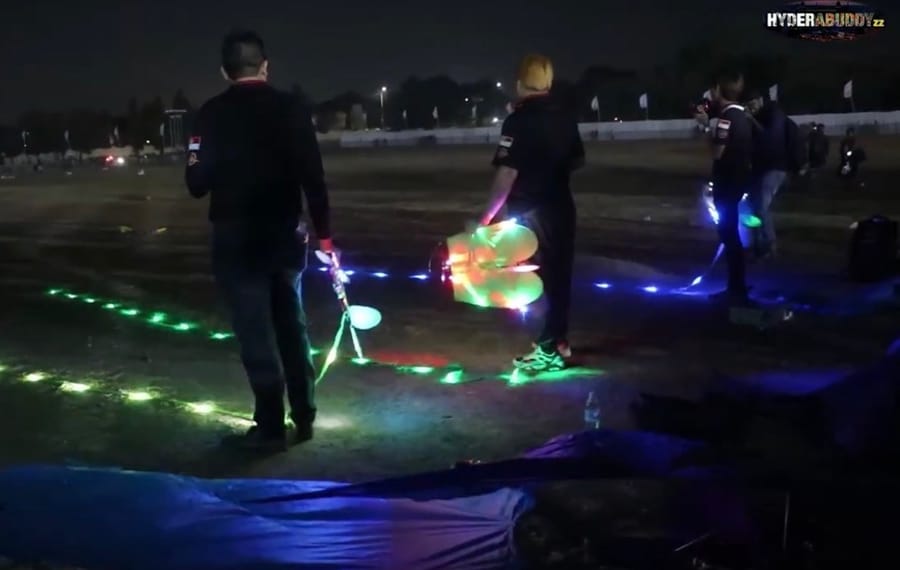
The 14-second video contains no metadata, no landmark in frame, and no fixed reference point, meaning there is nothing in the clip that can indicate the object's size, altitude, distance, or speed. It does, however, clearly depict a light cycling through red, green, and blue, seemingly at low altitude over Tehran.
That is sufficient. Patterned R.G.B. light is the mark of consumer electronics; a low, brightly lit thing afloat over a city at night isn't an anomaly so much as a product category.
Commercial LED kites have elicited this exact panic for years. A 2011 sighting near Vancouver, Wash. drew local news coverage before being identified as a seven-and-a-half-foot-tall parachute-fabric kite with a 13-foot wingspan carrying hundreds of LEDs powered by a battery and controlled by a small computer. Police in Nanaimo, British Columbia, received several calls about hovering lights before locating the man in a parking lot who had lost an LED box kite aloft. In Medellín, Colombia, a kite purchased for $25 at a roundabout and equipped with six bulbs by a 14-year-old drew a crowd, with one resident calling for entry into a building so he could confront the extraterrestrials he thought had landed on its roof.
Videos of the Tehran lights began circulating on X on Sept. 20, with several claiming they'd been captured the night before in Azadegan. Iranian aviation and military authorities have not yet identified the object. Users of the r/U.F.O. Reddit forum arrived at the kite explanation within hours, one offering that U.A.P. reports typically don't feature red, green, and blue lights while another noted the apparent low altitude.
It hit the timeline at a timing calibrated for maximum amplification. It hit the timeline almost precisely 50 years after the 1976 Tehran incident in which Iranian authorities scrambled two F-4 Phantoms after reporting a bright unidentified object, with a surviving Defense Intelligence Agency record of the event describing multiple witnesses and sensors that was never resolved. It hit the timeline in the midst of an escalation, the day after Iran's military threatened American bases and regional activities in the event of another attack, Reuters reported. There is no public evidence linking the lights to either.
The more important story isn't the sky over Tehran. It's the interdiction logs of nations on Iran's periphery, where cheap lifting platforms have become a common security headache.
Jordan interdicted at least 60 cross-border smuggling incursions from Syria in the first few months of 2026, mostly with balloon payloads launched by smugglers who use helium-filled balloons and prevailing winds to bring cargo across the border. The Jordanian Armed Forces reported 536 infiltration and smuggling incursions thwarted in 2025, including 89 downed drones, and 156 incursions thwarted in the first quarter of 2026 with 26 downed drones. One shipment "were launched simultaneously to confuse border guard units and evade detection," the army said, a description of saturation attacks conducted by smugglers against a border force.
The scale of the inventory is documented too. The Syria Interior Ministry said in February it had intercepted 75 hot-air balloons, 610 helium tanks, two million Captagon pills, 30 plastic mortar shells, a cannon, and a drone from one network crossing into Jordan.
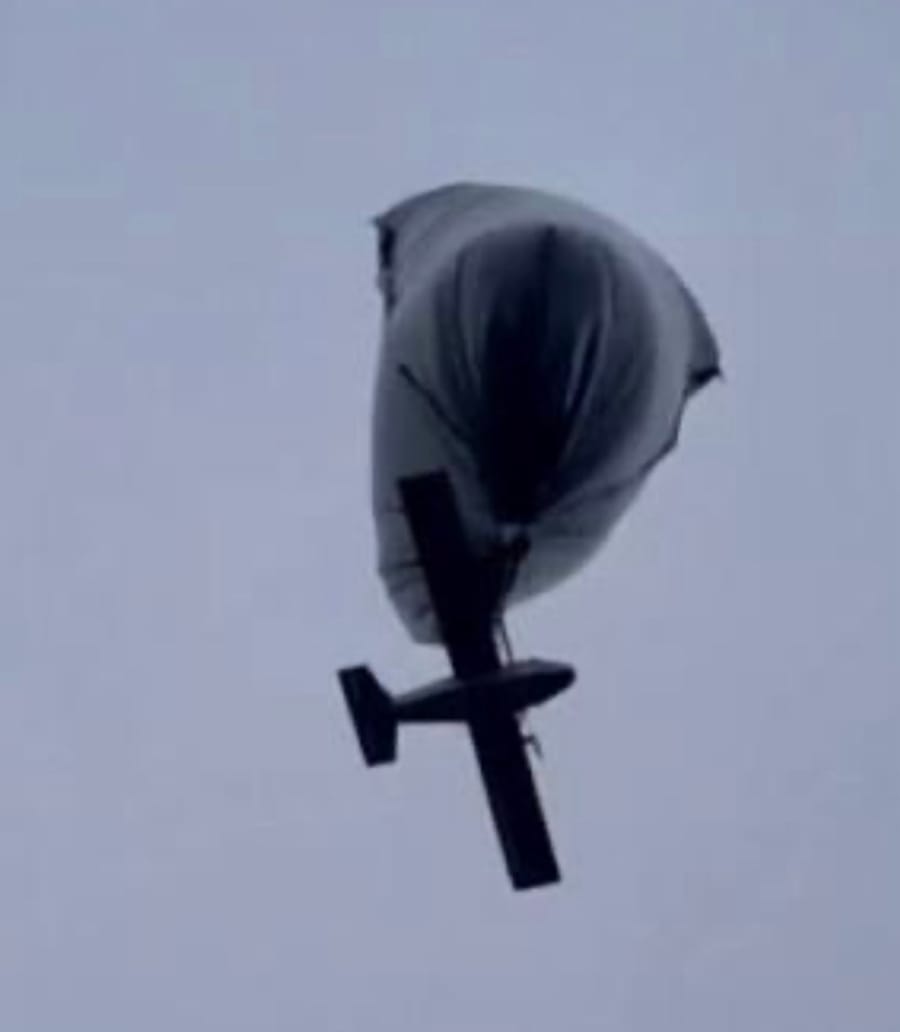
Equivalent platforms have been used as munitions before. Incendiary kites and balloons launched from Gaza ignited 678 fires in Israel by July 2018, and on Aug. 25, Israel threatened to ratchet up the pressure after kite, drone, and balloon launches from the territory, saying it would treat a balloon as it treats a kite and a kite as it treats a drone, regardless if they carry explosives.
Platforms like these have been employed to hoist small drones or munitions, and to saturate or wear down air defense systems by groups tied to Iran's Islamic Revolutionary Guard Corps and allied militias, according to a person with knowledge of the matter. InsiderWire couldn't independently confirm the account, with no government publicly speaking of balloon or kite platforms being used against air defenses. Iranian officials haven't commented.