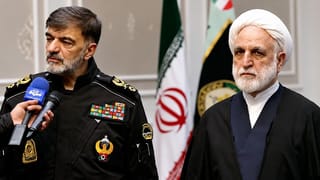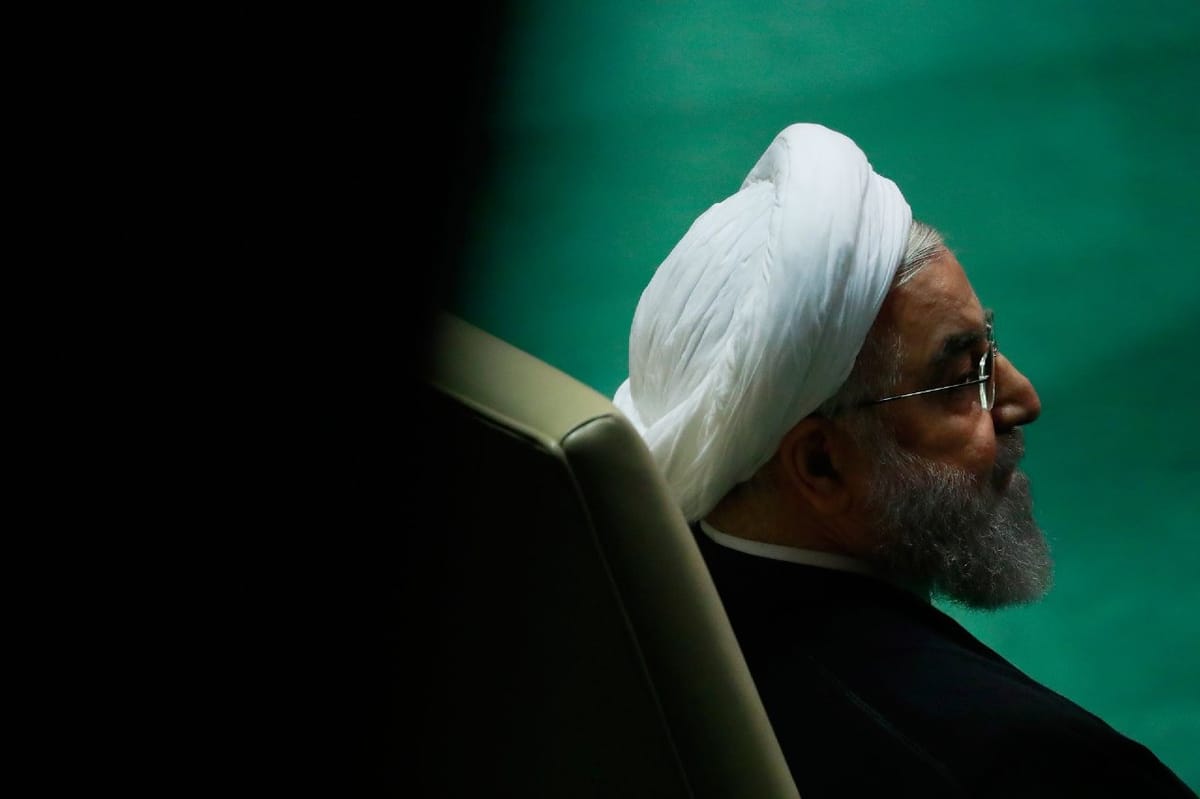
One of the greatest political deceptions perpetrated by the Islamic Republic over the past several decades has been the construction of a false image of a fundamental struggle between the regime’s principlists and its government-affiliated reformists.
The Islamic Left—or what later came to be known as the regime’s reformists—and the principlists are two sides of the same coin. Despite their disagreements over their respective shares of power, how the country should be governed, and how Iran should engage with the outside world, the two factions share one fundamental objective: preserving the Islamic caliphate of velayat-e faqih, perpetuating the dictatorship of the Shiite mullahs, and ensuring the survival of the existing regime.
Throughout these years, the two camps have played the roles of good cop and bad cop: one speaking the language of threats, repression, and revolution, the other invoking reform, moderation, dialogue, and civil society. The result has been the deception of public opinion and the buying of time for a regime whose foundations both factions have defended.
It should never be forgotten that many of the figures later presented to the public as reformists, moderates, or reformers emerged from the very same revolutionary and security establishment of the Islamic Republic, and that some of them believed in Islamic terrorism or were active in Islamic terrorist groups. Even today, the reformists’ deeply entrenched and interconnected mafia retains positions and bases of influence within the Islamic Republic’s military and security institutions. The political adherents and associates of the Hashemi Rafsanjani and Montazeri currents, as well as other branches of the Islamic Left, cannot be examined separately from the history of the Islamic Republic’s formation. Mostafa Tajzadeh, for example, was a member of the Falaq group, which formed part of the history of revolutionary Islamist movements. Other figures who later joined the reformist camp also played roles in expanding the Islamic Republic’s transnational terrorism network outside Iran.
The record of the Islamic Republic during the presidencies of Akbar Hashemi Rafsanjani, Mohammad Khatami, and Hassan Rouhani reveals the same reality. Throughout these periods, the Quds Force and the Ministry of Intelligence conducted extensive terrorist operations outside Iran. Changes in presidents and shifts in the government’s political rhetoric never brought the Islamic Republic’s security and terrorist machinery to a halt. At the very moment when one administration spoke of a “Dialogue Among Civilizations” and another presented itself as “moderate,” the Islamic Republic’s security apparatus and its transnational network continued their operations.
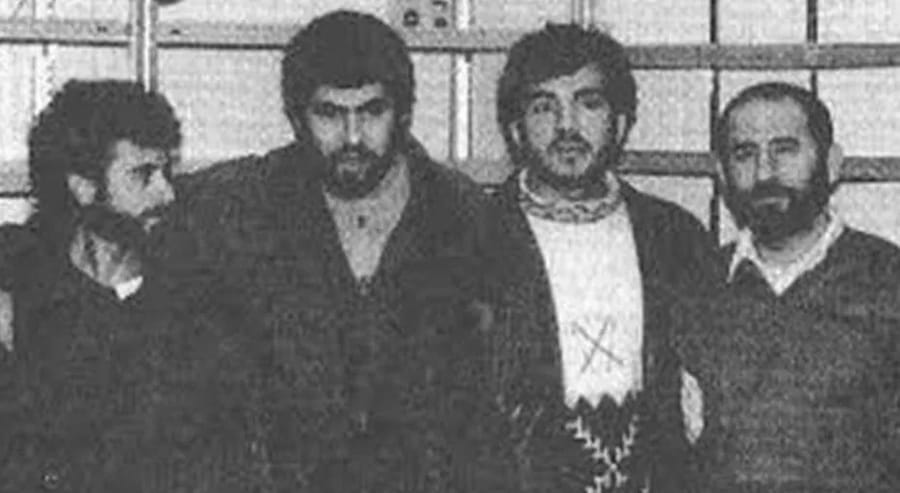
Nor did the reformists ever fundamentally take a stand against Islamic terrorism, nor did they achieve a genuine and structural break with the Islamic Republic in response to the repression and displays of brutality by the Islamic Revolutionary Guard Corps, the police, and the military inside Iran. Whenever the issue has involved fundamental opponents of the Islamic Republic, principlists and reformists have consistently shared a similar mindset and strategy: an opponent who rejects the regime itself must be contained, eliminated, or driven from the political arena. Their disagreements have been primarily about how to preserve the regime, not about the right of the Iranian people to move beyond it altogether.
The reformist mafia also wields extensive power in the media sphere, and the majority of Persian-language media outlets outside Iran—including BBC Persian and Voice of America in Washington—have fallen under its control. They have consistently sought to portray themselves as representatives of peace, dialogue, rationality, and engagement, yet the political character and history of this current tell a different story. For years, a network of political, media, and academic figures associated with this camp has attempted to manufacture an artificial distinction between the “Islamic Republic” and the “hardliners of the Islamic Republic,” as though Iran’s problem consisted merely of a handful of IRGC commanders or hardline clerics, and as though removing them would make it possible to preserve the same structure behind a new face.
Today, Hassan Rouhani, Mohammad Khatami, and other so-called reformist and reform-minded figures have once again emerged onto the scene, seeking to repaint the political landscape with fraudulent colors and repeat the same old deception under new circumstances. The objective is to prepare for the birth of another version of the Islamic Republic in the post-Khamenei era—a regime that could be called the “Third Islamic Republic.” Should Khamenei’s era come to an end, they seek to preserve the existing structure with new faces, softer rhetoric, and different political packaging. Yet, just like the principlists, they continue to praise and defend the Islamic Revolutionary Guard Corps and the Islamic Republic’s machinery of repression.
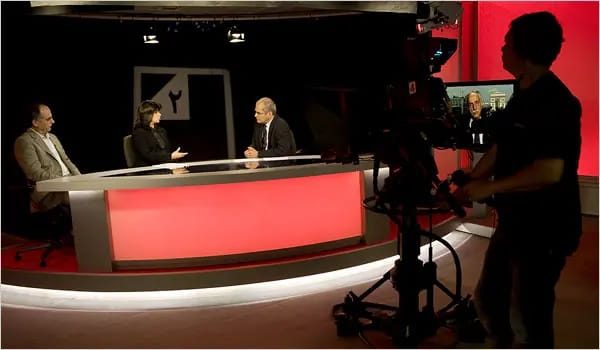
Figures affiliated with this faction outside Iran likewise continue trying to distract the Iranian people and dampen the anger of Iranian society. From Ataollah Mohajerani, a eulogist of Islamic terrorism, to Abdolkarim Soroush and other figures belonging to this current, and from television channels in the United States affiliated with the Rafsanjani faction and the IRGC—such as Channel One in Los Angeles—to VOA Persian, all are present in this orchestra, each playing a different instrument. Their messages may appear different, but the political outcome is the same: preventing the emergence of a clear determination to move entirely beyond the Islamic Republic and keeping Iranian society trapped within the confines of choosing among factions of the same regime.
This matters even more today because both the principlists and the regime’s reformists know that Iranian society is no longer willing to accept their old game. They have no intention of voluntarily relinquishing the power and wealth they have accumulated over decades, whether out of respect for the people’s vote or for the protests of the Iranian nation. On the contrary, if the survival of the existing structure becomes impossible, they seek to drag Iran toward civil war, turmoil, and chaos, only to present themselves once again as the sole force capable of holding the country together. Their implicit threat is unmistakable: either the Islamic Republic or chaos.
But this binary, like the reformist-versus-principlist binary, is itself a deception. Iran is not condemned to choose between the dictatorship of Shiite mullahs and civil war. The Iranian nation can demand a secular, national, and democratic government whose legitimacy derives neither from velayat-e faqih, nor from the Revolutionary Guards, nor from religious ideology, but from the free vote of its citizens.
The problem of the Islamic Republic is not merely Khamenei, a particular president, or a particular political faction. The problem lies in the destructive ideology of Khomeinism and the Shiite character of this regime. Such a regime will never accept genuine behavioral change, because fundamental change in its behavior would amount to repudiating its very raison d’être. For this reason, changing names, replacing factions, and bringing the reformists back to the political stage cannot provide an answer to Iran’s crisis.
What demands vigilance today is the attempt to sell an old product in new packaging: an Islamic Republic without Khamenei, but with the same networks of power; an Islamic Republic wearing the reformists’ smile, but retaining the Revolutionary Guards; an Islamic Republic speaking the language of moderation abroad, but maintaining the same machinery of repression at home. This is the dream of the “Third Islamic Republic.”
But Iran does not need a Third Islamic Republic. After experiencing Khomeini’s Islamic Republic and Khamenei’s Islamic Republic, Iran needs this cycle to end. Regime change means dismantling a structure that for more than four decades has placed political power, national wealth, and the fate of Iranian society in the hands of an ideological and security class—not allowing that same structure to be reborn with new actors, new slogans, and new colors.
The opposition outside Iran has not remained immune to this network and political environment either. With the exception of Prince Reza Pahlavi, who represents the real alternative to the Islamic Republic, a large part of the opposition abroad remains under the influence of the reformist mafia, and the confusion and disorientation in its behavior, rhetoric, and political positions are unmistakable. The contradiction runs even deeper: serious articles or political campaigns against figures such as Larijani, Ejei, Radan, Ghalibaf, Pezeshkian, and other accomplices in these crimes are rarely written or organized, yet those same forces devote considerable energy to campaigning against Prince Reza Pahlavi. Those who participated in Khomeini’s 1979 upheaval likewise remain part of this same front—people who, nearly half a century later, still appear unwilling to accept historical responsibility for the catastrophe in which they played a role and which contributed to Iran’s destruction.
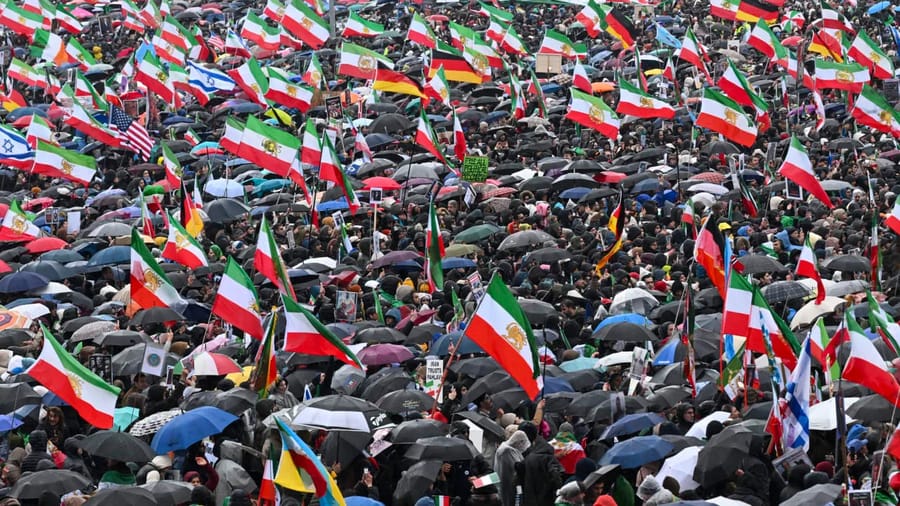
The bitter reality is that this regime will not relinquish power except by force, and no one should be deceived by its internal competition for power. The struggle among its factions is a struggle over their respective shares of power and wealth, not a sign of any willingness to return sovereignty to the Iranian nation. They have dragged Iran into war and crisis, yet with corrupt minds and loud mouths they still refuse to accept the collapse of the authoritarian system of the Islamic caliphate of the Shiite mullahs. At the same time, the regime’s own prospects are increasingly bleak, while Iran faces the genuine danger of chaos, civil war, and a bloodbath.
Even terrorist separatist groups, in some cases, move in alliance with the regime’s military and intelligence institutions, because these nihilists and communists would rather see the Islamic Republic survive for another hundred years than allow the name Pahlavi to emerge as the alternative. Some of this behavior can no longer be explained by ordinary political disagreement; it is a mixture of resentment, feelings of inferiority, and historical vindictiveness that sacrifices Iran’s national interests to hostility toward Pahlavi. In such an environment, hostility toward a national alternative can become so overwhelming that even the survival of the Islamic Republic appears more tolerable to them than the return of the Pahlavi name to the center of Iranian politics.
Moving beyond the Islamic Republic, its false Hidden Imam, and Khomeini’s path will not be easy while these infectious tumors remain. The road toward democracy and regime change in Iran remains rocky, tortuous, and dangerous—particularly when parts of the opposition, instead of concentrating on the ruling structure, remain consumed by their own exhausting internal wars, while international media, because of their lack of knowledge and understanding of the intricate fabric of the Islamic Republic, its security networks, and the real actors on Iran’s political stage, continue to embrace superficial narratives.
The tragedy is that, on the threshold of one of the most consequential moments in Iran’s modern history, many domestic and international actors still prefer self-deception to confronting reality. Time, however, is running out for Iran, and every day wasted in failing to understand the nature of this regime and the networks that sustain its survival may further narrow the distance between regime change and the country’s descent into chaos, civil war, and a bloodbath.