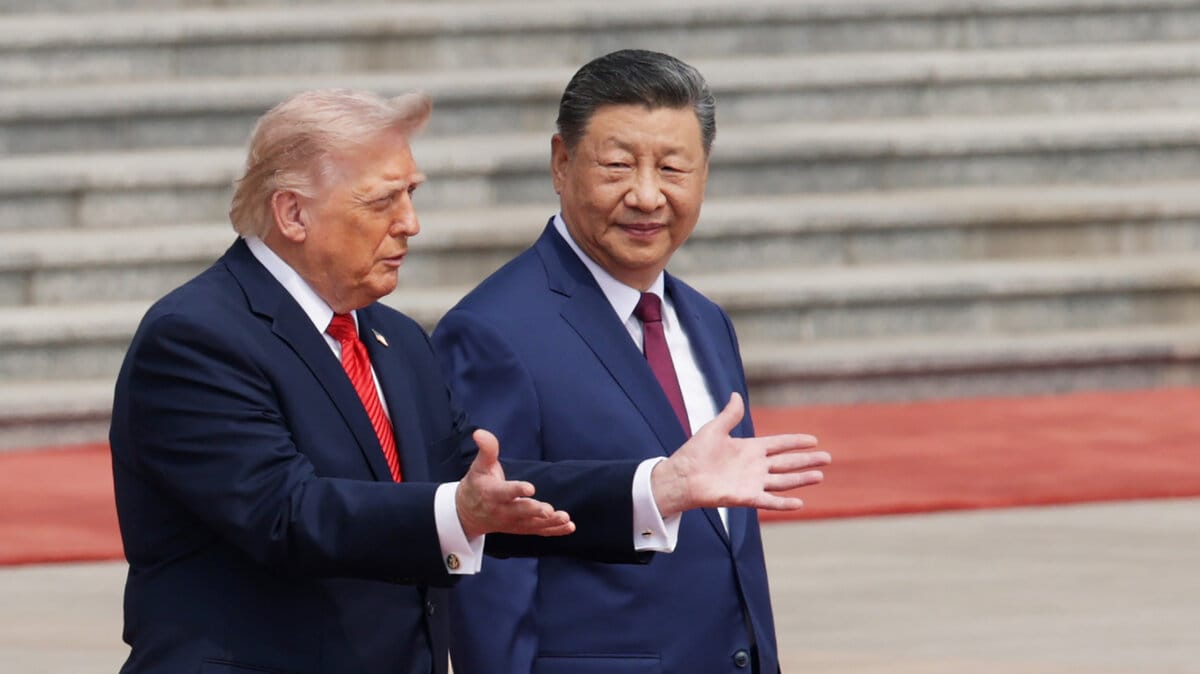
Chinese President Xi Jinping delivered a stark warning about potential "clashes and even conflicts" with the United States over Taiwan during his two-hour meeting with President Donald Trump at Beijing's Great Hall of the People on Thursday morning. The session, which began at 9:30 AM local time and concluded just before noon, marked their first face-to-face encounter since November 2022.
Xi described Taiwan as "the most important issue in China-US relations" during the high-stakes summit, according to China's foreign ministry readout released three hours after the meeting concluded. Beijing wants Washington to reduce military and diplomatic support for the self-governing island, which China claims as part of its territory despite never having controlled it. The warning came as China's defense budget reached $230 billion in 2024, with much of the increase directed toward capabilities needed for a Taiwan operation.
Iran Weapons Pledge Amid War Tensions
Trump emerged from the meeting claiming Xi pledged not to send weapons to Iran, contradicting recent intelligence reports that Chinese arms manufacturers had discussed $2.5 billion in weapons deals with Tehran since December 2024. The promise comes as CIA analysts assess Iran's regime has limited time under American economic pressure.
I say to everybody you're a great leader. Sometimes people don't like me saying it, but I say it anyway, because it's true.
The Trump administration's February military strikes against Iran have complicated what Beijing hoped would focus on trade negotiations between the world's two largest economies. Xi has made "unification" with Taiwan a centerpiece of his legacy and has refused to rule out military force to achieve that goal. Chinese military exercises around Taiwan increased 47% in 2024 compared to the previous year.
Both sides agreed "that the strait of Hormuz must remain open to support the free flow of energy," according to the White House readout. Xi indicated China could purchase more American oil to reduce dependence on Iranian energy supplies, potentially worth $15 billion annually to U.S. producers based on current market prices.
Historical Context Shapes Current Tensions
The Taiwan dispute traces back to 1949, when Chinese nationalist forces fled to the island after losing China's civil war. Since then, Beijing has maintained Taiwan must eventually rejoin mainland China, while the island has developed into a vibrant democracy of 23 million people. The U.S. has provided defensive weapons to Taiwan under the Taiwan Relations Act of 1979 while maintaining official diplomatic ties with Beijing.
Recent years have seen escalating tensions. China's military conducted its largest-ever exercises around Taiwan following then-House Speaker Nancy Pelosi's visit in August 2022. The Pentagon reported 183 Chinese military aircraft crossed into Taiwan's air defense identification zone in October 2024 alone, a monthly record.
Divergent Priorities Surface
The meeting exposed different priorities between Washington and Beijing. While Trump's team highlighted market access for American firms in China and Chinese cooperation on fentanyl controls, these issues were absent from Beijing's official summary of the talks. Chinese officials instead emphasized Taiwan and what they termed "interference in China's internal affairs."
China's emphasis on Taiwan reflects Xi's calculation that American military resources committed to the Middle East create an opportunity to pressure Washington on the island's status. Taiwan's democratic government has expressed concerns that Trump might trade away security commitments for economic concessions from Beijing.
The personal rapport between the two leaders remained on display, with Trump praising Xi as "a great leader" despite criticism from 12 Republican senators who issued a statement Wednesday calling such language inappropriate. Trump noted they had "known each other for a long time," referencing their relationship dating to his first presidency from 2017-2021.
What Comes Next
Pentagon planners have long worried about China exploiting American commitments elsewhere to move against Taiwan. The next critical test comes with Taiwan's military exercises scheduled for March 15-18, which could prompt Chinese countermeasures. Congressional leaders plan hearings on Taiwan security assistance by March 30.
The Beijing summit's mixed results suggest both sides remain far apart on fundamental issues despite areas of potential cooperation on energy and trade. Watch for whether Xi follows through on the Iran weapons pledge and how aggressively China tests American resolve in the Taiwan Strait over the next 60 days, as spring weather makes military operations more feasible.