UN Secretary-General António Guterres closed out his tenure Tuesday with a stark warning to world leaders: global "cracks have become canyons." In his farewell address to the 81st General Assembly in New York, Guterres called for an end to the wars in Ukraine and the Middle East, climate accountability, AI safeguards, and Security Council reform — including a permanent African seat. He left to a standing ovation.
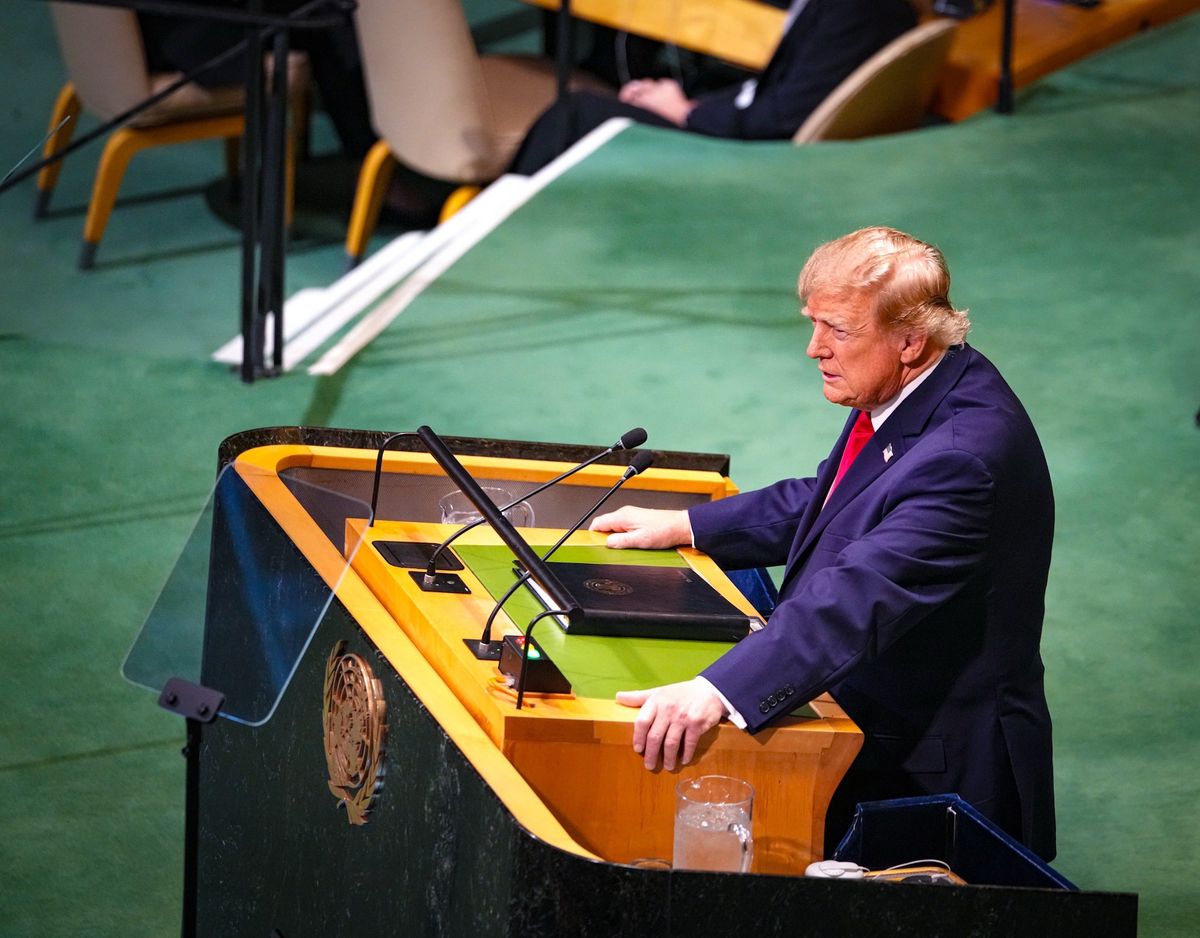
President Trump used his speech to draw a red line on Iran: he would “never allow” a nuclear weapon, claiming U.S. strikes had already obliterated Tehran’s program and navy, and offered the regime a choice between a deal or being “annihilated.” The same address triggered a walkout by the Cuban delegation after he called the island a “failed state” that “will fall” and said Washington wanted “fundamental change.”
The AI debate broke into the open on the assembly floor. Trump dismissed international guardrails as a "globalist scheme," argued the word "artificial" makes intelligence sound fake, and declared that "whoever wins superintelligence wins." Britain's Andy Burnham and Australia's Anthony Albanese pushed back, comparing unregulated AI to the early industrial revolution and jointly launching a child-safety roadmap targeting chatbots, deepfakes, and AI-generated abuse.
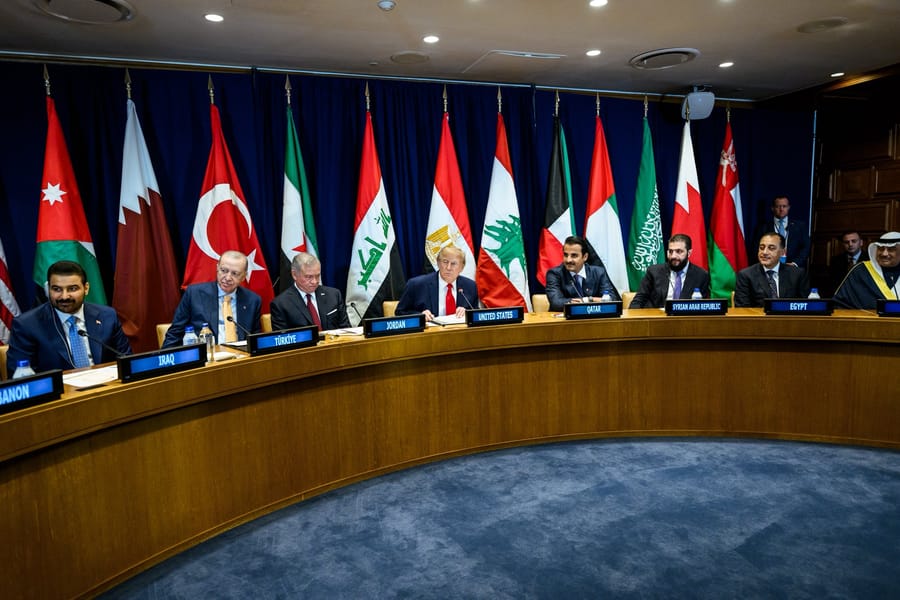
World leaders criticized Israel over Gaza and the West Bank. Guterres warned that settlement expansion was "bulldozing the path to peace." Jordan's King Abdullah said UN resolutions against Israel "end where they begin: on paper."
Other leaders, including Jordan’s King Abdullah II, Turkey’s Recep Tayyip Erdoğan, Qatar’s Emir Sheikh Tamim bin Hamad Al Thani, France’s Emmanuel Macron, British Prime Minister Andy Burnham and Japanese Prime Minister Sanae Takaichi, also addressed the hall amid roughly 130 heads of state.
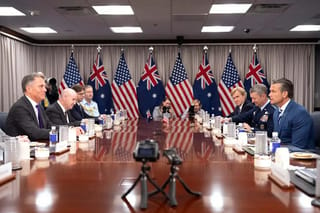
A White House reception capped the day, all set against the backdrop of an ongoing U.S.-Iran conflict, energy shocks and the intensifying race to succeed Secretary-General António Guterres. Attention now turns to the coming sessions, with Iranian President Masoud Pezeshkian expected to deliver a closely watched address on Wednesday and Israeli Prime Minister Benjamin Netanyahu scheduled to speak on Thursday.