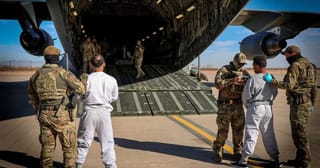
Republican senators are signaling strong resistance to any massive funding request from President Trump for the Iran war, warning that tens of billions in additional military spending will face an uphill battle in the Senate without a clear exit strategy. The pushback from Trump's own party comes as defense officials prepare to submit supplemental budget requests that could exceed $40 billion for the current fiscal year.
GOP senators say patience is wearing thin over what they describe as the administration's failure to articulate a concrete plan to end the conflict. The warning comes as House and Senate Republicans have grilled Defense Secretary nominee Pete Hegseth over Iran war costs and strategy during confirmation hearings held throughout January.
Senate Armed Services Committee ranking member Roger Wicker (R-Miss.) told colleagues privately that any emergency spending measure must include monthly progress reports and measurable benchmarks for military objectives. Sources familiar with Senate GOP leadership discussions indicate at least eight Republican senators have expressed reservations about blank-check war funding.
Fiscal Hawks Draw Line
The Senate resistance represents a major challenge for Trump, who has already faced pushback from his own party on war powers. Three GOP senators recently broke ranks on an Iran war powers resolution, which failed by just one vote, 49-50, on February 8th.
Senators Rand Paul (R-Ky.), Mike Lee (R-Utah), and Susan Collins (R-Maine) joined Democrats in that vote, signaling broader Republican discomfort with the administration's Iran strategy. Paul has since indicated he would oppose any supplemental spending bill that lacks congressional oversight mechanisms.
Republican senators are demanding answers about the war's trajectory before approving additional emergency spending. The concerns reflect broader GOP unease about open-ended military commitments without clear objectives or timelines for American withdrawal. Current military operations in the Persian Gulf involve approximately 15,000 additional U.S. personnel deployed since hostilities began.
Trump has taken an increasingly aggressive stance toward Iran, recently dismissing Tehran's peace proposal and declaring their nuclear response "totally unacceptable." The president has also suggested he wants to "go in" Iran to seize nuclear material, according to Israeli Prime Minister Netanyahu.
Historical Context and Stakes
The Republican resistance echoes similar GOP pushback during the final years of the Afghanistan conflict, when senators from both parties demanded clearer metrics for success before approving continued funding. That precedent resulted in mandatory quarterly Pentagon reports and ultimately contributed to the U.S. withdrawal timeline.
The current Iran engagement began escalating in December following attacks on U.S. naval vessels in the Red Sea. Defense spending has already increased by $12 billion in emergency allocations since January, straining the Pentagon's operations and maintenance accounts. Congressional Budget Office projections suggest sustained operations at current levels would require an additional $85 billion through September 2025.
Economic Concerns Mount
The funding fight comes as the Iran conflict's economic impact weighs on American families. Trump recently stated that Americans' financial pain from the war was "not even a little bit" a factor in his Iran negotiations, a comment that drew criticism from both parties during a February 12th press conference.
Rising fuel costs linked to Persian Gulf shipping disruptions have added an average of $127 monthly to household expenses, according to Energy Department data. Republican senators facing 2026 reelection bids have privately expressed concern about voter reaction to prolonged military spending while domestic economic pressures mount.
The military engagement has already strained defense budgets while China gains military edge over the US during the Iran war, raising questions about America's global strategic position. Pentagon officials acknowledge that sustained Iran operations have delayed planned modernization programs and reduced training exercises in the Indo-Pacific region.
What Comes Next
Senate Republicans' warning signals a potential constitutional clash over war funding authority. Congress holds the power of the purse, and GOP senators appear ready to use that leverage to force strategic clarity from the White House. The Senate Appropriations Committee has scheduled hearings for March 15th and 18th to review defense spending requests.
The funding battle will test Trump's relationship with Senate Republicans and could determine whether the Iran conflict continues at current levels or faces resource constraints that force a change in strategy. Senate Majority Leader John Thune (R-S.D.) has indicated any supplemental spending bill must pass with bipartisan support, giving Democrats additional leverage in negotiations expected to begin next week.