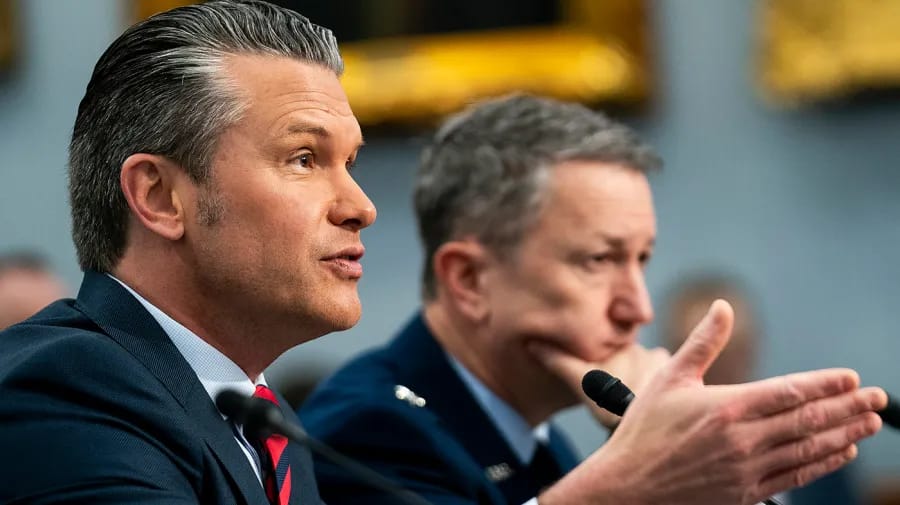
Defense Secretary Pete Hegseth endured a double dose of Republican criticism Tuesday during separate House and Senate hearings, where GOP lawmakers pressed him on the escalating Iran conflict, President Trump's unconventional Pentagon funding plan, and America's shrinking ammunition stockpiles. The House Armed Services Committee session ran from 9 a.m. to 11:30 a.m., followed immediately by a Senate Armed Services Committee hearing that stretched past 3 p.m.
The back-to-back committee sessions revealed growing frustration among Republicans with the Defense Department's handling of multiple fronts. Lawmakers questioned Hegseth's strategy for the Iran war, which has intensified following recent ceasefire breakdowns, as Insider Wire previously reported. Chairman Mike Rogers of Alabama opened the House hearing with pointed questions about operational timelines, while Senate Armed Services Chairman Roger Wicker of Mississippi demanded specific cost projections for sustained Middle East operations.
Funding Fight Takes Center Stage
Republicans expressed particular concern over Trump's unusual approach to Defense Department financing. The president's plan, which deviates from traditional Pentagon budgeting methods, drew sharp questions about its impact on military readiness and long-term strategic planning. The administration's proposal calls for redirecting $12.7 billion from existing procurement accounts to fund immediate operational needs, bypassing standard congressional authorization procedures.
Senate Republicans grilled Hegseth on spending priorities as the Pentagon faces pressure to simultaneously fund the Iran operations while addressing ammunition shortages that have reached what internal assessments describe as "red line" levels. Senator Joni Ernst of Iowa questioned whether the current $847 billion defense budget adequately covers expanded Middle East commitments, noting that artillery shell production remains 40% below wartime demand projections.
House lawmakers focused their fire on operational readiness, demanding specifics about how the administration plans to maintain America's military edge while managing multiple international crises. Representative Mike Gallagher of Wisconsin pressed Hegseth on whether the 15,000 troops currently deployed across the Middle East have sufficient logistical support under the proposed funding framework.
Iran Strategy Under Scrutiny
The Iran war dominated much of the questioning, with lawmakers seeking clarity on military objectives and exit strategies. Republicans pressed Hegseth for details about troop deployments, rules of engagement, and coordination with regional allies. The conflict has escalated dramatically since January 23, when ceasefire negotiations collapsed following strikes on American naval assets in the Persian Gulf.
Current military operations involve 23,000 personnel across the region, including 8,000 naval personnel aboard three carrier strike groups. The sustained tempo has accelerated ammunition consumption, with Tomahawk cruise missile stocks down 35% since operations began. Senator Tom Cotton of Arkansas questioned whether production timelines for precision munitions can meet operational demands if the conflict extends beyond six months.
Concerns about America's ammunition reserves took on new urgency given the sustained military operations. Several committee members highlighted the strategic risk of depleted stockpiles, particularly if conflicts expand or new threats emerge in the Pacific theater. Current 155mm artillery shell inventory stands at approximately 180,000 rounds, down from pre-conflict levels of 280,000.
Growing Congressional Pressure
The hearings reflected broader Republican anxiety about Pentagon management under the current administration. Lawmakers from both chambers voiced frustration with what they characterized as inadequate communication from defense leadership on critical national security matters. This represents a shift from the typically supportive relationship between GOP legislators and Republican defense secretaries.
The intense congressional scrutiny builds on mounting Republican concerns over military preparedness dating back to the 2023 Defense Authorization Act debates. Lawmakers have consistently pressed for greater transparency in Pentagon spending, particularly regarding overseas contingency operations that often receive less detailed oversight than base budget items.
Hegseth defended the administration's approach but acknowledged the challenges facing the Defense Department. He emphasized ongoing efforts to address ammunition shortfalls and streamline Pentagon operations, though he provided few specific timelines or metrics during Tuesday's sessions.
The intense congressional scrutiny signals rougher waters ahead for Hegseth as Republicans demand greater accountability on defense spending and military strategy. Committee leaders indicated they plan additional oversight hearings scheduled for February 15 and March 8, with the House panel specifically planning sessions focused on ammunition production capacity. Senate Armed Services Committee staff confirmed they will require monthly briefings on Iran operations funding through the remainder of the fiscal year, with the next formal hearing set for February 28 as budget negotiations intensify.