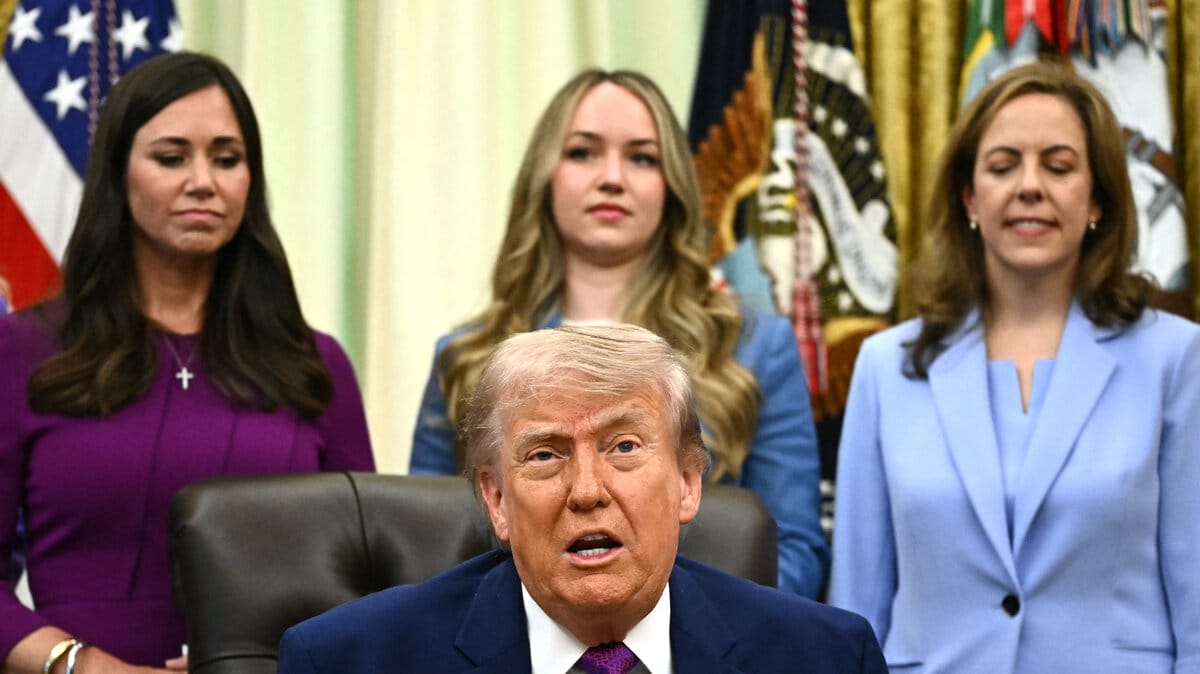
President Donald Trump declared the ceasefire with Iran is on "life support" during a Tuesday evening press conference at the White House, announcing he's considering restarting U.S. Navy escorts for commercial ships through the Strait of Hormuz to counter an escalating Iranian blockade that has already disrupted $2.1 billion in daily shipping traffic.
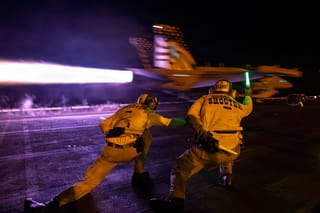
Speaking from the Rose Garden, Trump said the administration is prepared to deploy USS Arleigh Burke-class destroyers within 72 hours if Iranian forces continue their harassment of commercial vessels. The Pentagon has placed the Fifth Fleet, headquartered in Bahrain, on heightened alert status as of Monday.
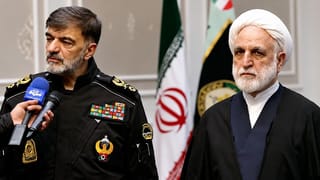
The president's comments mark a sharp escalation in tensions after Trump previously called Iran's ceasefire response "totally unacceptable" following Tehran's November 18 rejection of Washington's proposed terms. The administration now appears ready to take direct military action to protect the critical shipping lane that handles roughly 20% of global oil traffic.
Naval Escorts Return After Five-Year Hiatus
Trump's consideration of naval escorts represents a return to tactics last used during the 2019 tanker crisis, when the Obama administration deployed Operation Sentinel to protect commercial shipping after Iranian forces attacked six oil tankers between May and June of that year. The program was quietly discontinued in January 2020 following the Soleimani assassination and subsequent diplomatic overtures.
The Strait of Hormuz, measuring just 21 miles wide at its narrowest point between Iran's Qeshm Island and Oman's Musandam Peninsula, serves as the world's most important oil chokepoint. Iranian Revolutionary Guard Corps Navy forces have positioned fast attack craft and anti-ship missile batteries along the northern coastline, according to satellite imagery analyzed by the Pentagon.
Defense Secretary Lloyd Austin briefed congressional leadership on Monday about the estimated $12 million daily cost of resuming escort operations, which would require deploying two destroyers, support vessels, and aerial reconnaissance assets to the region.
Economic Pressure Mounts on Both Sides
The deteriorating ceasefire has already triggered immediate market reactions, with oil prices surging 4% to $89.20 per barrel on Tuesday following Trump's rejection of Iran's latest diplomatic proposals. Brent crude futures jumped to $91.85, the highest level since the initial October ceasefire took effect.
Iranian forces have intercepted or harassed 23 commercial vessels since November 20, according to shipping industry data compiled by Lloyd's of London. Major carriers including Maersk and Evergreen Marine have already rerouted 15 container ships around the Cape of Good Hope, adding 10-14 days to delivery schedules and $400,000 in additional fuel costs per voyage.
Iran's economy faces renewed pressure from the ceasefire collapse, with the rial dropping 8% against the dollar since diplomatic talks stalled. The country's oil exports, which briefly recovered to 1.8 million barrels per day during the ceasefire period, could face new sanctions enforcement if military confrontation resumes.
Regional Stakes Rise as Proxies Mobilize
The ceasefire breakdown extends beyond the Gulf, with Iranian proxy forces across the Middle East interpreting the diplomatic failure as a green light for renewed operations. Houthi forces in Yemen launched three drone attacks against Saudi oil facilities over the weekend, while Hezbollah moved short-range missiles closer to Israel's northern border, according to Israeli Defense Forces intelligence.
American military commanders worry that escort operations could trigger the kind of naval incidents that sparked the 1987-1988 Tanker War, when U.S. forces accidentally shot down Iran Air Flight 655, killing 290 civilians and nearly triggering full-scale war between Washington and Tehran.
What Comes Next
Pentagon officials expect Trump to make a final decision on naval deployments by Friday, with the first escort missions potentially beginning as early as December 2. Congress returns from Thanksgiving recess Monday, where House Armed Services Committee Chairman Mike Rogers has scheduled emergency hearings on Iranian escalation for December 3.
The next major flashpoint comes December 15, when Iran's 180-day suspension of uranium enrichment activities expires under the original ceasefire terms. Intelligence agencies are monitoring whether Tehran will resume production of 60% enriched uranium if diplomatic talks remain stalled.