Oil prices surged more than 4% Monday morning after President Trump rejected Iran's latest response to ceasefire proposals, triggering volatility across Asian markets while Wall Street continues setting new records. Brent crude jumped to $87.42 per barrel in early trading, while West Texas Intermediate climbed to $83.15, marking the steepest single-day gain in three weeks.
The spike in crude prices reflects growing concern that diplomatic efforts to resolve the ongoing Middle East tensions may be stalling. Energy markets responded immediately to news of Trump's rejection, with traders betting on continued supply disruptions in the region. The Strait of Hormuz, which handles roughly 21% of global petroleum liquids, remains a focal point for supply concerns.
Diplomatic Breakdown Accelerates Market Response
Trump's rejection came just 48 hours after Iranian Foreign Minister Abbas Araghchi delivered Tehran's response through Pakistani intermediaries in Islamabad. The proposed framework reportedly included provisions for gradual sanctions relief in exchange for nuclear program restrictions, but administration officials called the terms "insufficient" for meaningful progress.
This diplomatic setback follows a pattern of stalled negotiations that began when the U.S. withdrew from the Joint Comprehensive Plan of Action in May 2018. Since then, oil markets have experienced seven major price spikes tied directly to Iran-related tensions, with the largest reaching 19% gains in September 2019 following drone attacks on Saudi facilities.
Energy analysts at Goldman Sachs estimate that complete disruption of Iranian oil exports could remove 2.1 million barrels per day from global markets, pushing prices toward $100 per barrel within weeks.
Mixed Asian Market Response
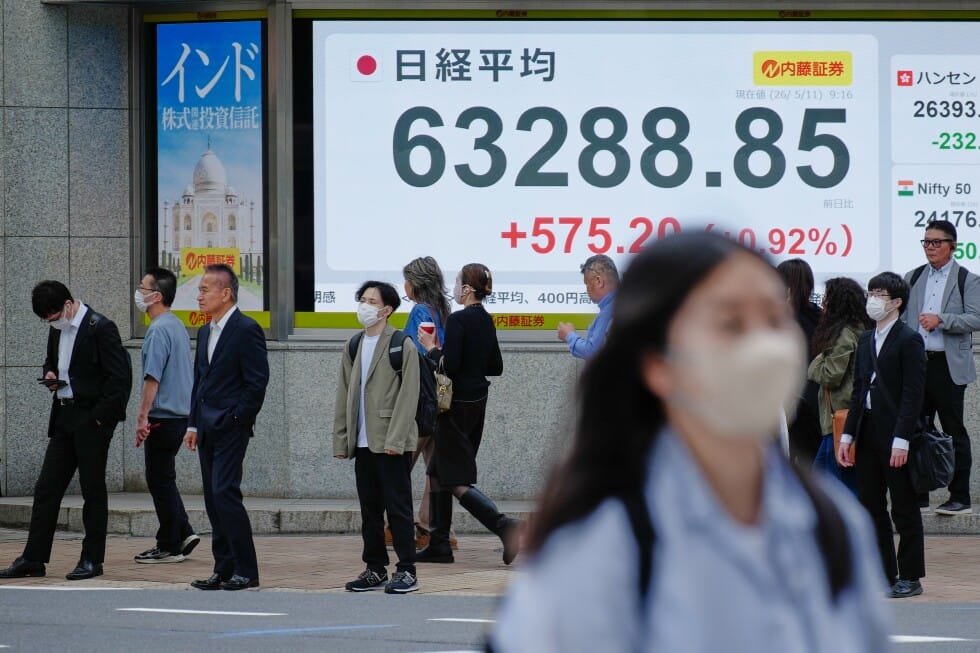
Asian stock markets showed divided reactions to the developments. Japan's Nikkei 225 opened down 1.2% before recovering to close essentially flat at 28,743 points, reflecting investor uncertainty about the geopolitical implications. The Hang Seng Index in Hong Kong fell 2.3% to 17,892, while South Korea's KOSPI managed modest gains of 0.4%.
Energy-heavy markets bore the brunt of volatility. Australia's ASX 200 energy sector jumped 6.8%, led by Woodside Petroleum and Santos Limited, both posting double-digit gains. Currency markets also reflected the tension, with the Japanese yen strengthening 0.8% against the dollar as investors sought safe-haven assets.
The oil price jump comes as Iran previously responded to U.S. peace proposals through Pakistani mediators, suggesting diplomatic channels remain active despite Trump's latest rejection.
Energy Security Implications
The 4% oil surge translates directly into higher costs for American consumers and businesses, particularly in transportation and manufacturing sectors. Each $10 increase in crude prices typically adds 25 cents to gasoline prices within two weeks, according to Energy Information Administration data.
For American taxpayers already funding military operations in the region, the rejection of Iran's ceasefire response signals potentially extended engagement costs. The Pentagon currently spends approximately $81 million daily on Middle East operations, including carrier group deployments and regional base maintenance.
The energy price volatility also complicates Federal Reserve monetary policy decisions as officials weigh inflation pressures against economic growth. Fed Chair Jerome Powell cited energy price uncertainty as a "key variable" in December rate decisions during last week's Jackson Hole remarks.
Wall Street's continued record-setting performance provides a stark contrast to the volatile energy sector, with the S&P 500 closing Friday at 4,891 points. This divergence indicates that investors may be compartmentalizing geopolitical risks from broader economic fundamentals.
What Comes Next
Market analysts will closely watch Wednesday's EIA inventory report for signs of supply tightening, as energy prices often serve as leading indicators for broader economic sentiment. The next diplomatic milestone comes Thursday when Pakistani Foreign Minister Bilawal Bhutto Zardari is scheduled to meet with State Department officials in Washington.
Traders are also monitoring Iranian Revolutionary Guard naval exercises scheduled for this weekend near the Strait of Hormuz, which could trigger additional market volatility if expanded beyond routine operations.