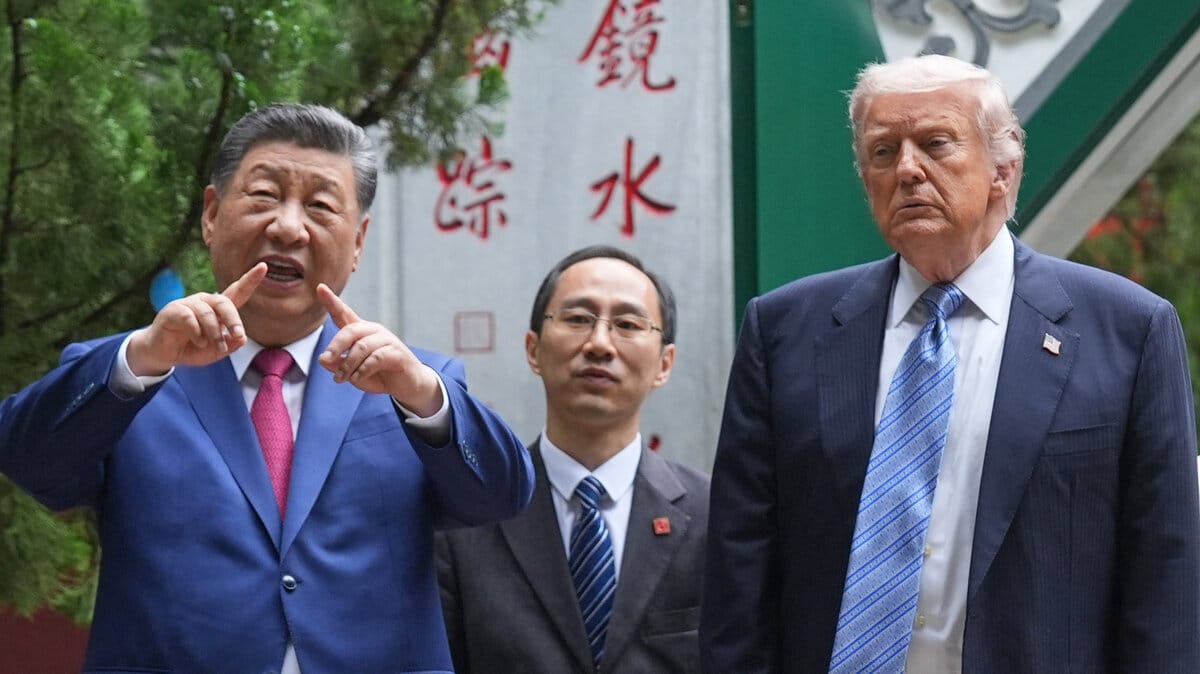
President Trump declared "a lot of problems settled" following his final day of talks with Chinese President Xi Jinping in Beijing, claiming the summit produced trade victories despite Xi's stark warning about potential military confrontation over Taiwan.
Trump told reporters the meetings yielded "fantastic trade deals for both countries" and that "a lot of good" had emerged from the diplomatic discussions. The president offered no specifics about which trade agreements were reached or what concessions either side made during the high-stakes Beijing summit.
Xi Issues Taiwan Warning
Xi Jinping delivered a direct warning to Trump about Taiwan policy, stating that continued U.S. support for the island democracy could lead to "clashes and even conflicts" between the world's two largest economies. The Chinese leader's language marked a sharp escalation in rhetoric over the self-governing island that Beijing claims as its territory.
The Taiwan warning came as Trump has faced mounting pressure from both parties in Congress to maintain strong support for the island's defense. Taiwan officials have expressed concern that Trump might sacrifice their security interests in exchange for favorable trade terms with Beijing.
Trump's silence on Taiwan following Xi's threats represents a notable departure from his administration's previous statements supporting Taiwan's democratic government. The president made no public response to Xi's warning about potential military action, focusing instead on claimed trade achievements.
Economic Stakes Rising
The Beijing talks occurred as American businesses and farmers await concrete details about what trade concessions China might offer. Trump has promised to secure better market access for U.S. agricultural products and reduce barriers for American technology companies operating in China.
However, the lack of specifics from Trump's public statements left markets and trade analysts uncertain about whether substantial progress was actually achieved. The president's claims of "fantastic trade deals" contained no dollar figures, product categories, or timeline for implementation.
The summit also addressed broader geopolitical tensions, with Trump claiming alignment with China on Iran policy despite providing no details about areas of cooperation or shared strategy in the Middle East.
Xi's Taiwan warning signals that Beijing views the island issue as a potential breaking point in U.S.-China relations, regardless of progress on trade matters. Chinese military officials have increasingly conducted exercises near Taiwan and upgraded their capabilities for a potential invasion scenario.
The president's emphasis on trade victories while avoiding discussion of Xi's military threats reflects the administration's priority of securing economic wins ahead of the 2024 election cycle. Trump has frequently cited trade negotiations as evidence of his foreign policy success, particularly with China.
For Taiwan's 23 million residents, Trump's muted response to Xi's warning creates uncertainty about continued American military support. The island depends on U.S. weapons sales and security guarantees to deter Chinese aggression.
Trump departed Beijing without scheduling follow-up meetings or announcing when the claimed trade agreements might take effect. The president's next moves on Taiwan policy and whether he will respond to Xi's military threats will signal how seriously the administration takes China's escalating pressure on the democratic island.