Hear this from someone inside Iran. I was one of the millions who answered the nationwide call to join the anti-regime protests on Jan. 8 and 9. I was one of the millions who believed our voices finally mattered. And I was one of the lucky ones who, more by chance than by anything else, made it home alive.
Eight months have passed. Like so many others, I am still trying to make sense of what I saw. I am still in shock. I still carry those days with me. The streets are quieter now, but what happened in them has not left us.
For years, the world kept asking us the same question: Why don't Iranians rise up? Why don't they take to the streets and overthrow the regime?
Then we did. Millions of us did.
And yet the question came again. On Sept. 2, President Trump was asked about a post he had put on Truth Social earlier that day: "When are the Iranian people going to rise up and fight?" Peter Doocy of Fox News asked him whether, if that was what he wanted, he would send the C.I.A. to arm Iranians.
Mr. Trump's answer was striking. He said he understood their plight because "they're being shot." He said that as of three months earlier, 52,000 protesters had been killed, and that he was hearing another 20,000 to 25,000 had been killed since — bringing the total, he said, to "close to 65,000." He described a regime that uses machine guns and snipers. "They shoot them right between the eyes," he said.
Most important, he acknowledged that he had asked his original question "sort of knowing the answer." The answer, in his own words, was simple: "The only answer is that they're being shot." And when he concluded, "So that's why it's not happening. And who can blame them?" he was saying out loud what Iranians have known for decades.
That is the part the world needs to understand.
The question was never whether Iranians were willing to rise up. We already had. The question was never whether Iranians understand the cost. We do. We have known it for nearly five decades, and we have lived it.
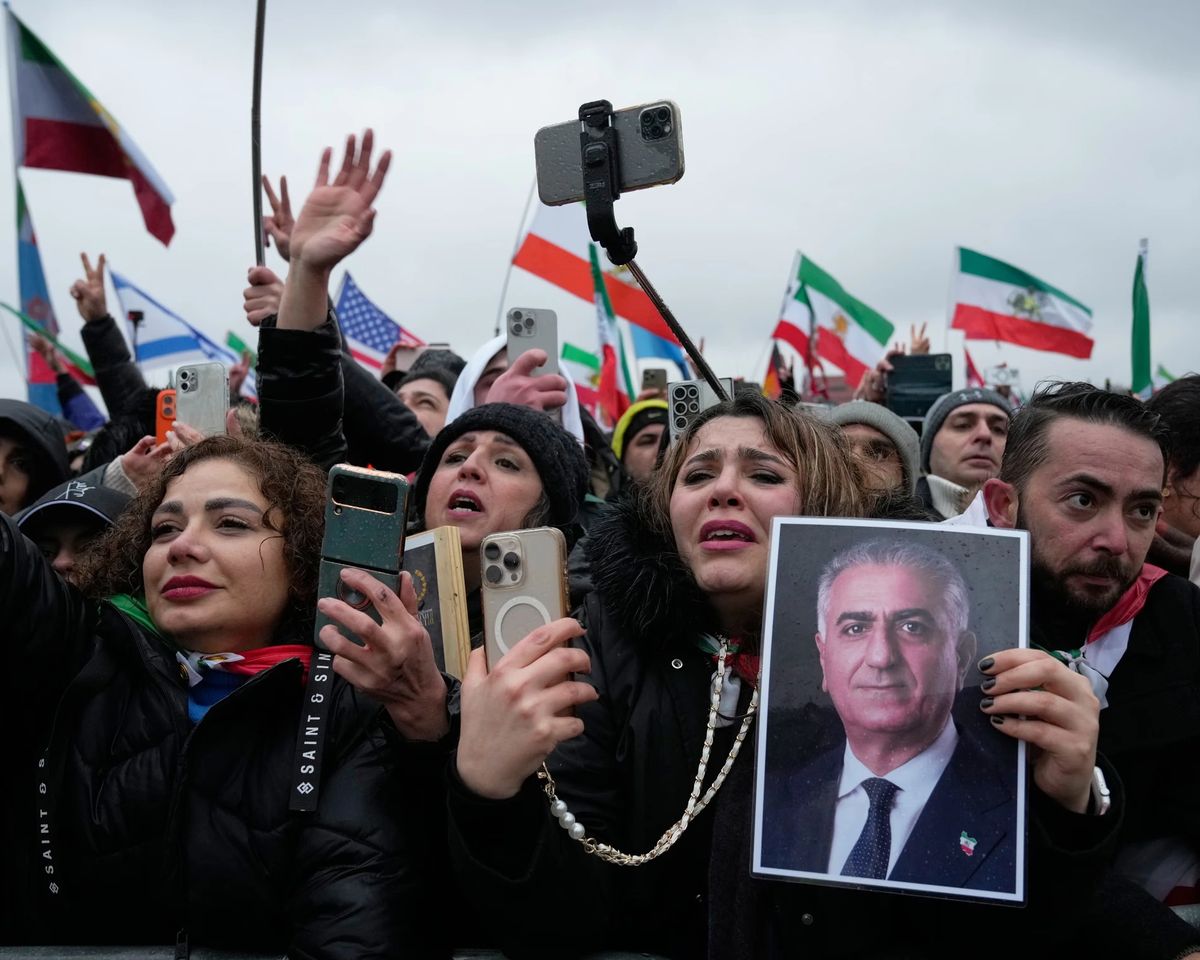
The people of Iran have risen against the Islamic Republic again and again, knowing exactly what could happen to them. We answered Crown Prince Reza Pahlavi's call on Jan. 8 and 9. We walked into the streets believing that if the world finally saw us, it would not look away.
What followed changed our lives forever.
If even the president of the United States can now ask why Iranians have not risen up, and then answer himself that "they're being shot," then my question is not for the Islamic Republic. It is for everyone else.
Why don't they hear us?
Is state propaganda simply louder than ordinary people's blood on the street? Does disinformation travel further than the testimony of people risking everything?
For months, Iranians have lived through internet restrictions and repeated digital blackouts — after the massacre, and again during the war. This is not a new tactic. The Islamic Republic has used shutdowns to cut Iranians off from one another and from the outside world through every period of unrest, including the protests that followed the killing of Mahsa Amini in 2022. Communication itself became another battlefield. By the time information got out, propaganda had usually travelled much further than the truth.
Many of us warned where that path led, including the risk that the world's inaction would let the crisis grow into a wider conflict. And still it felt as though the voices of ordinary Iranians could not break through.
Were we not loud enough?
Were we not visible enough when millions answered the crown prince's call to protest inside Iran? Were we not visible enough when Iranians across the world answered his call for a Global Day of Action on Feb. 14? Iran International reported that more than one million people rallied in over 70 cities in more than 30 countries. The Associated Press reported roughly 250,000 people in the streets of Munich alone, with tens of thousands more in Toronto, Los Angeles, London and elsewhere. It did not stop there. Iranians abroad have kept gathering, week after week, refusing to let the people inside Iran be forgotten.
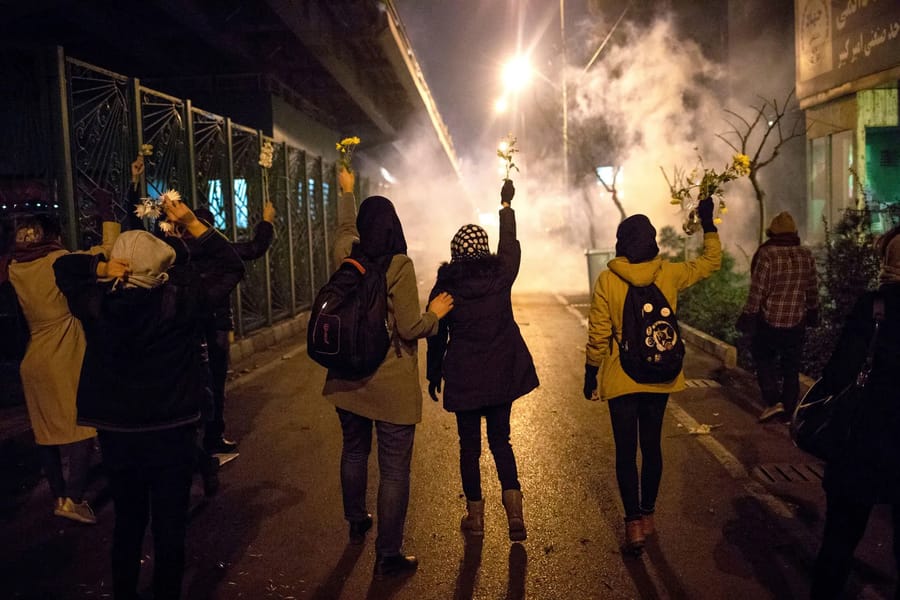
Were we not peaceful enough? Protesters handed flowers to police officers. They carried the flags of their host countries beside the Lion and Sun. They left the streets cleaner than they found them.
Our message has never been about hatred. It has always been about peace. And yet the world seems to notice us only when there is violence, chaos or extremism. Peaceful movements rarely make headlines. They cannot compete with organized propaganda.
Maybe that is the answer. Not that we failed to speak — but that propaganda is louder than ordinary people.
For nearly five decades, millions of Iranians have lived under a government they never chose. Many still risk their freedom, and some their lives, to demand a different future.
Listen to them. Listen to the people inside Iran. We are still here.
The question is no longer whether we have spoken loudly enough. It is why we are not heard. Because our message has never been complicated: We want the regime gone. We want our country back.
We have written it on walls. We have chanted it in the streets. We have carried it across continents. Javid Shah has echoed through cities inside Iran and among Iranians around the world. It is one of the clearest expressions of what many of us are asking for: We want our Shah to come home.
If the world truly wants to prevent another uprising from ending in another massacre, another war in the region, more global instability and another shock to oil markets, then it should listen to what Iranians are saying now: Recognize Crown Prince Reza Pahlavi as the legitimate government-in-exile, and support a peaceful transition of power — rather than waiting for Iranians to rise again and risk being killed again.
We have already shown the world that we are willing to rise.
The question now is whether the world is willing to help us choose peace — not only for Iranians, but for itself.
Mahsa R. is a writer in Tehran who took part in the January protests. She has previously written about Iran for the Financial Times. This OP-ED was submitted exclusively to Insider Wire.