There are moments in political history when a government reveals more through its vocabulary than through its actions. Power has always understood the importance of language. Before repression can be normalized, the victim must often be renamed; before extraordinary violence can be justified, the person against whom it is directed must be removed from the ordinary categories of civilian life. A dissident becomes a traitor, an opponent becomes an enemy, and a critic becomes a threat to national security. The transformation may appear semantic at first, but history repeatedly reminds us that dangerous policies are often preceded by dangerous definitions.
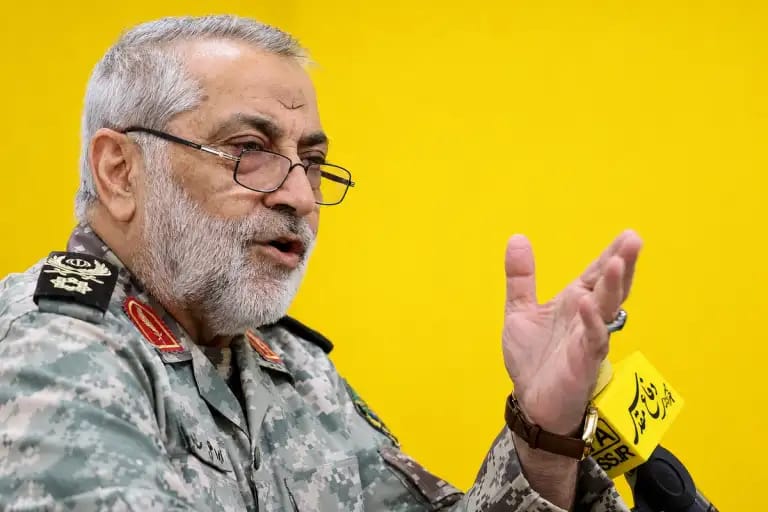
This is what makes the remarks delivered on August 26 by Abolfazl Shekarchi, a senior spokesman for the armed forces of the Islamic Republic of Iran, so disturbing. Speaking about journalists employed by Persian-language media outside Iran, he specifically referred to Iran International, BBC Persian and Radio Farda. He accused these organizations of connections to American and Israeli intelligence services without publicly presenting evidence, and then introduced a phrase that fundamentally changed the nature of the accusation: their personnel, he suggested, could be included in the Islamic Republic’s “military target bank.” Governments frequently denounce journalists, and authoritarian governments routinely accuse them of serving foreign interests. But describing journalists through the vocabulary of military targeting is qualitatively different. It moves the argument from propaganda into the conceptual territory of warfare.
Journalism Is Not Combat
The distinction matters because journalism, however controversial or adversarial, is not combat. Governments have every right to challenge newspapers, television networks and individual reporters. Journalists make mistakes, news organizations possess editorial biases, and reporting can be unfair. If credible evidence exists that someone has engaged in espionage or criminal activity, a state governed by law has legal mechanisms through which such allegations can be presented and contested. What no government should be permitted to do is erase the distinction between reporting on a conflict and participating in one. A microphone does not become a weapon because the questions asked through it are uncomfortable, nor does a television studio become a military installation because a government dislikes what is broadcast from it.
Once that distinction disappears, the consequences extend far beyond the journalists immediately named. If a government can unilaterally determine that hostile journalism constitutes enemy activity, the institutions subjected to scrutiny acquire the power to redefine those scrutinizing them. The military being investigated may declare its investigator a combatant; the intelligence service being exposed may describe the reporter as an operative. Once the journalist has been linguistically transformed into an enemy, violence against that journalist can also be redefined. What would otherwise be understood as intimidation, kidnapping or assassination may suddenly be presented as defense against an enemy.
The History Behind the Words
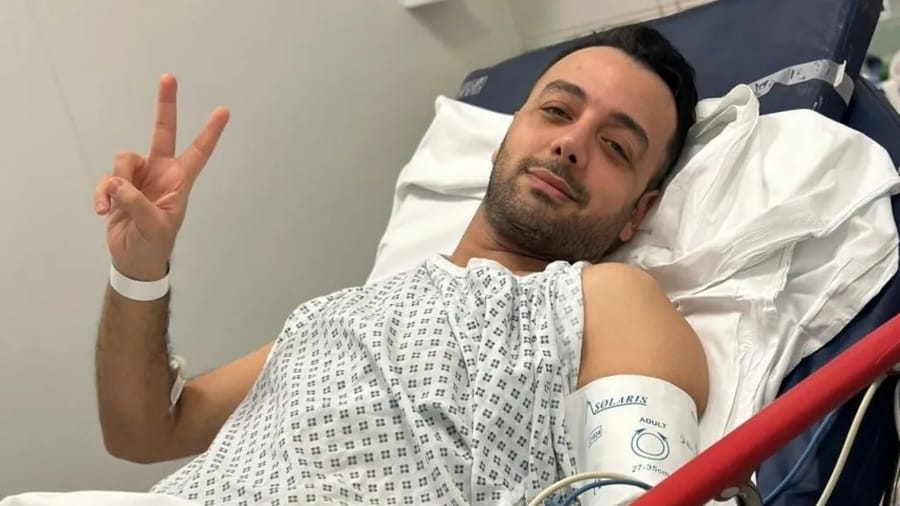
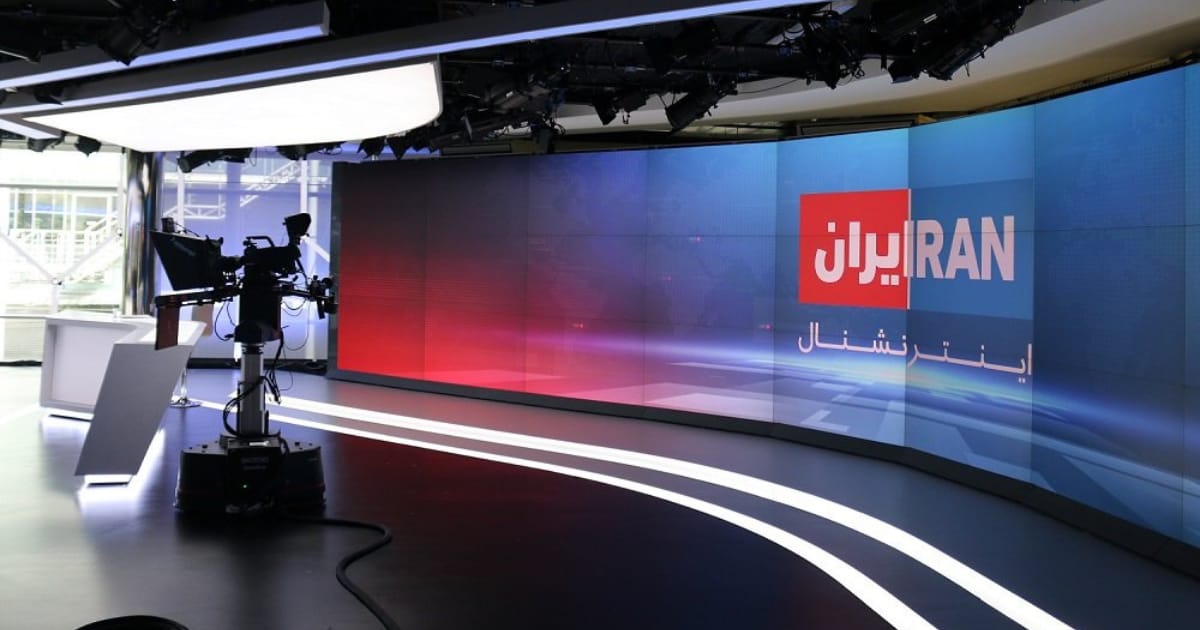
Such rhetoric would be alarming from any government, but words cannot be separated from the history surrounding them. The Islamic Republic has spent decades attempting to control not merely journalism inside Iran but the broader information environment surrounding Iranian society. Iran International was designated a “terrorist organization” by Iran’s Ministry of Intelligence in 2022. Threats against its journalists became serious enough that the network temporarily moved its London broadcasting operation to Washington in 2023. In March 2024, Iran International presenter Pouria Zeraati was stabbed outside his home in Wimbledon. A British court subsequently sentenced two Romanian men for their roles in the attack, and the judge concluded that the evidence overwhelmingly indicated that the operation had been conducted on behalf of Iranian authorities. Against that background, public references to journalists as potential military targets cannot responsibly be dismissed as theatrical rhetoric from Tehran.
Repression That Crosses Borders
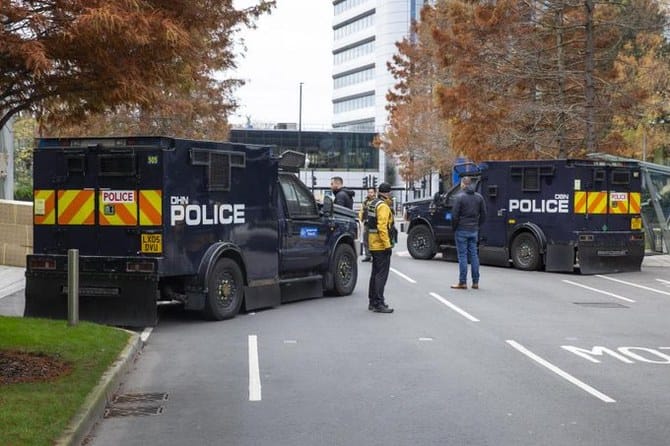
What we are witnessing belongs to a broader transformation in authoritarian repression. During much of the twentieth century, repression was primarily understood within national borders. Exile could create meaningful distance between the dissident and the state. Technology, migration and the internationalization of authoritarian security networks have weakened that assumption. A journalist may leave Iran, but intimidation can follow. A reporter may work in London or Washington while parents or siblings remain vulnerable inside Iran. Borders may protect the journalist’s physical body while leaving family members exposed to interrogation, surveillance and pressure. Repression has become transnational, and fear itself has become exportable.
That is why threats against Iranian journalists abroad are not solely an Iranian human-rights issue. They are also questions of sovereignty for the democratic countries in which those journalists live and work. If someone legally residing in Britain can be threatened by a foreign state for journalism conducted on British soil, the matter concerns Britain's authority over its own democratic space. The same principle applies in the United States, France, Germany and elsewhere. A democracy that allows a foreign regime to determine who may safely speak within its territory has surrendered something larger than the security of an individual: it has permitted another state to impose the boundaries of permissible speech through fear.
Democratic governments therefore cannot afford to wait until rhetoric culminates in physical violence. Protection cannot begin only after someone has been stabbed, abducted or killed. Explicit threats deserve security attention, particularly when they emerge from states with documented histories of transnational intimidation. Protecting journalists under such circumstances is not an endorsement of every editorial decision made by their employers. It is the defense of a basic principle of democratic sovereignty: foreign governments do not acquire the right to enforce censorship through fear on democratic soil.
Why the Precedent Won’t Stay in Iran
Nor does one need to admire Iran International, BBC Persian or Radio Farda, or consider their journalism beyond criticism, to defend the distinction between journalism and warfare. Indeed, this is precisely where press freedom is tested. Freedom is easy to defend when the journalist is admired and the reporting agreeable. Its meaning emerges when the journalist is controversial and the government considers the coverage profoundly hostile. If journalists abroad can be classified as military targets because governments dislike their reporting, the precedent cannot logically remain confined to Iran. Russian journalists in exile, Belarusian reporters, Chinese dissidents and investigative journalists confronting other authoritarian states could be subjected to the same doctrine.
As someone who has worked in journalism, I do not believe journalists should demand immunity from criticism. Our profession requires scrutiny. Journalists should be challenged when evidence is weak, corrected when facts are wrong and held accountable when reporting fails the standards it claims to uphold. Credibility must be earned repeatedly. Yet accountability and intimidation belong to entirely different moral and political categories. No reporter should have to wonder whether publishing an investigation has placed a name inside a government’s “military target bank,” nor should parents, siblings or children become instruments through which governments punish journalism produced thousands of miles away.
The Journalist Becomes the Battlefield
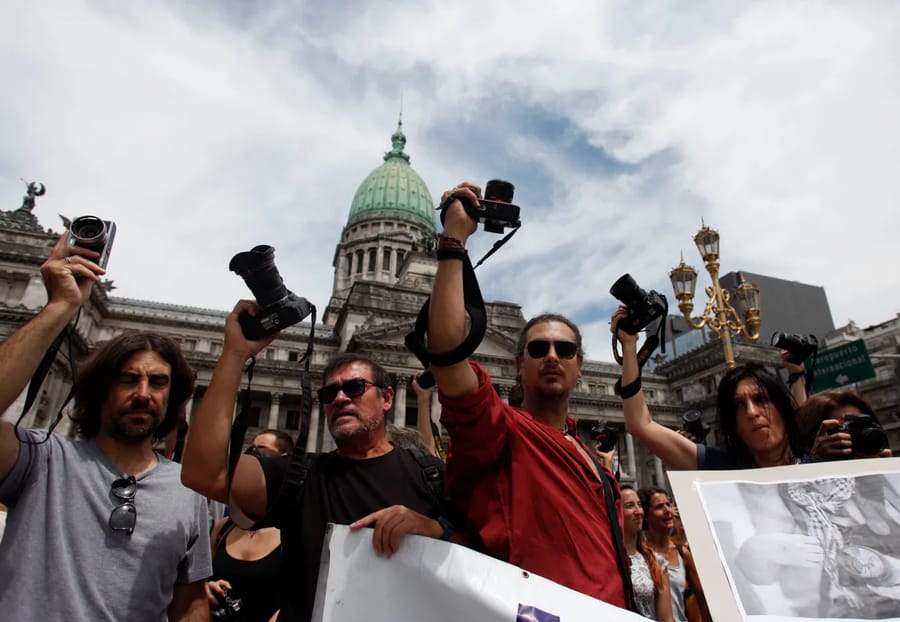
There is a reason authoritarian power so often develops a troubled relationship with journalism. Journalism occupies the boundary between what power wishes to reveal and what society has a right to know. Its purpose is not to make governments comfortable, nor should its legitimacy depend upon the approval of those it investigates. At its best, journalism verifies official claims, documents events, examines evidence and exposes contradictions. A government confident in its legitimacy responds with facts. A state governed by law brings genuine criminal accusations before legitimate judicial institutions. It does not answer a microphone with the vocabulary of missiles.
The most troubling aspect of the Islamic Republic’s latest language, therefore, is the doctrine implicit within the threat: that information may be treated as warfare and that those who communicate unwelcome information may consequently be stripped of their civilian identity. Democracies should reject that doctrine without qualification. Every threat that is normalized, every act of intimidation that produces silence and every rhetorical escalation that passes without consequence teaches authoritarian power something about how far it may go.
History offers ample warning about what happens when governments acquire the authority to rename inconvenient citizens and thereby redefine the moral limits of what may be done to them. The process rarely begins with the final act of violence. It begins with categories and accusations that gradually remove an individual from the protections attached to civilian life. The dissident becomes the traitor, the critic becomes the enemy, and eventually the journalist becomes the military target. That is why the language used on August 26 matters. It challenges the boundary separating political criticism from armed conflict and civilian activity from warfare. Once that boundary disappears, freedom of the press is no longer merely being censored or intimidated. The journalist has become the battlefield.
And one final distinction should not be lost: Iran International has paid a very real price for directly challenging Tehran’s narrative, while other Persian-language outlets—including BBC Persian, Voice of America Persian, and even a widely discredited Los Angeles-based channel—have at times faced sharp criticism for coverage that echoes, legitimizes or gives disproportionate space to narratives favorable to the Islamic Republic. The distinction between journalism that confronts authoritarian propaganda and journalism that risks amplifying it remains essential.