T
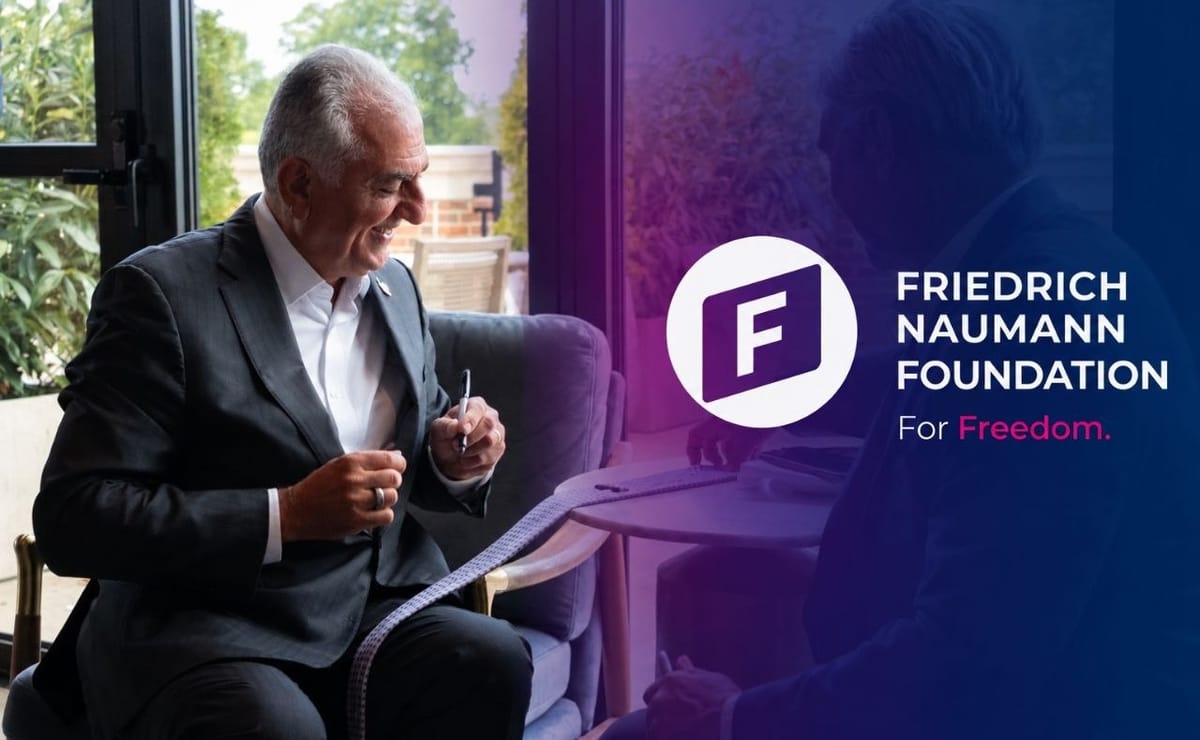
he Friedrich Naumann Foundation quite literally lifted the lid on the Iranian opposition’s sewer. This institution, dedicated to liberal democracy and individual freedom, inadvertently exposed, through a single announcement, the ideological resentments, historical hostilities, and political contradictions in which Iran’s fake and fraudulent opposition has been trapped for nearly half a century. On September 14, 2026, the Foundation announced that it would award its Freedom Prize to the Iranian people on November 7 at St. Paul’s Church in Frankfurt, with Crown Prince Reza Pahlavi receiving the honor on their behalf and in trust. This decision was made carefully and resulted in the designation of a specific, popular political representative.
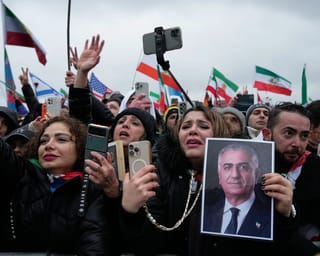
The Foundation explicitly honored the courage of Iranians resisting the barbaric regime of the Islamic Republic: women, students, workers, journalists, political prisoners, and families who have paid a price for freedom. Steffen Saebisch, Chairman of the Foundation, explained that the prize belongs to the Iranian nation and will ultimately be entrusted to its freely elected representatives. Even the blind, deaf, and grotesque world has seen millions of videos and photographs showing the Iranian people calling out the name of their one and only alternative: Crown Prince Reza Pahlavi. He is, in the literal sense of the word, the opposition, and he seeks regime change in Iran.
Nevertheless, this compassionate gesture was met with a petition reportedly signed by nearly 700 malicious, vindictive thugs and hooligans opposed to Reza Pahlavi’s involvement. The resulting controversy, rather than becoming a discussion about the meaning of freedom and democracy, turned into a confrontation over historical legitimacy, political identity, and the unresolved legacy of the terrorist upheaval of 1979—the year when a group of stateless wretches unleashed terrorism upon their own homeland and drove Iran into the abyss of destruction.
This reaction exposed a familiar weakness in the politics of the fraudulent opposition, which favors preserving the status quo: the temptation to substitute ideological hostility for political achievement. But the truth must be told: What have these 700 people accomplished during nearly 48 years of rule by the Shiite mullahs? What institutions have they built, and what credible programs have they offered for Iran’s democratic transition? Nothing! Some of the signatories are remnants of the terrorist left, former supporters of the Tudeh Party, republican factions, and other political circles still known primarily for their opposition to the Pahlavi name. They suffer from the disease of an obsessive anti-Pahlavi complex. An examination of all their records shows that they are fraudsters and hollow attention-seekers, eager to pose before cameras and photographs, with disgraceful histories. Yet this controversy raises a legitimate question about political accountability. A petition proves the existence of opposition, not the possession of national authority. Fundamentally, nobody in Iran knows them, and they are despised. Like the regime in Tehran, they are terrified of the Crown Prince’s international recognition and popularity at both the national and international levels. S
even hundred signatures—without democratic backing—can never represent millions of citizens. Fundamentally, these groups have neither standing nor a social base in Iran. The deeper question is whether political movements can demonstrate organizational capacity, public accountability, and a coherent vision for governance instead of relying on historical reputations, ideological labels, or opposition to a rival political figure.
The roots of this conflict and incurable disease go back to 1979, when Marxists, Islamists, nationalists, liberals, and other terrorist forces, despite profound disagreements over the political order that should replace the existing one, opposed the Iranian monarchy, law and order, and Iran’s history. Their handiwork became a state sponsor of terrorism and the ultimate consolidation of religious despotism and the Islamic Caliphate of the Shiite mullahs—a sinister coalition that opened the gates of evil upon Iran. Some participants in Khomeini’s terrorist upheaval later collaborated in the mullahs’ crimes in Iran, while patriots were imprisoned, executed, or exiled. These distinctions are historically fundamental, and responsibility cannot be lifted from their shoulders.
Nevertheless, that savage upheaval remains at the center of today’s political rivalries. For certain republican, Marxist-left, and Islamic-left factions (the regime’s reformists), opposition to the Iranian monarchy—which believes in freedom, democracy, and culture—is fashionable, while they themselves possess no fundamental democratic convictions. For many Pahlavi supporters and patriots inside and outside Iran, numbering in the millions, the destruction of the previous state by Islamic and Marxist terrorists symbolizes the beginning of Iran’s national catastrophe.
But the difficulty arises when each of these interpretations becomes an exclusive claim to legitimacy. Political philosophy distinguishes between historical memory, which can preserve moral responsibility, and remaining trapped in history, which holds political judgment captive. A movement that defines itself primarily through its enemies of the past may preserve its identity, but it may lose its ability to respond to the necessities of the present.
The reaction of Iranian society and its informed younger generation to the petition demonstrated just how deep and enduring these divisions are, and that these thugs and hooligans will not stop destroying Iran until the day they die. The signatories’ political achievements have no connection whatsoever to Iranian society, and their claimed authority to challenge the Foundation’s decision is fundamentally hollow—a display of self-promotion intended to please the bankrupt government in Tehran. This revolutionary coalition of leftist and Islamist forces, together with separatist and terrorist elements, means that this gang of villains refuses to accept the consequences of its historical choices.
These individuals, supposedly belonging to or associated with republican organizations, know only one thing: aligning themselves with the regime by launching anti-Pahlavi campaigns. Otherwise, they have nothing to say to Iranian society. Repeated surnames, family clusters, and duplicate signatures made this petition ridiculous; even a shared surname proves fraudulent participation. Nevertheless, the intensity of these reactions points to a hidden crisis of trust. These fraudulent opposition organizations have no transparent structures, identifiable social bases, practical political programs, or record of effective action. They have created no democratic credibility and are themselves part of the problem obstructing regime change.
The Foundation’s announcement neither transferred Iran’s sovereignty to Crown Prince Reza Pahlavi, nor recognized him as head of state following a vote at the ballot box, nor determined whether Iran should become a republic or a constitutional monarchy. The Foundation simply selected the only prominent figure and genuine opposition leader to receive a symbolic prize in trust. His international recognition, his opposition to the rule of oppression and terror in Iran, his publicly stated acceptance of the democratic process, and his calls for reconciliation with neighboring countries, including Israel, are undeniable. He is the only person who, at the international level, has moved the question of popular representation toward a solution.
For him, the democratic principle is what matters, and he is a genuine believer in human rights and the ballot box for Iranian citizens. The irony of this controversy is that a prize intended to honor popular sovereignty became a pointless struggle over who could legitimately symbolize it. A mature opposition distinguishes between appreciation and recognition, representation and constitutional authority, rather than treating these concepts as interchangeable. But Iranians have no one other than Crown Prince Reza Pahlavi.
This troubling controversy must be measured against the practical challenges of political transition. Iran’s future will not be secured merely by resolving a dispute over a ceremonial prize. Any successor government will have to confront the reconstruction of security institutions, civilian oversight of the armed forces, the political and economic influence of the Islamic Revolutionary Guard Corps, judicial independence, accountability for state violence, economic reconstruction, and the protection of ethnic, religious, and political minorities. Credible mechanisms for dialogue, constitutional drafting, and competitive elections will also be necessary, together with safeguards against the reproduction of authoritarianism. These matters require preparation, not slogans, insults, and the abusive language of a gang of villains.
Moreover, they require cooperation among political forces. The mushroom-like movements of the Iranian opposition are corrupt, exhibitionist, and mafia-like, and they would rather see the regime remain in power for another half-century than allow the Pahlavi name to be mentioned. They have no practical proposals for Iran’s future; they want only a share of power and wealth. They have no institutions and no capacity to mobilize supporters. These political organizations, admirers of Khomeini, the Soviet Union, and Yasser Arafat, and enemies of America and Israel, have no distinguished record and still lack an adequate strategy for transition. These shortcomings are not hidden from the Iranian people.
On the other side stand the Iranian people, resisting tyranny—people whose suffering gives the Freedom Prize its moral meaning. The Foundation spoke of citizens who have risked imprisonment, persecution, and death while demanding fundamental freedoms. Their struggle includes women protesting compulsory laws, students demanding freedom of thought, workers seeking dignity, journalists confronting threats and intimidation, and grieving families of those killed under authoritarian rule. And this nation called out the name of a savior, Crown Prince Pahlavi—not the signatories of a petition, nor the supporters of a dead terrorist political leader such as that of the Mojahedin-e Khalq. Through the politics of petitions and the creation of doubt and fear, they cannot hijack international institutions or impose their worthless opinions.
Pahlavi’s moral legitimacy arises from his defense of human rights and democracy, and from the Pahlavi brand he carries on his chest, with its century-long historical legacy. His political legitimacy originates in the freely expressed will of a people oppressed by religious despotism. The objective of political transition is also to achieve democracy, the rule of law, and meritocracy.
This controversy also exposes a common structural problem among opposition movements operating in exile. They do not possess the same power and capacity as Pahlavi in international access, media attention, academic networks, and relationships with foreign institutions. They merely wish to be seen and to obtain money or considerable fame without proving that they represent anyone inside Iran. In contrast to this army of lowlifes, Crown Prince Pahlavi has placed his international recognition, genuine political experience, and social influence at the service of saving the Iranian nation. The issue is the lives of a nation and the salvation of a country, not competition over symbols, ceremonies, invitations, prizes, and public recognition.
Under these critical circumstances, petitions are a display of delusion—a fantasy of national leadership existing only in the imagination. None of these is a credible substitute for democratic participation. Therefore, the controversy surrounding the Friedrich Naumann Foundation requires a substantive argument; and if the hollow claims of these 700 people were democratically verified, it would seem that we should thank the Friedrich Naumann Foundation for lifting the lid on the Iranian opposition’s sewer, allowing its stench to spread everywhere—and a solution must be found.
Forty-eight years after the establishment of the Islamic Republic, Iran’s theatrical and hollow opposition remains entangled in the unresolved relationship between memory, legitimacy, and power. The controversy surrounding the Freedom Prize has exposed these tensions in an unprecedented way.
By signing the petition, its signatories effectively put their political records, motivations, and claims to representation on display—and they have nothing to offer but vindictiveness, savagery, delusion, and hostility that prolong the regime’s existence. The Iranian people need a political future and hope with which to rebuild that future. The Foundation, too, sought to honor precisely this aspiration. Whether this controversy becomes yet another stage for factional hostility or an opportunity for serious political reflection, this opposition is not only unwilling to leave the stage and confront criticism of its hollow history, filled with crime and betrayal, but remains imprisoned by delusion. A collection of signatures cannot create national legitimacy, and no historical resentment can determine a country’s constitutional destiny. The ultimate measure of Iran’s political future will be whether Iranians themselves gain the freedom to choose, criticize, and replace those who govern them.
Fortunately, the Friedrich Naumann Foundation understands that these 700 self-appointed political stooges—an assortment of failed Marxists, remnants of the 1979 revolutionary coalition, ideological opportunists, and bitter anti-Pahlavi factions—have spent nearly half a century producing no credible leadership, no democratic mandate, no meaningful political achievements, and no viable alternative for Iran, offering instead little more than historical resentment, political delusion, and obsessive hostility toward Crown Prince Reza Pahlavi, while claiming to speak for a nation that never elected them to represent it.
Five thousand activists inside Iran have declared that the signatories of the petition protesting the awarding of the Iranian nation’s Courage Award to Reza Shah II Pahlavi not only do not represent Iranians, but are also part of the apparatus of repression and propaganda of the criminal Islamic Republic regime against the Iranian people. These petition signatories, acting in concert with the crimes of the Islamic Republic, are attempting to present bloodthirsty human-rights profiteers such as Narges Mohammadi and Nasrin Sotoudeh as representatives of the Iranian nation instead of its true representative, Crown Prince Reza Pahlavi. We hereby declare that these individuals do not represent Iranians and that all of them are accomplices in the massacre of Iran’s courageous and freedom-loving people by the Islamic Republic.
These 700 despicable individuals consider themselves opponents of the Islamic Republic and supporters of human rights. The height of this group’s depravity is that they believe the Iranian people are immature and chant the Crown Prince’s name out of ignorance. The letter written by this group is a document of betrayal against the Iranian people and all the young people who sacrificed their lives in the month of Dey while chanting slogans in support of Crown Prince Reza Pahlavi.