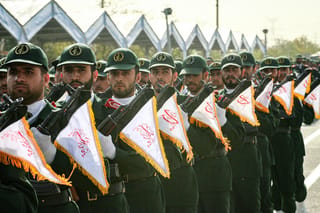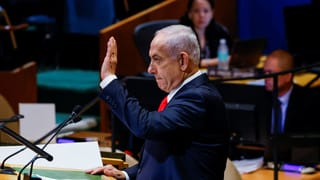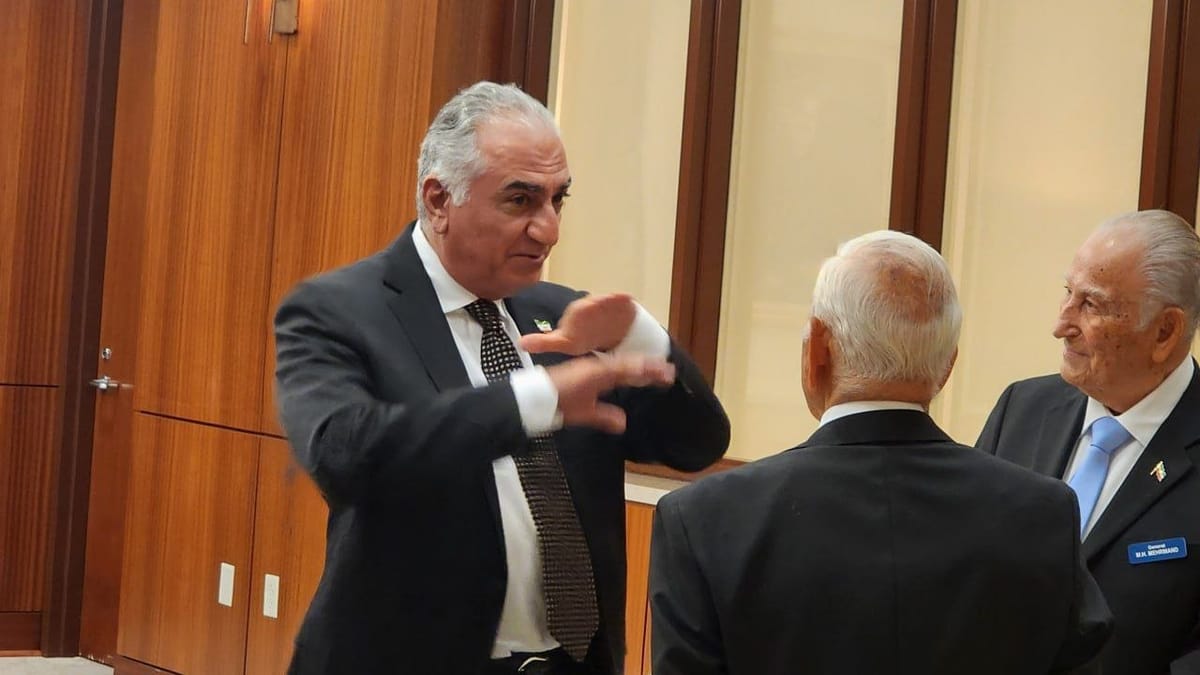
The American perception of monarchy and kingship is profoundly different from that of the Middle East. The United States separated itself from the British monarchy with the issuance of the Declaration of Independence on July 4, 1776, and that separation was formally established with the signing of the Treaty of Paris in 1783. In American political culture, the king is associated with opposition to democracy. Yet this deeply negative perception is fundamentally different from the historical reality of countries such as Iran, as well as from the experience of Europe.
In 1979, virtually the entire American media establishment lined up to praise a dictator like Khomeini while condemning the West’s friend, America’s loyal ally, and Iran’s late patriotic monarch, Mohammad Reza Pahlavi. Neither the American media—much of which was influenced by Islamist and Marxist terrorists—nor Washington’s political figures—many of whom were in contact with Khomeini’s entourage and with terrorist organizations and groups connected to the KGB and the Soviet Union—had any meaningful understanding of Iranian culture or the Iranian tradition of kingship. They did not understand how much legitimacy and value the Pahlavi legacy possessed throughout Iran.
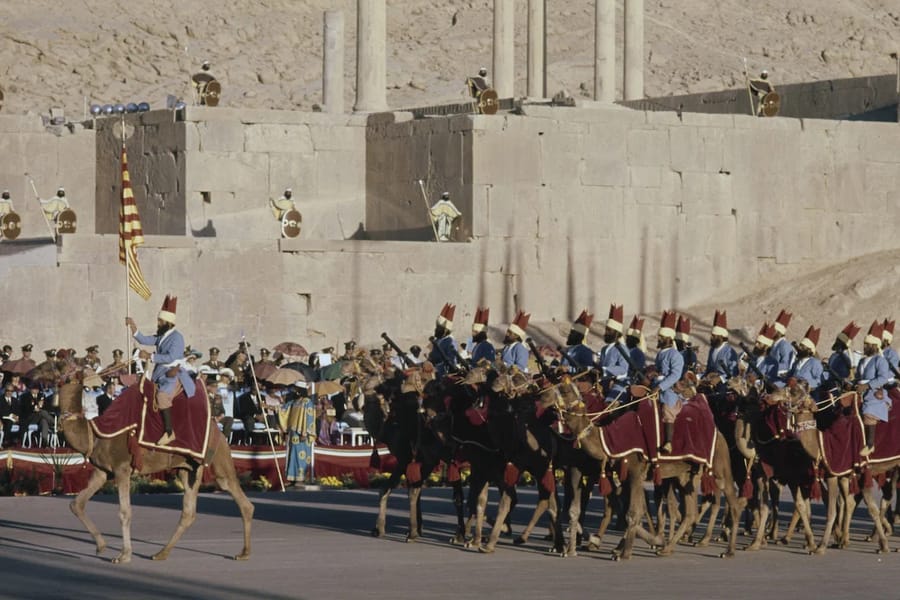
From the day Reza Shah the Great became king in 1905, following the removal of the Qajar dynasty by the Constituent Assembly and the formal establishment of the Pahlavi dynasty, until January 1979—a period of approximately 53 years—neither the American media nor American political figures made a serious effort to understand the meaning of Iranian kingship, Iran’s ancient culture and civilization, or the monarchy’s cultural relationship with Iranian society. Iran’s beloved and patriotic king hosted the celebration of the 2,500th anniversary of the founding of the Persian Empire by Cyrus the Great from October 12 to 16, 1971. From the United States, Vice President Spiro Agnew attended the celebrations as the representative of Richard Nixon, a close friend of the Shah. Regrettably, the American media produced almost nothing about this ancient history beyond pointless criticism and the repetition of arguments advanced by Marxist-Leninist leftists, radical Islamists, and Khomeinists.
Nearly half a century later, American media and American political figures, Republican and Democrat alike, still seem unable to explain why, in a stadium filled with 100,000 people, despite decades of regime propaganda against the monarchy and the patriotic Pahlavi kings, the name of Reza Shah still shines and people still chant “Javid Shah”—“Long Live the King.” The very root and meaning of the word “Shah” in Iranian literature is associated with purity, truthfulness, and righteousness. Does anyone have a problem with the endurance of truth and righteousness? Why does no one ask why, when the entire propaganda machinery of the Shiite mullah regime, the thugs and hooligans of the Islamic Left—the so-called reformists—and the Marxist Left has been relentlessly anti-Pahlavi and anti-monarchy, Pahlavi nevertheless remains the most popular and credible political figure and political brand in Iran?
The historical reality is that Iranian culture, literature, and history are extraordinarily rich, belonging to one of the world’s oldest civilizations, with a history stretching back thousands of years. For the world, perhaps the likes of Khayyam, Saadi, Hafez, Rumi, Ferdowsi, or the thought of Zoroaster are nearly without parallel. Iranian mothers and grandmothers still tell their children and grandchildren stories of kings and kingdoms: how the king of Iran went to war against the kings of Greece and ancient Rome and defeated them; how Nader Shah the Great marched into India and returned with diamonds and was greater than Napoleon; or stories of Cyrus, Darius, and countless others. Iranian literature is interwoven with these stories. Hafez asks: “This land was the city of friends and the soil of the kindhearted. What became of kindness? What became of the kings?” This was among the poetry sung in concerts only a year or two after 1979, when the war with Iraq began. Its meaning was unmistakable: Iranian culture, Iranian society, and the entire country had lost a pillar, a father, and a guardian, while Iran had descended into the darkness, terror, misery, poverty, and disorder of religious despotism.
It must therefore be said plainly that the foundation of Iranian monarchy represents the unity of Iran’s ethnic communities, the endurance of law, the guardianship of the country, the protective umbrella over its culture, and the embodiment of Iranian civilization. The Shah is the guardian of the law and the coordinator of the country. In Iranian literature, culture, civilization, and history, no one speaks of a Supreme Leader or a president. Since 1979, each of those figures has been more corrupt, more notorious, more savage, more deceitful, and more disastrous than the one before him—a catastrophe in the fullest meaning of the word. It must be stated very clearly that the republic is alien to Iranian culture. And it is shameful that no one seems to have such objections to the world’s most important democratic monarchies—including the United Kingdom, Japan, Sweden, Norway, Denmark, the Netherlands, Belgium, Spain, Luxembourg, Australia, and Canada (the latter two as Commonwealth realms represented domestically by governors-general)—yet some insist on prescribing abstract, imaginary, and philosophical formulas for Iran and Iranians.
It must also be said frankly and truthfully that Americans have little knowledge, understanding, or comprehension of the history of Iranian kingship. Even today, American students are taught in school about the negative aspects of monarchy in U.S. history and may unconsciously generalize that perception to monarchies everywhere. This creates a one-sided cultural lens that fails to provide a complete picture of the broader historical reality.
Their view has almost always been negative. Yet, ironically, some politicians in the Trump administration have recently begun to recognize and gradually accept that perhaps the best form of government for Iran is a monarchy, comparable in some respects to Saudi Arabia and Dubai, where MBS and MBZ govern their countries effectively. There is, therefore, something in the shifting sands of the Middle East that differs from Western standards, and the existence of a monarch can contribute to a country’s growth, progress, and development.
One can only hope that the White House will gradually recognize this point and this historical reality: with the present scale of poverty, shortages, public dissatisfaction, militarization, and the suffocating security atmosphere, Iran is witnessing the beginning of the end of the Shiite mullah regime and its Islamic caliphate. Iran’s problems have become so enormous that any one of them could provide the spark.
Soon, protests may erupt across the country against a ruling establishment that occupies, represses, plunders, and destroys Iran. This time, no one may be able to contain the fire of the Iranian nation’s anger and desire for retribution. And perhaps the only person capable of saving Iran from civil war and a bloodbath is Crown Prince Reza Pahlavi, under whose leadership Iran could witness a bloodless transitional period after the collapse of the regime and before the ballot box.
The evidence suggests that the regime has entered its final months. This savage regime is taking its last breaths and cannot overcome the magnitude of these crises. Being killed, arrested, executed, shut down, closed, dismissed, disillusioned, driven to suicide, blinded—and the list goes on—alongside the absence of electricity, water, gas, internet access, and fuel, combined with soaring prices, poverty, and rage: these are not merely news headlines. They are a summary of the daily lives of the Iranian people.
The train of Iranian civilization and history was driven toward the bottom of the abyss of destruction in 1979. Yet there is still “a small spark” alive. Once again, as Iranian youth declared in January 2026: “This is the final battle, and Pahlavi will return.” One can only hope that the White House, rather than indulging once again in the temptation of losing another diplomatic gamble with the savage mullahs and accepting the humiliation and indelible stain that would follow, will stand behind the Iranian people and, as Israel has done, meet with the true representative of the Iranian nation and the genuine face of the opposition—Crown Prince Reza Pahlavi. In doing so, they may help bring history back to life.