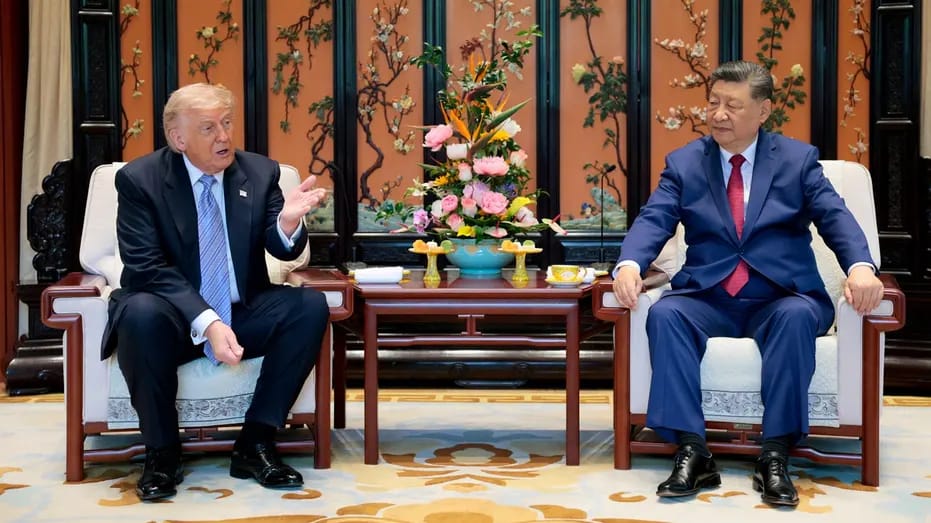
President Donald Trump secured an order for 200 Boeing jets from China during his final meeting with Chinese President Xi Jinping at the Zhongnanhai compound in Beijing, marking a concrete win in the administration's yearslong trade battle with the communist nation.
Trump declared victory after the bilateral summit, telling reporters the visit produced tangible results despite the ongoing tariff war between the world's two largest economies.
This has been an incredible visit. I think a lot of good has come of it, and we've made some fantastic trade deals. Great for both countries.
The Boeing aircraft order represents a direct benefit to American manufacturing and jobs, addressing one of Trump's core campaign promises to level the playing field with China. The deal comes as the president continues to deploy aggressive tariff policies, including the "Liberation Day" tariffs rolled out in April 2025, designed to generate leverage in trade negotiations while creating new revenue streams.
High-Level Delegation Attends Beijing Talks
The meeting featured Trump's top economic and security team, including Treasury Secretary Scott Bessent, Secretary of State Marco Rubio, Defense Secretary Pete Hegseth, U.S. Trade Representative Jamieson Greer, and U.S. Ambassador to China David Perdue. The presence of both economic and military officials underscored the broad scope of U.S.-China relations under discussion.
American business leaders who traveled with Trump to Beijing held separate meetings with Chinese Premier Li Qiang on Thursday to discuss expanded economic cooperation. During a Thursday evening interview with Fox News' Sean Hannity, Trump revealed China expressed interest in investing "hundreds of billions of dollars" alongside these visiting American executives.
The Chinese government signaled reciprocal interest in deepening economic ties, despite ongoing tensions over trade imbalances and national security concerns. China's Ministry of Foreign Affairs released a statement emphasizing both nations should "meet each other halfway" and "safeguard bilateral economic and trade relations."
China is willing to work with the United States to implement the important consensus reached by the two heads of state, strive for more positive outcomes, achieve mutual success and promote common prosperity, and better benefit the people of both countries and the world.
America First Strategy Shows Results
The Boeing deal validates Trump's "America First" trade strategy, which prioritizes holding trading partners accountable for persistent trade deficits that have cost American workers jobs and weakened domestic manufacturing. The president's approach of using tariffs as negotiating tools appears to be producing concrete results, despite ongoing national security concerns about Chinese investment in strategic sectors.
Trump emphasized that the visiting business leaders came to Beijing specifically "to make deals and to bring back jobs," directly linking the diplomatic engagement to measurable benefits for American workers. The focus on job creation and manufacturing orders addresses key concerns of voters in swing states where industrial employment remains a political priority.
The agreement also demonstrates how Trump's tariff policies have created space for negotiated wins, even as critics argue the duties increase costs for American consumers. The president has consistently argued that short-term economic pressure through tariffs is necessary to achieve long-term trade balance with China.
While the White House and Chinese Embassy in Washington have not provided additional details about other potential agreements reached during the summit, the Boeing order provides a concrete measure of success that Trump can point to as evidence his trade strategy is working. The meeting occurred against the backdrop of broader geopolitical tensions, including Xi's recent warnings about potential Taiwan conflicts and ongoing disputes over technology transfer and market access.
The success of the Boeing deal will likely influence Trump's approach to future trade negotiations with China and other trading partners, as the administration seeks to replicate this model of using economic leverage to secure concrete benefits for American industry and workers.