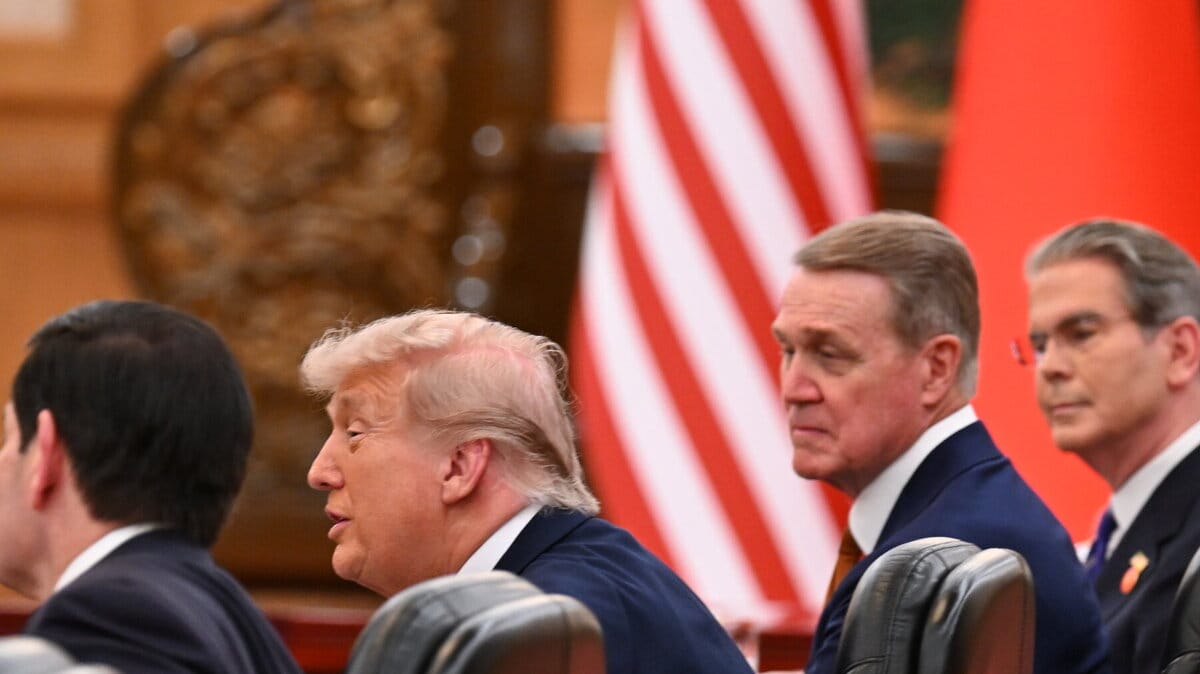
President Donald Trump is signaling potential openness to increased Chinese investment in the United States, setting up a collision with deep-seated national security concerns that have defined Washington's approach to Beijing for years. The shift comes as the administration seeks new economic partnerships while managing approximately $650 billion in annual trade with China.
The prospect of welcoming more Chinese capital comes as Trump seeks to rebuild economic relationships following his recent Beijing summit with President Xi that failed to ease broader trade tensions. But any move toward expanded Chinese investment would face fierce resistance from both parties in Congress and national security agencies that have spent the better part of a decade building walls against Chinese economic influence.
CFIUS Blocks Mount Under Both Parties
Intelligence officials and lawmakers have spent years warning about China's use of investment as a tool for espionage and influence operations. The Committee on Foreign Investment in the United States (CFIUS) has blocked dozens of Chinese acquisitions over the past decade, targeting everything from semiconductor companies to social media platforms.
Under the Trump administration alone, CFIUS has rejected at least 18 Chinese-backed deals worth more than $140 billion combined. The committee killed Ant Group's attempted $1.2 billion acquisition of MoneyGram in January 2018, citing national security risks. Earlier that year, CFIUS forced the unwinding of Beijing Kunlun Tech's ownership of dating app Grindr, arguing the platform's user data posed counterintelligence risks.
The national security establishment views Chinese investment through the lens of strategic competition, not just economic opportunity. Beijing's track record of using business relationships to advance military and intelligence objectives has made even routine transactions politically toxic in Washington. The Pentagon's 2023 annual report on Chinese military power documented how civilian investments routinely feed dual-use technologies back to China's People's Liberation Army.
Bipartisan Resistance Takes Root
Trump's openness to Chinese investment breaks with a bipartisan consensus that has hardened over two decades. The current restrictive approach traces back to 2005, when Chinese oil company CNOOC's attempted $18.5 billion takeover of Unocal triggered the first major congressional revolt against Chinese acquisitions. That deal collapsed under political pressure, establishing a template that has only grown more restrictive.
Congress expanded CFIUS authority through the Foreign Investment Risk Review Modernization Act in 2018, passing the Senate 87-10 and the House 400-2. The law lowered thresholds for review and gave CFIUS power to examine minority investments and joint ventures, not just controlling stakes. Since implementation, Chinese investment in the U.S. has dropped from $46 billion in 2016 to just $5.4 billion in 2023, according to Rhodium Group data.
Economic Reality Meets Political Risk
Trump faces a delicate balancing act as he manages multiple foreign policy challenges simultaneously. With Iran tensions consuming significant resources and defense spending under scrutiny, Chinese investment could provide economic benefits that appeal to business-minded Republicans who remember when Chinese capital flowed more freely into American markets.
Yet the political risks are enormous. Any appearance of being soft on China could energize Democratic opposition while alienating the GOP's increasingly hawkish base on national security issues. Members of both parties have made careers out of taking tough stances against Chinese economic influence. Senator Marco Rubio chairs the Intelligence Committee's subcommittee on Chinese threats, while House Democrats have pushed for even tighter investment screening.
The administration would need to navigate CFIUS review processes that have become increasingly restrictive under both Republican and Democratic leadership. Recent precedent suggests that even seemingly benign investments face intense scrutiny when Chinese entities are involved. Last year, CFIUS forced Chinese gaming company ByteDance to explore selling TikTok's U.S. operations, affecting 170 million American users.
What Comes Next
Watch for congressional reactions in the coming days as lawmakers gauge whether Trump's openness to Chinese investment represents a strategic shift or merely tactical positioning ahead of broader trade negotiations. The Senate Banking Committee, which oversees CFIUS, holds its next scheduled hearing on February 15. House Armed Services Committee Chairman Mike Rogers has already signaled plans for hearings on Chinese economic influence before the April recess.
The real test will come when the first major Chinese investment proposal reaches CFIUS under any new policy framework. That review process typically takes 75 days, meaning any deals announced this month would face decisions by late spring.