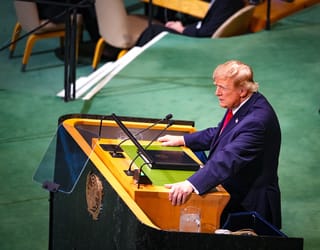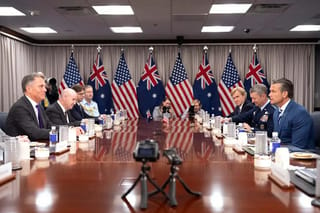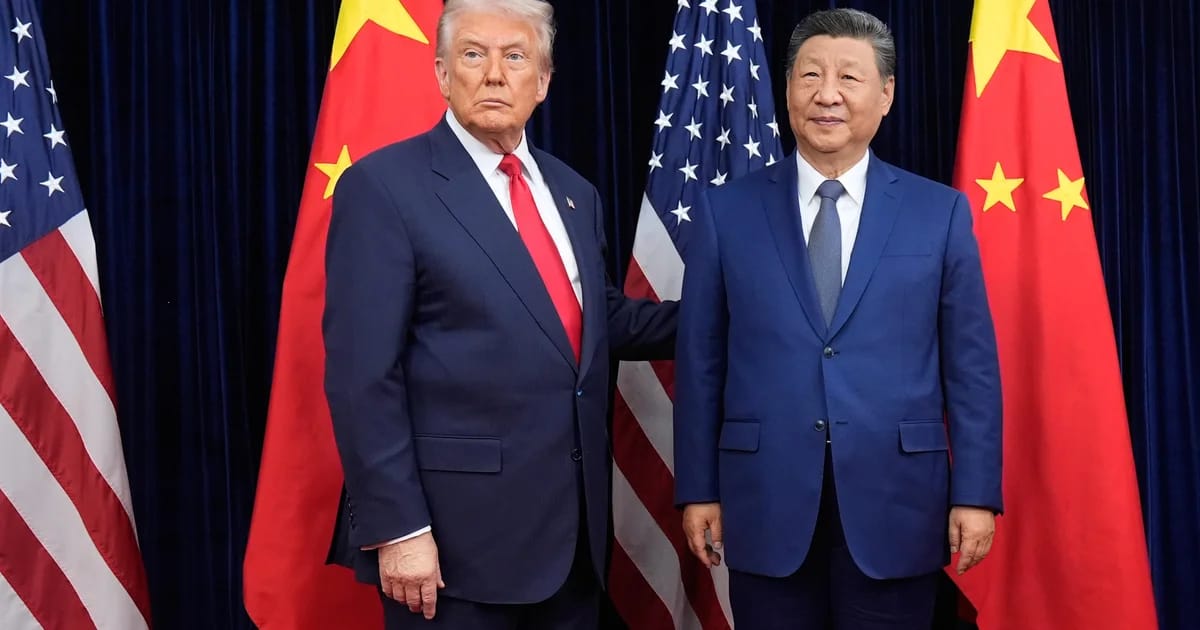
President Donald Trump will face intense pressure over Taiwan when he arrives in Beijing for his high-stakes summit with Chinese President Xi Jinping, with a $14 billion arms package to the island democracy hanging in the balance. The three-day summit, scheduled to begin Thursday at the Great Hall of the People, marks the first time a U.S. president has agreed to negotiate pending arms sales with Beijing.
Xi plans to make Taiwan his top priority during the Air Force One visit, pushing Trump to make diplomatic concessions no previous U.S. president has offered. Trump has already broken precedent by agreeing to discuss the pending arms sale with Xi — a move that violates former President Ronald Reagan's 1982 commitments to Taiwan. Those assurances, formalized in the Third Joint Communiqué, promised Taiwan that arms sales would not become bargaining chips with Beijing.
China Seeks Language Changes on Taiwan Policy
China wants Trump to alter decades of U.S. policy by changing official language from saying America "does not support" Taiwan independence to stating the U.S. "opposes" it. The proposed shift would represent the most dramatic change to the "One China" policy since President Jimmy Carter established diplomatic relations with Beijing in 1979. While the adjustment sounds semantic, diplomatic experts warn the language change could have major consequences for Taiwan's 23 million inhabitants.
Beijing's negotiating position was strengthened last month when the Pentagon confirmed delays in previous arms deliveries to Taiwan. The $11 billion package approved in September — which included 400 Harpoon anti-ship missiles and 60 HIMARS rocket systems — has faced production bottlenecks. Taiwan officials privately expressed frustration that only 30% of previous orders have been delivered on schedule.
Summit Comes as Regional Tensions Mount
The pressure comes as Trump heads to Beijing weakened by ongoing Middle East conflicts that have stretched U.S. military resources. The Pentagon currently maintains two carrier strike groups in the Middle East, reducing Pacific fleet strength that typically serves as a deterrent to Chinese action against Taiwan.
This summit represents a test of Trump's transactional diplomacy against decades of bipartisan U.S. policy supporting Taiwan. Since 1979, Washington has maintained "strategic ambiguity" about military intervention while providing defensive weapons. The arrangement has survived six presidents from both parties, but Trump's willingness to treat Taiwan policy as negotiable marks a departure from four decades of consistency.
Taiwan Official Expresses Confidence Despite Pressure
Taiwan's deputy foreign minister Chen Ming-chi told CBS News Monday he remains confident in American support despite Trump's unprecedented willingness to negotiate arms sales with China. Chen spoke from Taipei following emergency consultations with President Tsai Ing-wen's national security team.
The U.S. can count on us as much as we can count on the U.S. Do we believe in the U.S. commitment? Yes. They are our reliable partner. Probably the most reliable partner.
Taiwan's strategic importance extends beyond geopolitics. The island produces 90% of the world's high-end semiconductors used for AI and defense technology, making it critical to American economic and national security interests. Taiwan Semiconductor Manufacturing Company alone accounts for 54% of global chip production, with major facilities in Hsinchu and Tainan that supply Apple, Nvidia, and defense contractors.
Xi Escalates Reunification Timeline
Xi has declared Taiwan's reunification with mainland China "unstoppable" and hasn't ruled out taking the island by force. China has proposed extending its "one party, two systems" model from Hong Kong to Taiwan, though polling shows less than 2% of Taiwanese support that approach. U.S. intelligence previously assessed that Xi wanted his military prepared for Taiwan action by 2027, though recent reports suggest that timeline may have shifted to 2025 following accelerated military modernization.
The Beijing summit will test whether Trump's dealmaking approach can defuse tensions or emboldens Chinese aggression in the Taiwan Strait — a waterway critical to global trade and American strategic interests in the Pacific. Congressional leaders from both parties plan to monitor the talks closely, with House Speaker Mike Johnson scheduling hearings for next week if Trump makes concessions on Taiwan policy.