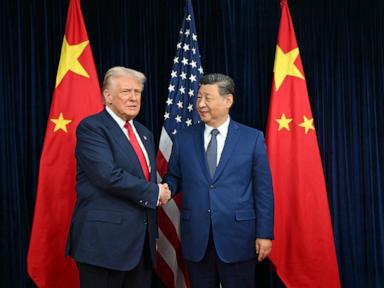
President Donald Trump will arrive in Beijing next Thursday as the first U.S. president to visit China in nearly a decade, but he comes from a position of unexpected weakness as the Iran war drags into its third month with no end in sight.
The high-stakes meeting was originally scheduled for spring but postponed because of the Iran conflict. Trump predicted the war would last four to six weeks. Instead, the Strait of Hormuz remains closed, U.S. gas prices are surging, and the president faces record-low approval ratings.
War Shifts Power Dynamic
That backdrop has flipped the leverage dynamic between Washington and Beijing, according to regional experts. While China would have preferred the war never started—the energy disruption and hit to global demand create real headaches for an export-dependent economy—the conflict has handed Xi Jinping a relative advantage.
China is a relative bright spot in Trump's foreign policy right now.
Czin argued the longer the Iran war continues, the more it reduces chances of another economic confrontation with China. Beijing has already demonstrated it can retaliate—as it did with tariffs and rare earth export controls—and the administration backed down before.
Both sides continue maneuvering for advantage in the run-up. The Treasury Department recently sanctioned Chinese oil refiners and shipping firms tied to Iranian crude to cut off funding. In an unprecedented response, Beijing invoked a "blocking rule" for the first time, directing Chinese companies not to comply with sanctions on Chinese oil refiners.
Military Posture Weakened
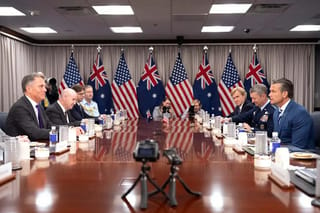
The war has also reduced U.S. military posture in the Indo-Pacific with long-term consequences for deterring China and defending Taiwan, according to Daniel Shapiro, a former deputy assistant secretary of defense for the Middle East.
"Trump's position and leverage at the summit is considerably weaker if he goes to Beijing with the war still unsettled, or even with renewed escalation. And the Iranians know that. So they are whittling down the terms to end the war to something much more modest than what Trump originally envisioned," Shapiro wrote on X.
The administration clearly wants Beijing to use its influence over Tehran. Secretary of State Marco Rubio this week urged Beijing to leverage Iran's foreign minister's visit to China to push for de-escalation.
The meeting marks Trump's return to Beijing since his 2017 visit as president, but the circumstances couldn't be more different. Then, Trump arrived from a position of economic strength. Now, China views the U.S. as distracted by multiple crises and constrained by ongoing military commitments.
Watch for whether Trump can secure Chinese cooperation on Iran or if Xi extracts concessions on trade and Taiwan in exchange for any help ending the conflict that has dominated Trump's second term.