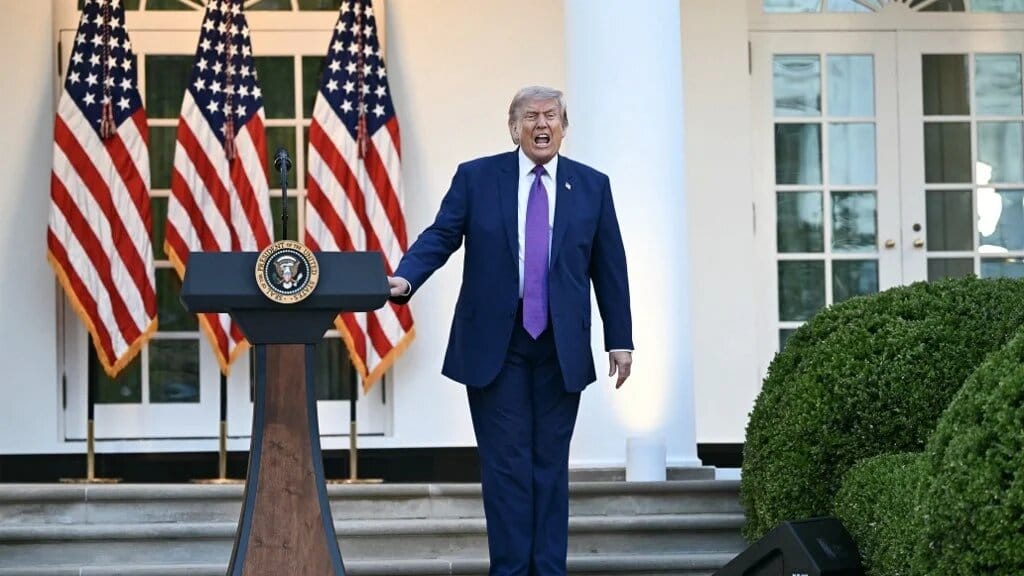
President Donald Trump accused Kurdish forces of being freeloaders who "take, take, take" during White House remarks Monday, expressing frustration over their refusal to fight Iranian government forces despite alleged CIA weapons deliveries.
Trump's criticism comes amid conflicting reports about whether the US armed Kurdish opposition groups during the US-Israeli military campaign against Iran that began in late February. Kurdish leaders have flatly denied receiving American weaponry to use against the Islamic Republic.
The Kurds take, take, take. They have a great reputation in Congress. Congress says they fight hard. They fight hard when they get paid.
Mixed Messages on Kurdish Role
The President's remarks highlight the administration's confused messaging on Kurdish involvement in the Iran conflict. In early March, days after launching the war, Trump told Reuters he would back Kurdish forces attacking Iran. But he later reversed course, telling reporters: "They're willing to go in, but I've told them I don't want them to go in."
The contradictory statements surprised leaders of Iranian Kurdish parties, who command approximately 6,000 armed fighters based in northern Iraq but stayed out of the US-Israeli operations. Mustafa Mawloudi, deputy secretary-general of the Kurdistan Democratic Party of Iran, told Middle East Eye his group never received weapons for "our people in Rojhalat [Iranian Kurdistan]."
"A proof of this is that we cannot send arms through Iraq to our people," Mawloudi said, citing legal complications that would arise from such transfers.
Intelligence sources familiar with CIA operations in the region dispute claims that weapons were delivered to Kurdish groups during the February-March timeframe. Three sources told Insider Wire that while the agency maintains contacts with Kurdish opposition leaders, no arms shipments were authorized for anti-Iran operations during the current conflict.
Historical Pattern of Kurdish Reliance
Trump's comments reflect a broader tension that has defined US-Kurdish relations for decades. Kurdish forces served as key allies in the 2003 Iraq invasion, the fight against ISIS from 2014-2019, and operations against al-Qaeda dating back to 2001. In each case, Kurdish groups received substantial US military aid and training worth billions of dollars.
The relationship soured after Trump's October 2019 decision to withdraw US forces from northern Syria, abandoning Kurdish allies to Turkish military assault. That decision prompted fierce congressional criticism and damaged trust between Washington and Kurdish leadership across the region.
Senator Lindsey Graham and House Foreign Affairs Committee Chairman Michael McCaul have repeatedly defended Kurdish contributions to US military objectives. Graham's office declined to comment on Trump's Monday remarks.
Iranian Retaliation Intensifies
Iran has responded to Kurdish opposition activities with overwhelming force. Since February 28, Iranian forces and proxies have launched nearly 700 missile and drone attacks targeting Iraqi Kurdistan, according to data from Kurdish outlet Rojhelat Info.
The Iranian strikes have killed at least 15 people, including six fighters from Iranian Kurdish opposition parties who were hit in approximately 170 targeted strikes. The campaign represents Tehran's effort to eliminate Kurdish opposition infrastructure outside its borders.
The Kurdish reluctance to engage stems partly from the aftermath of nationwide Iranian protests in late December, which lasted two weeks before being violently crushed by state forces during an internet blackout. Kurdish groups witnessed firsthand Iran's willingness to use extreme force against internal opposition.
Hengaw Organization for Human Rights documented 43 Kurdish civilians killed during the December crackdown, with hundreds more detained in provinces including West Azerbaijan and Kurdistan.
What's Next for US-Kurdish Relations
Trump's public criticism may complicate upcoming congressional testimony by Secretary of Defense Lloyd Austin scheduled for April 15, where lawmakers plan to question administration strategy toward Kurdish allies. House Armed Services Committee ranking member Adam Smith has requested a classified briefing on Kurdish cooperation by April 10.
The administration faces a May 1 deadline to submit its quarterly report to Congress on regional partnerships in the Iran conflict. Kurdish involvement will likely feature prominently in that assessment.
Trump's frustration reflects broader challenges in building a coalition against Iran, as ceasefire negotiations remain stalled. The President's public criticism of Kurdish forces may further complicate efforts to maintain regional allies as the conflict with Iran continues to escalate.