Israeli Prime Minister Benjamin Netanyahu revealed that President Donald Trump wants to "go in" to Iran to secure the country's stockpile of highly enriched uranium, as tensions escalate despite ongoing peace negotiations through Pakistani intermediaries.
In a Sunday interview with CBS's 60 Minutes, Netanyahu told correspondent Bill Whitaker that Israel's war with Iran will continue as long as Tehran maintains nuclear material that could be weaponized. When asked how the enriched uranium should be removed from Iran, Netanyahu said the best approach would be "to go in and you take it out" as part of an agreement.
Trump Backs Military Action
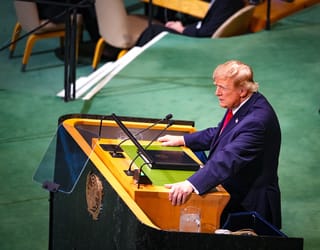
The Israeli leader disclosed that Trump had expressed direct support for entering Iran to secure the fissile material during recent discussions between the two leaders. "He wants to go in there," Netanyahu said, referring to the U.S. president's position on addressing Iran's nuclear capabilities through direct action rather than prolonged diplomatic efforts.
The revelation comes as the International Atomic Energy Agency reported in November that Iran's uranium stockpile has reached 6,200 kilograms of enriched uranium, with portions enriched to 60% purity – just steps away from the 90% threshold needed for weapons production. Intelligence estimates suggest Iran could produce enough weapons-grade material for multiple nuclear devices within two to three months if it chose to do so.
Pakistani Mediation Efforts Continue
The comments come as Iran responds to a U.S. peace proposal through Pakistani mediators. Iranian state media reported on January 12 that the response had been delivered through diplomatic channels in Islamabad, though no details were released. Pakistan's Foreign Ministry confirmed it forwarded Tehran's answer to Washington on the same day.
The U.S. peace proposal, presented on January 5 through Pakistani Ambassador Masood Khan, reportedly consists of a one-page, 14-point memorandum that would reopen the Strait of Hormuz while establishing a framework for further nuclear negotiations. The proposal includes provisions for suspending Iranian uranium enrichment above 20% in exchange for limited sanctions relief worth an estimated $10 billion.
Historical Context and Stakes
Netanyahu's hawkish stance reflects a decade-long Israeli strategy of pressuring Iran's nuclear program through military threats and international sanctions. Israel has conducted multiple covert operations against Iranian nuclear facilities since 2010, including cyber attacks on the Natanz enrichment facility and targeted assassinations of nuclear scientists.
The current crisis builds on the 2018 U.S. withdrawal from the Joint Comprehensive Plan of Action, which had limited Iran's nuclear activities in exchange for sanctions relief. Since that withdrawal, Iran has systematically breached the agreement's uranium stockpile and enrichment limits, bringing its program closer to weapons capability than at any point since 2003.
Ceasefire Shows Strain
Netanyahu's hawkish stance comes as the month-old ceasefire brokered through Qatari mediation shows signs of fraying. Drone strikes on January 10 targeted Iranian proxy positions in eastern Syria, while Tehran-backed militias launched rockets at the Al-Asad airbase in Iraq on January 11, injuring three U.S. personnel.
"It's not over, because there's still nuclear material – enriched uranium – that has to be taken out of Iran,"
Netanyahu explained to CBS.
"There are still enrichment sites that have to be dismantled."
The Israeli position puts additional pressure on American taxpayers and military resources, as any operation to secure Iranian nuclear facilities would likely require significant U.S. involvement. Pentagon assessments estimate such an operation would cost $25-40 billion and require deployment of 150,000 troops across multiple theaters.
What Comes Next
The next decision point arrives January 20 when Trump returns to office, with Iranian negotiators expecting a response to their counter-proposal within 72 hours of the inauguration. Secretary of State nominee Marco Rubio faces confirmation hearings January 15, where senators will likely press him on the administration's Iran strategy.
Intelligence sources indicate Iran has begun dispersing nuclear materials across 17 different sites, making any military solution exponentially more complex. The next phase of negotiations will test whether diplomatic channels can address Israeli security concerns without requiring the military intervention that both Netanyahu and Trump appear ready to support.