The latest Iranian missile and drone attacks against American military positions across the Middle East should not be understood simply as another round of retaliation.
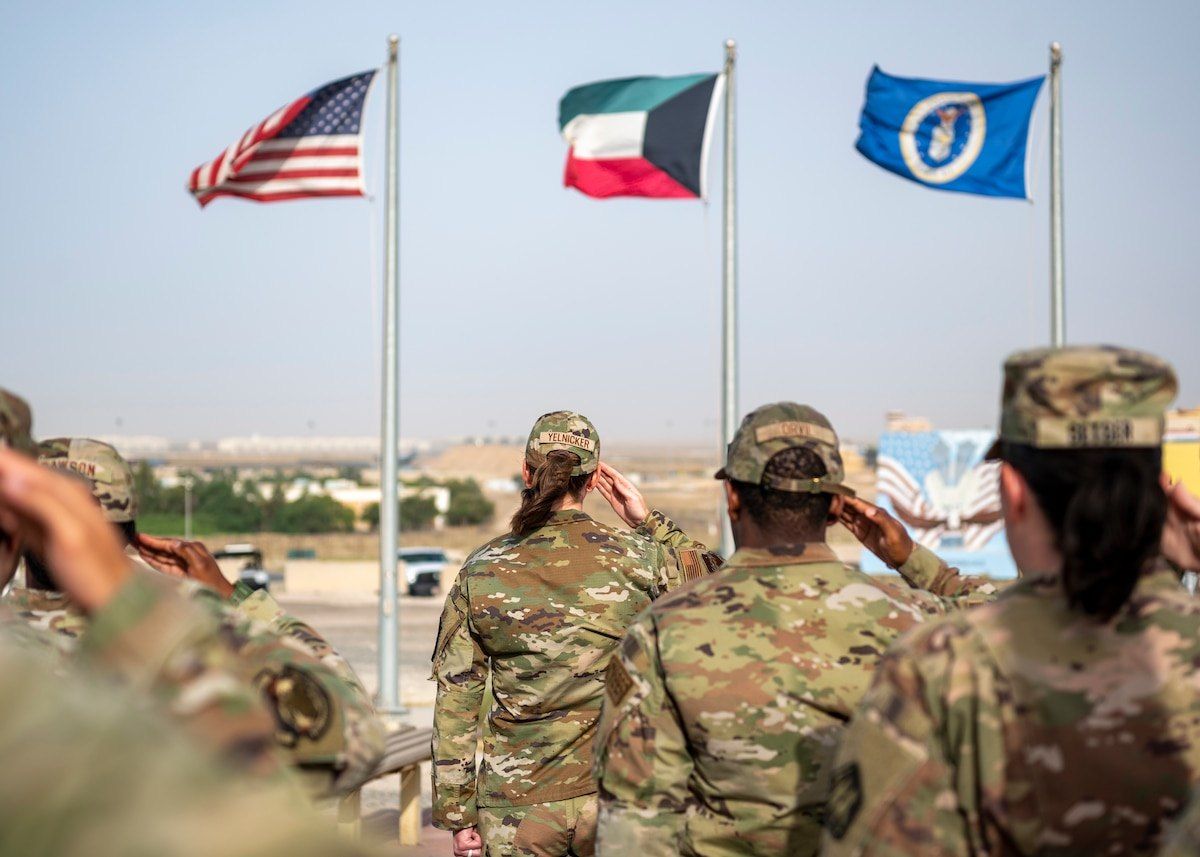
They represent something more consequential: an attempt by Tehran to redraw the geography of the conflict. Iran says it struck American assets in Kuwait, Bahrain, Jordan and Iraq, while Kuwait activated its air defenses against incoming missiles and drones and Bahrain reported intercepting Iranian drones. In Kuwait, Tehran specifically claimed to have targeted Ali Al Salem Air Base and facilities associated with the American presence there. U.S. officials, however, said preliminary assessments showed no American casualties, contradicting Iranian claims of U.S. deaths. What matters strategically is therefore not merely the immediate battle-damage assessment. It is that Iran has demonstrated a willingness to treat the network of American bases scattered across the Middle East as a single, interconnected battlespace.
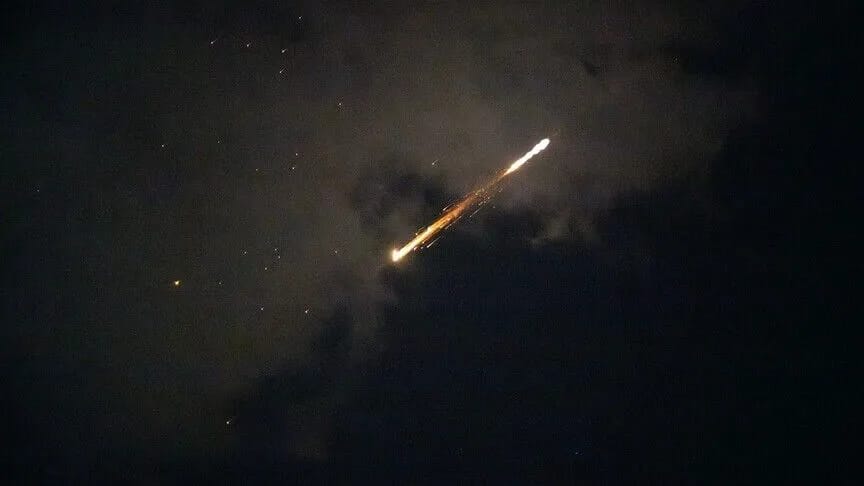
From the perspective of security studies, this is a classic case of horizontal escalation. Rather than escalating only vertically—using greater destructive force against the same opponent in the same theater—Iran is widening the geographical boundaries of confrontation. American military facilities in Kuwait, Bahrain, Jordan and Iraqi Kurdistan are no longer simply logistical infrastructure supporting operations elsewhere; Tehran is attempting to transform them into active fronts. The distinction is enormously important. Horizontal escalation complicates deterrence because every additional theater introduces another government, another air-defense system, another civilian population and another possibility of miscalculation. Jordan reported intercepting 10 of 13 Iranian ballistic missiles entering its airspace, while Kuwait and Bahrain similarly activated defenses against Iranian attacks. A confrontation once centered primarily on Iran and American forces is consequently acquiring the characteristics of a regional security crisis.
Iran’s strategic logic is nevertheless understandable. Tehran cannot easily match the United States symmetrically in conventional military power. American forces possess overwhelming advantages in airpower, intelligence, surveillance, reconnaissance, precision strike and maritime warfare. Iran therefore has incentives to impose costs asymmetrically by exploiting geography. The American military presence in the Middle East is powerful precisely because it is distributed across a network of bases and partnerships. But Tehran is attempting to convert that advantage into vulnerability. Its message is essentially that any territory supporting American military operations may become exposed to Iranian retaliation. The IRGC has explicitly urged regional governments to expel American forces and has portrayed U.S. military presence as a security liability for host countries. This is therefore not merely kinetic warfare. It is coercive diplomacy conducted through missiles and drones: Tehran wants Persian Gulf governments to conclude that cooperation with Washington carries an unacceptable price.
Yet this strategy contains a potentially devastating contradiction for the Islamic Republic. Iran wants to fracture America’s regional security architecture, but attacking the territory of America’s Arab partners may instead strengthen it. Kuwait does not need to accept Tehran’s argument that Iranian weapons are aimed only at Americans when Iranian missiles and drones are entering Kuwaiti airspace. Bahrain faces the same calculation. Qatar, which hosts the largest American air base in the Persian Gulf, has already said it holds Iran responsible for such attacks and their consequences. Every Iranian projectile crossing the sovereign territory of an Arab state makes Tehran—not Washington—the immediate military threat that these governments must defend against. Thus Iran risks producing precisely the strategic outcome it seeks to prevent: deeper intelligence sharing, greater air-defense integration and stronger dependence by Persian Gulf states on the American security umbrella.
The second danger concerns deterrence stability. Deterrence does not require peace; it requires both adversaries to understand the boundaries beyond which escalation becomes prohibitively costly. Those boundaries are becoming increasingly ambiguous. Washington has struck Iranian air defenses, radar systems, maritime assets, mine-laying capabilities, communications infrastructure and other military targets. Iran has answered by attacking American positions throughout the region. President Donald Trump has warned that Washington is prepared to strike Iran again, while Tehran has threatened broader and more destructive responses. Both sides may believe they are demonstrating resolve without seeking unlimited war. That is precisely what makes the situation dangerous. In deterrence theory, wars do not always expand because leaders consciously choose total escalation. They can expand because each side believes one additional strike will compel the other to retreat.
The crucial variable may therefore be casualties. So far, U.S. officials have disputed Iranian assertions that American personnel were killed in the latest attacks, saying preliminary assessments showed no casualties. That distinction is strategically significant. An intercepted missile and a missile killing dozens of American servicemen may be launched for the same political purpose, but they create radically different pressures on an American president. Iran may believe that calibrated attacks demonstrate capability while preserving space below the threshold of overwhelming American retaliation. But missiles and drones are imperfect instruments of calibration. Air defenses fail. Guidance systems malfunction. Debris falls on populated areas. Intelligence can be wrong. A single successful strike on American barracks—or a missile killing Kuwaiti or Bahraini civilians—could transform the political logic of the conflict within hours. The escalation ladder is therefore becoming increasingly dependent not on intention but on probability.
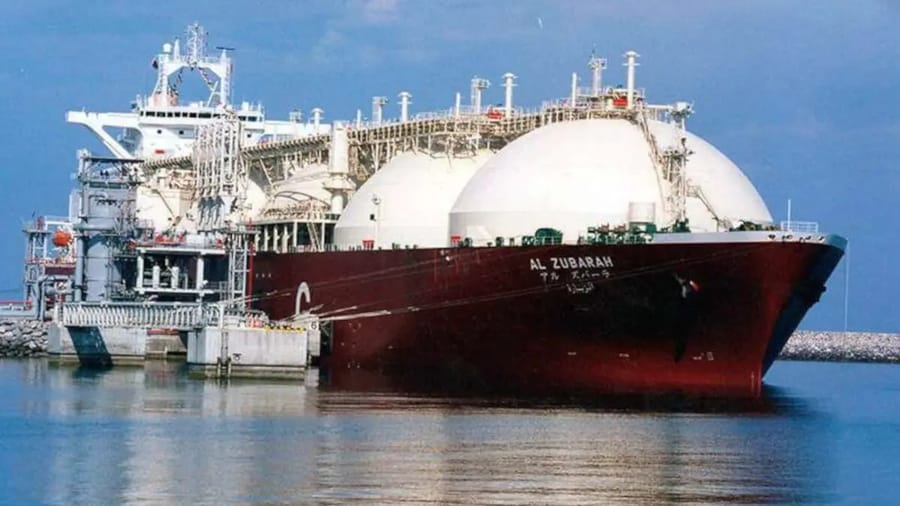
A third dimension makes the confrontation even more dangerous: the Strait of Hormuz. The military contest is no longer confined to land bases and airspace. American strikes have targeted Iranian maritime and mine-laying capabilities near the strait, while Iran has sought to demonstrate that it retains the capacity to threaten commercial shipping and impose costs on global energy markets. Before the war, roughly one-fifth of global oil and liquefied-natural-gas shipments moved through this narrow maritime corridor, according to Reuters. That means escalation around Hormuz transforms a regional military confrontation into an international economic-security crisis. Iran’s remaining leverage is not necessarily its ability to defeat the United States militarily; it is its capacity to increase the economic price of the war for actors far beyond the battlefield. Disrupted shipping, higher insurance costs, threatened tankers and rising energy prices allow Tehran to internationalize the consequences of its military weakness.
This creates what security scholars would recognize as a dangerous interaction between deterrence, compellence and desperation. The United States is trying to degrade Iranian military capabilities sufficiently to change Tehran’s behavior. Iran, unable to impose comparable conventional destruction on the United States itself, is attempting to demonstrate that continued American pressure will destabilize the broader region. Washington’s implicit message is: your military infrastructure can be systematically destroyed. Tehran’s counter-message is: the regional system supporting that campaign can be made unsafe. Neither message has yet compelled the other side to change course. Instead, both are generating incentives for another round of escalation. That is the central strategic failure of the current equilibrium: military action is imposing costs, but those costs are reinforcing resolve rather than producing accommodation.
The attack on Kuwait therefore matters far beyond Kuwait. It suggests that the center of gravity of this confrontation is shifting from a bilateral contest toward a struggle over the entire American security architecture in the Middle East. Tehran appears to believe that widening the battlefield can weaken Washington’s regional presence by frightening its partners. But the opposite outcome may be more likely. By firing missiles and drones toward countries that host American forces, the Islamic Republic risks converting governments that might otherwise prefer distance from the conflict into increasingly active security partners of the United States. The greatest danger, however, is that neither Tehran nor Washington may fully control what comes next. Once several countries, multiple military bases, ballistic missiles, drones, maritime chokepoints and global energy supplies become interconnected within the same escalation cycle, the margin for error collapses. Iran may believe it is expanding the battlefield to increase its leverage. In reality, it may be expanding the coalition, geography and military logic of the war against itself.
Ultimately, the deeper strategic problem is not a missile, a drone, or even a particular military installation, but the ideological architecture of Khomeinism itself—a revolutionary system that has functioned for decades as a malignant force in the Middle East. Until Washington develops a genuine strategic will to confront the question of regime change rather than endlessly managing the consequences of Tehran’s behavior, the region will remain hostage to an authoritarian regime whose armed networks combine ideological fanaticism with an apocalyptic worldview. The danger is therefore larger than another cycle of escalation: as long as Khomeinism survives as a governing ideology, the Middle East will continue paying the price for a regime that has repeatedly demonstrated its willingness to make the region darker, bloodier, and more unstable in pursuit of its revolutionary vision.