Regimes rarely collapse when foreign governments predict they will. They collapse when fear changes sides. That may be the most important political transformation underway in Iran.
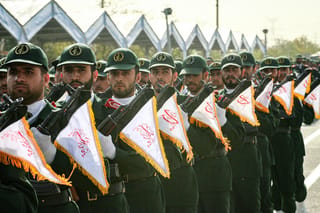
The Islamic Republic still possesses prisons, intelligence agencies, armed forces, propaganda machinery, and an enormous apparatus of repression, yet increasingly it behaves like a government haunted by the society beneath it. Washington has spent decades asking how to contain, deter, negotiate with, or reform the Islamic Republic.
It has spent far less time asking the question that may soon become unavoidable: What happens the morning after this regime, and with whom will the United States speak when that morning arrives? Washington must not select Iran’s next government, but if the present order collapses, the White House will need an Iranian interlocutor capable of discussing security, territorial integrity, institutional continuity, and democratic transition. At present, one opposition figure is increasingly difficult to ignore: The Crown Prince Reza Pahlavi.
Iran today is deeply unsettled. The ruling establishment understands the danger of allowing weapons, political rage, and collapsing authority to converge. It remembers its own revolutionary history. Rafsanjani once remarked that the Islamic Republic would not repeat the Shah’s mistakes. Whatever else Tehran’s rulers misunderstand, they know how quickly an apparently powerful state can lose control once its coercive monopoly begins to fracture. Their greatest existential fear is therefore not another American speech, Israeli threat, or sanctions package. It is an Iranian population that concludes the state is no longer invincible.
February 1979 remains an instructive warning. On February 9, clashes involving Air Force personnel and the Imperial Guard intensified the revolutionary crisis. Weapons eventually reached civilians; police stations and military facilities came under attack; Islamist and Marxist forces exploited the collapse of authority; and Khomeini rode the revolutionary wave. Two days later, the armed forces declared neutrality. Whatever interpretation one gives to the controversial American role surrounding General Robert Huyser’s mission, the lesson is unmistakable: a state can appear formidable until its institutions cease believing they can—or should—defend it.
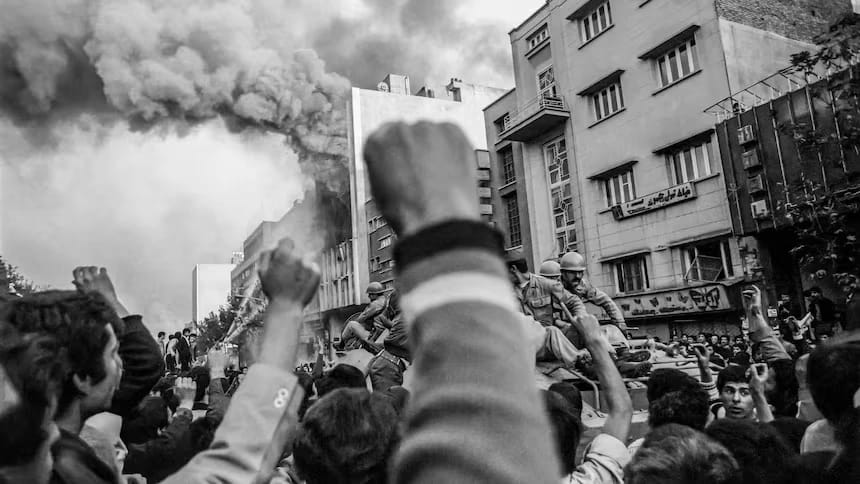
Today is not 1979, but the Islamic Republic knows that lesson. Foreign military power can destroy installations, commanders, missiles, and infrastructure. A population that loses its fear can destroy the political psychology upon which authoritarian rule depends. Iranians have endured inflation, shortages, corruption, ideological interference, repression, international isolation, and repeated cycles of protest and bloodshed. The regime may still control the streets, but control is not legitimacy. The appearance of calm should not be mistaken for stability. Iran resembles a society waiting for a catalyst.
There is also a dangerous dimension to collapse. If central authority disintegrates while weapons circulate widely, ideological remnants of the Islamic Republic are unlikely simply to surrender power, privilege, and weapons peacefully. Some could reorganize as underground militant cells. That makes the transitional question urgent. Removing a dictatorship is not enough; preventing the destruction of the state is equally important. Iran needs a path in which the regime can disappear without Iran disappearing with it.
For nearly half a century, successive American administrations have searched for the right formula for Tehran: containment, engagement, sanctions, secret channels, nuclear negotiations, maximum pressure, and renewed diplomacy. Yet the fundamental character of the clerical establishment has remained remarkably consistent. Iranian society understands this system because it has lived under it since 1979. Too many policymakers in Washington still discuss Tehran as though one more negotiation might reveal a pragmatic institution hidden beneath its revolutionary ideology.
None of this means the United States or Israel should determine Iran’s political future. They should not. The next political system must acquire legitimacy through Iranian consent and free elections. The choice between constitutional monarchy, republic, or another democratic constitutional arrangement belongs exclusively to Iranians. Yet respecting Iranian sovereignty does not require Western governments to pretend that every opposition figure possesses equal political weight. Diplomacy is partly the art of recognizing reality before reality becomes an emergency.
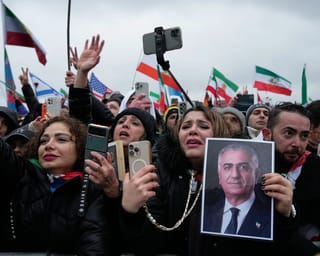
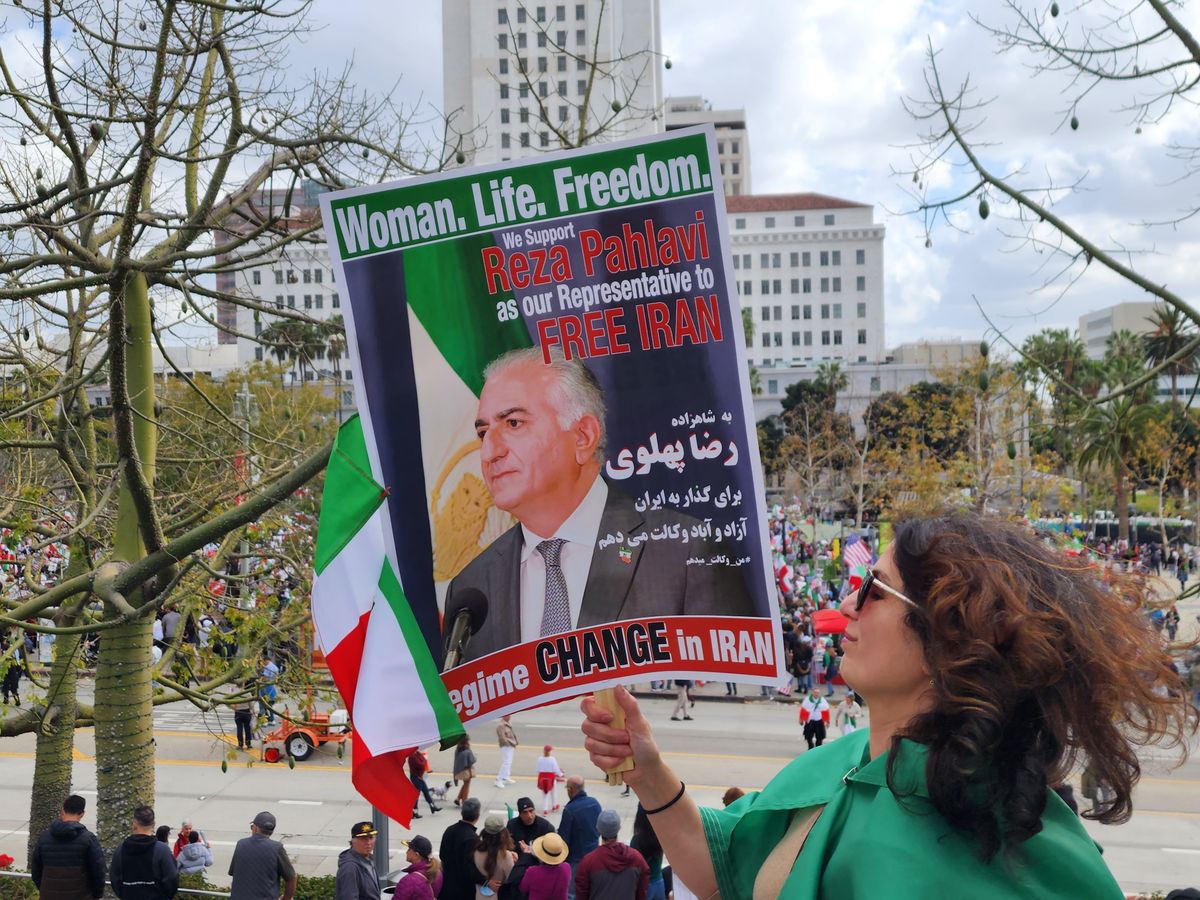
That reality increasingly includes HRH Reza Pahlavi. His political significance does not rest solely on being the son of the late Shah. His advantage is the combination of historical symbolism, international recognition, political relationships, name recognition among Iranians, and his emphasis on a transitional process followed by democratic choice. His most important potential role may therefore not be deciding Iran’s permanent constitutional system, but helping safeguard the bridge between dictatorship and democracy. The person who protects the bridge does not necessarily determine what society builds on the other side.
Developments in Canada are significant in this context. Conservative leader Pierre Poilievre’s engagement with HRH Reza Pahlavi reflects an awareness that Iran’s opposition landscape increasingly matters to Western foreign policy. Canada is a G7 country and home to a substantial Iranian community. Whatever the immediate political calculations, the broader signal matters: Western political establishments are beginning to consider the possibility that relations with Iran cannot forever mean relations with the Islamic Republic.
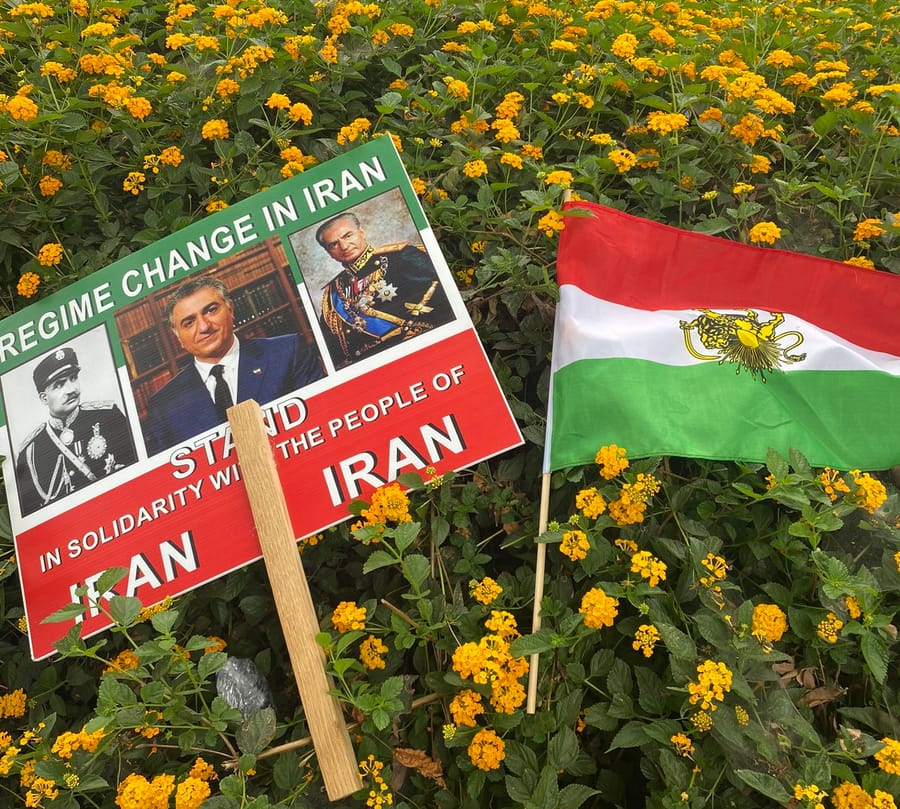
Others will eventually face the same calculation. If the regime collapses, major governments will urgently need Iranian counterparts with whom they can discuss border security, the armed forces, nuclear facilities, energy infrastructure, diplomatic recognition, sanctions relief, economic reconstruction, and the prevention of civil conflict. There are many courageous Iranian activists, intellectuals, former officials, and organizations. But political transitions require recognition, networks, institutional thinking, and the capacity to represent continuity without claiming permanent ownership of the state. In that landscape, The HRH Reza Pahlavi stands apart. Even Stevie Wonder could look at Iranian politics and recognize the obvious: he is the only game in town with this particular combination of attributes.
This is not a demand that America crown a king. Washington has neither the right nor the legitimacy to do so. The crown prince Reza Pahlavi must derive any future authority from Iranians, not foreigners. The central issue is continuity. Whatever constitution Iranians ultimately choose, the state must survive the fall of the regime.
American intelligence institutions should therefore widen their analytical lens. Iran cannot be understood exclusively through nuclear centrifuges, Revolutionary Guard deployments, missiles, or diplomatic cables. Nor can a society approaching a potentially historic transformation be fully understood from behind desks in Langley. Field research, Iranian expertise, and serious study of the political psychology of the clerical establishment are indispensable. Until its final days, this regime is likely to retain its instincts for repression, subversion, terrorism, and survival. Tehran also remains strategically connected to Moscow, Beijing, and Pyongyang.
Iran is older than the Islamic Republic and will outlive it. Its rulers may still command prisons, guns, propaganda networks, and instruments of terror, but no government commands history indefinitely. The decisive moment will come not when Washington announces it or Jerusalem predicts it, but when enough Iranians conclude that the state confronting them is no longer invincible. At that moment, fear will change sides.
When that day comes, the White House will discover that the question it postponed has become the question it must answer: who can help Iran cross the dangerous distance between dictatorship and democratic choice without allowing the country itself to collapse? Washington cannot appoint that person, nor can it dictate Iran’s future. But political reality may leave it little choice about whom it must take seriously. If the Islamic Republic falls, sooner or later the White House will have to knock on HRH Reza Pahlavi’s door. It would be wiser for Washington to know where that door is before history comes knocking on its own.