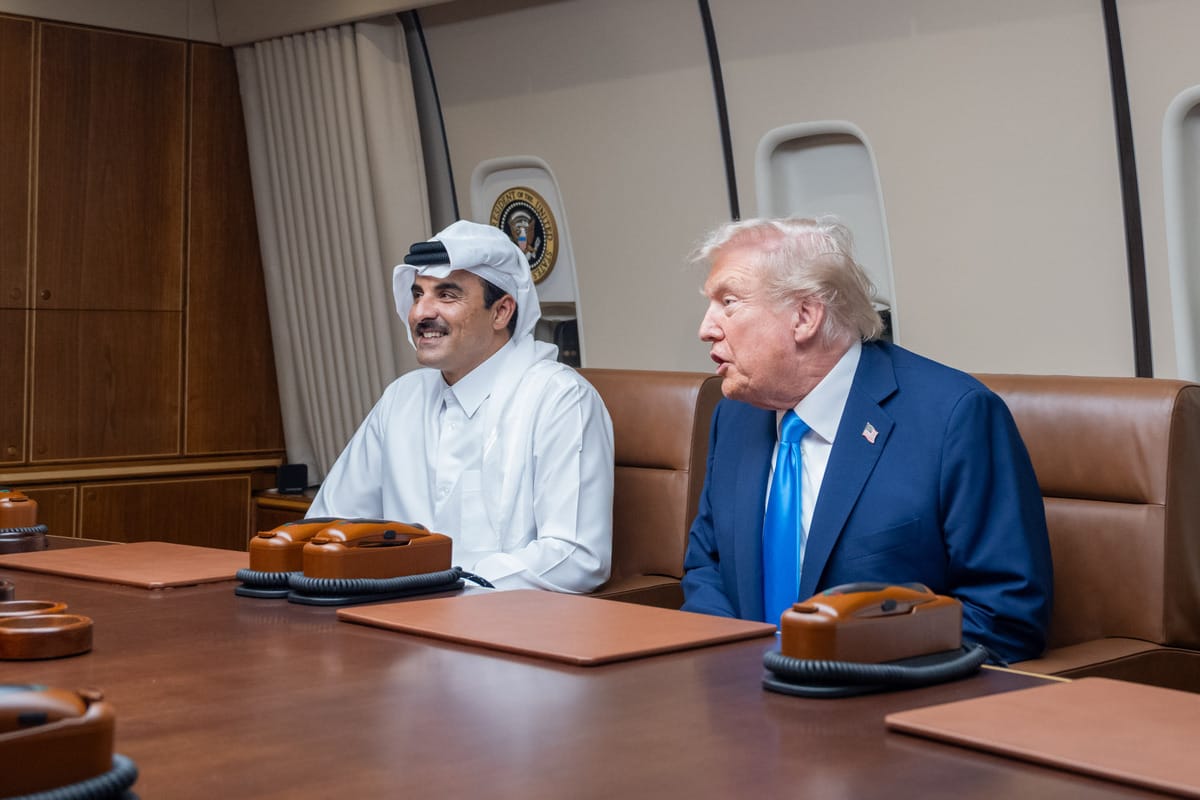
President Donald Trump spoke Friday with Qatar's Emir Sheikh Tamim bin Hamad Al Thani about efforts to maintain the fragile ceasefire between the United States and Iran, according to a statement from Qatar's Amiri Diwan.
The two leaders reviewed regional developments and discussed updates on the US-Iran ceasefire agreement, along with international efforts to consolidate the peace deal. They also examined how regional tensions could affect maritime security and global supply chains — a key concern as both nations have seized tankers in the Strait of Hormuz despite the ceasefire.
During the call, Al Thani emphasized the importance of de-escalation and pursuing peaceful solutions to regional conflicts. The Qatari leader reaffirmed his nation's commitment to working with regional and international partners to support ongoing mediation efforts.
Qatar specifically highlighted its backing for Pakistan's role in leading diplomatic initiatives between Washington and Tehran. Trump recently dispatched envoys Steve Witkoff and Jared Kushner to Pakistan for Iran peace talks, underscoring Islamabad's growing importance as a mediator in the conflict.
The conversation comes as the ceasefire remains under strain from multiple violations. The US has warned that any additional Iranian mine-laying activities will be treated as ceasefire violations, while both nations continue to test the boundaries of the agreement through naval confrontations in critical shipping lanes.
For American interests, Qatar's mediation role carries significant weight. The Gulf state hosts the largest US military base in the Middle East and serves as a crucial diplomatic bridge between Washington and regional powers, including Iran. Qatar's emphasis on maritime security reflects concerns about energy supplies and shipping costs that directly impact American consumers.
The ceasefire has already cost American military resources heavily, with the US burning through half its Tomahawk arsenal during the Iran conflict. This depletion has raised questions about America's readiness for potential conflicts elsewhere, particularly regarding Taiwan's defense.
Qatar's diplomatic engagement also signals the Gulf state's continued efforts to position itself as a regional power broker, following its successful mediation in various international crises. The emirate's relationship with both Washington and Tehran makes it uniquely positioned to facilitate dialogue between the adversaries.
The focus on supply chain impacts reflects broader economic concerns as oil markets remain volatile amid the ongoing tensions. Any disruption to shipping through the Persian Gulf could drive up energy costs for American consumers and businesses already dealing with inflation pressures.
Watch for additional diplomatic moves from Qatar and Pakistan as they work to strengthen the ceasefire framework, while monitoring whether the US and Iran can avoid further provocations that could unravel the peace deal entirely.