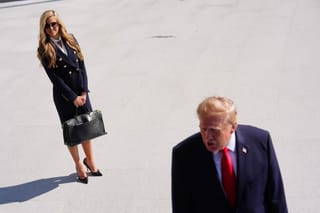
President Trump abruptly canceled plans to send his envoys Steve Witkoff and Jared Kushner to Pakistan for Iran ceasefire negotiations, telling Fox News that Iranian officials "can call us anytime they want" instead of meeting in Islamabad.
The reversal came Saturday, just hours after Iran's foreign minister departed Pakistan following diplomatic talks in the capital. The White House had announced Friday that Trump's Middle East envoy Witkoff and senior advisor Kushner would travel to Islamabad to revive stalled ceasefire negotiations between the U.S. and Iran.
Trump's decision shifts the diplomatic approach from in-person meetings to waiting for Tehran to initiate direct contact with Washington. The move suggests either growing confidence in America's negotiating position or frustration with Iran's willingness to engage seriously in talks.
The canceled Pakistan trip follows weeks of escalating tensions after U.S. forces burned through over 1,100 cruise missiles in strikes against Iranian targets. American military officials have privately expressed concern about depleted weapons stockpiles that were earmarked for potential conflicts with China over Taiwan.
Iran's foreign minister had been in Islamabad for talks with Pakistani officials, who have served as intermediaries between Washington and Tehran in previous diplomatic crises. Pakistan's strategic location and relationships with both powers made it a natural venue for sensitive negotiations.
The timing of Trump's announcement suggests Iran may have signaled unwillingness to engage in substantive talks during the Pakistani meetings. Tehran has previously demanded the complete lifting of U.S. sanctions and withdrawal of American forces from the region as preconditions for any ceasefire agreement.
For American taxpayers, the diplomatic uncertainty means continued military spending in the Middle East while weapons stockpiles remain dangerously low. Defense contractors face pressure to ramp up cruise missile production, but rebuilding America's arsenal could take months.
The cancellation also puts Pakistan in an awkward diplomatic position, having offered to host the talks only to see them scrapped at the last minute. Islamabad has been trying to balance its relationships with Washington, Tehran, and Beijing while managing its own economic crisis.
Trump's "they can call us" approach mirrors his negotiating style from his first presidency, when he walked away from planned summits with North Korea and other adversaries to demonstrate American strength. The strategy sometimes forced concessions but also risked prolonging dangerous standoffs.
The next move belongs to Iran's leadership, who must decide whether to swallow their pride and call Washington directly or continue the military confrontation that has already cost both sides significantly in blood and treasure.