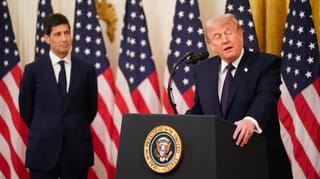
President Donald Trump declared that Iranians need guns to fight their government, sparking a revival of Reagan-era strategies for backing armed resistance movements against hostile regimes. Trump made the comments during an interview with "The Hugh Hewitt Show" while discussing anti-regime protests inside Iran.
They have to have guns. And I think they're getting some guns. As soon as they have guns, they'll fight like, as good as anybody there is.
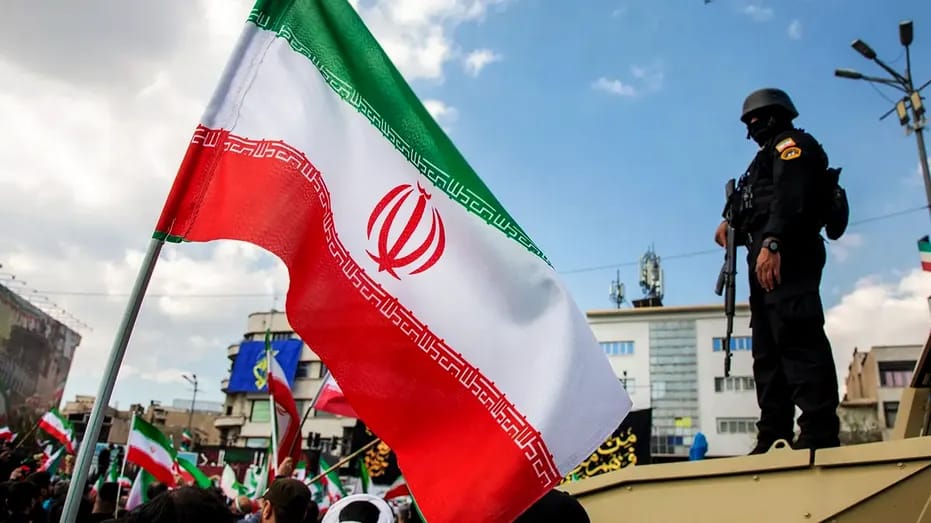
The remarks come as Iran's regime emerges battered from weeks of military conflict with the U.S. and Israel, while domestic unrest continues to simmer after years of failed protests and violent crackdowns by the Islamic Revolutionary Guard Corps. Iranian dissidents, military analysts, and Republican lawmakers now openly debate whether America should move beyond sanctions and actively arm resistance networks inside Iran.
Military Experts Push 'Reagan Doctrine 2.0'
Brett Velicovich, founder of Powerus and former U.S. military intelligence specialist, told Fox News the current moment represents the best opportunity in decades to challenge Tehran from within. He described the strategy as "Reagan Doctrine 2.0" — updated for modern asymmetric warfare using drones and decentralized tactics.
Cheap FPV drones, loitering munitions, and small arms let motivated fighters turn Iran's streets and mountains into a nightmare for the IRGC.
The Reagan Doctrine backed anti-Soviet resistance movements across the globe during the 1980s, from Afghanistan's mujahideen to Nicaragua's contras. Supporters argue sanctions, diplomacy, and unarmed demonstrations have failed to produce meaningful change in Iran after decades of trying.
Senator Lindsey Graham has pushed for what he calls a "Second Amendment solution" for the Iranian people, urging the U.S. and Israel to arm Iranian civilians seeking to topple the regime, as Insider Wire previously reported during recent naval clashes.
Critics Warn of Civil War Risk
Critics warn that openly discussing armed resistance could endanger protesters already facing brutal crackdowns and risk pushing Iran toward civil war. They argue such strategies could deepen divisions within Iran's fractured opposition movement, which has struggled to unite around common leadership.
The debate unfolds as the Iranian regime faces its weakest position in years. Recent airstrikes by the U.S. and Israel have damaged key infrastructure, while economic sanctions continue to squeeze Tehran's resources. Protesters have repeatedly taken to the streets despite violent suppression by security forces.
Velicovich emphasized that modern technology makes armed resistance more viable than during the Cold War era. Small, commercially available drones and lightweight weapons systems could give Iranian fighters significant advantages against government forces in urban and mountainous terrain.
The discussion marks a sharp departure from previous U.S. policy focused primarily on economic pressure and diplomatic isolation. Trump's comments signal potential willingness to escalate American involvement in Iranian internal affairs, raising questions about how far the administration might go in supporting armed opposition groups.