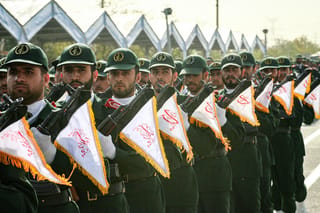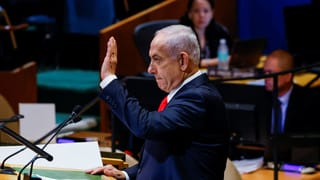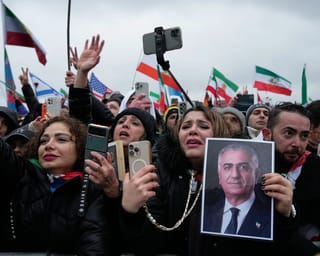
Without digression or generalization, there is no doubt that Iran’s domestic situation is deeply chaotic. Yet the U.S. intelligence community continues to suffer from one fundamental problem: it has not read the Shiite mullah’s book.
Nor is it an exaggeration to say that it does not truly understand either Islamist terrorism or Shiite terrorism. The terrorist organizations within the Islamic Republic’s transnational Islamist terrorist mafia may well be studied by America’s intelligence and espionage agencies, but those institutions still fail to grasp one larger picture: a Shiite-style Islamic caliphate is among the most dangerous and brutal forms of mafia rule in the world, and Khomeinism is a combination of Nazism, Stalinism, Maoism, communism, and terrorism. The world united against communism, apartheid, and other such systems, yet when it comes to eliminating Islamist terrorism, it still stands bewildered, watching events unfold from a distance.
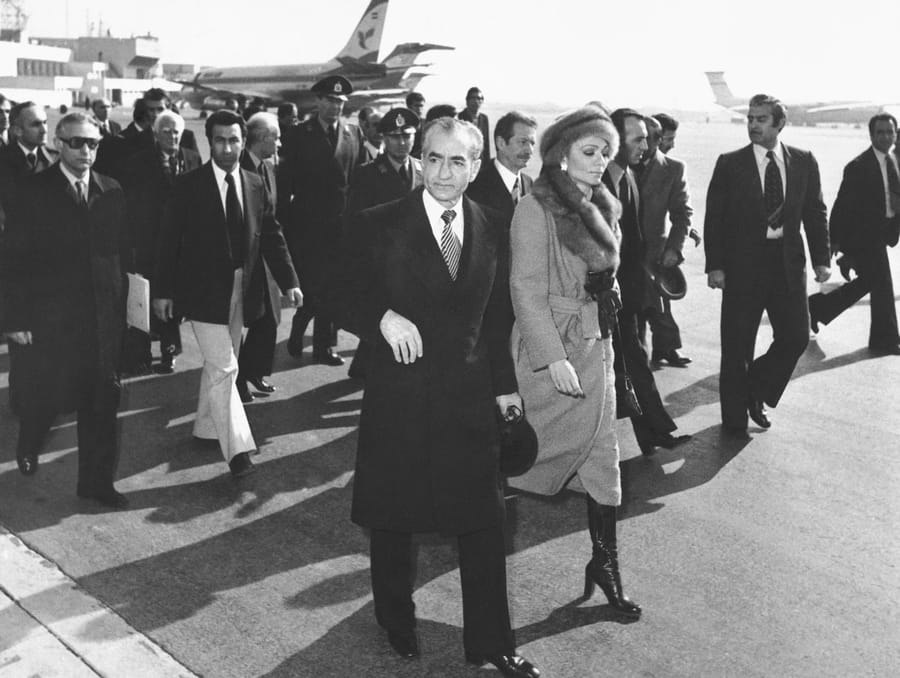
After 1979, the United States and the White House effectively lost their most loyal, sincere, and useful friend in the Middle East and Western Asia, while Iran fell into the trap of the former Soviet Union. When Mohammad Reza Shah Pahlavi, astonished and incredulous at the CIA’s lack of understanding, boarded the plane that took him out of Iran, the CIA itself had little interest in listening to experienced SAVAK officials who warned that Islamist and Marxist terrorists had lined up behind Khomeini at the direction of the KGB. The CIA had not even read Velayat-e Faqih—the blueprint for the religious dictatorship of a brutal Shiite mullah. Nor was it willing to listen to Mossad’s accounts, while discovering little on its own. Then came 1983 and the bombing of the U.S. Embassy in Beirut, where Robert Ames, the CIA’s highly experienced Middle East expert, was killed. Perhaps from 1980 onward, the U.S. State Department had gradually begun to recognize this cancerous growth, this horrifying tumor on the body of international relations. But by then, it was too late.
None of the American presidents—Democrat or Republican—has possessed a serious intention or genuine determination to eliminate this problem, and they still do not. Even today, there is no real will for regime change in the White House. The U.S. intelligence community and the CIA are fundamentally unfamiliar with Iranian experts and analysts. And even when a friendly meeting takes place with people from the CIA or FBI—or an unfriendly encounter with DHS—the first question is: Do you have U.S. citizenship? It is an irrelevant question that obstructs the exchange of information and ideas.
When George W. Bush, despite having experienced and seasoned intelligence and security advisers such as Michael Morell and an informed intelligence director such as General Hayden, became aware of the existence of this cancerous tumor, he placed the Islamic Republic inside the sinister triangle of the “Axis of Evil.” Yet once again, there was no seriousness about eliminating the central problem and bringing it to an end. From 2001 onward, both the Shiite Crescent and the Islamic Republic’s mafia-like transnational terrorist network expanded, while the terrorist Quds Force entered a new and more dangerous phase of operations beyond Iran’s borders.
The Islamic Republic also invaded America through charities, religious institutions, cultural centers, and media organizations. Many mosques, universities, Persian-language media outlets inside the United States, and even affiliated lobbying groups effectively and shamelessly became propaganda megaphones for the Islamic Republic on American soil. Meanwhile, apologists and stooges received green cards, while sincere friends of the CIA ended up in the absurd and irrelevant prisons of DHS and ICE. Grotesque!
It has reached the point where, in Los Angeles, a notorious and disgraced television channel – Channel one - can become a promoter of Hamas while the FBI in Los Angeles appears unconcerned. The Persian service of Voice of America becomes a gathering place for IRGC operatives, and when the CIA decides that it wants to get rid of a concerned Iranian expert, it arranges to meet him at Ben & Jerry’s for ice cream—and then, nothing. Grotesque again! Perhaps he should have obtained clearance from the ice-cream shop first.
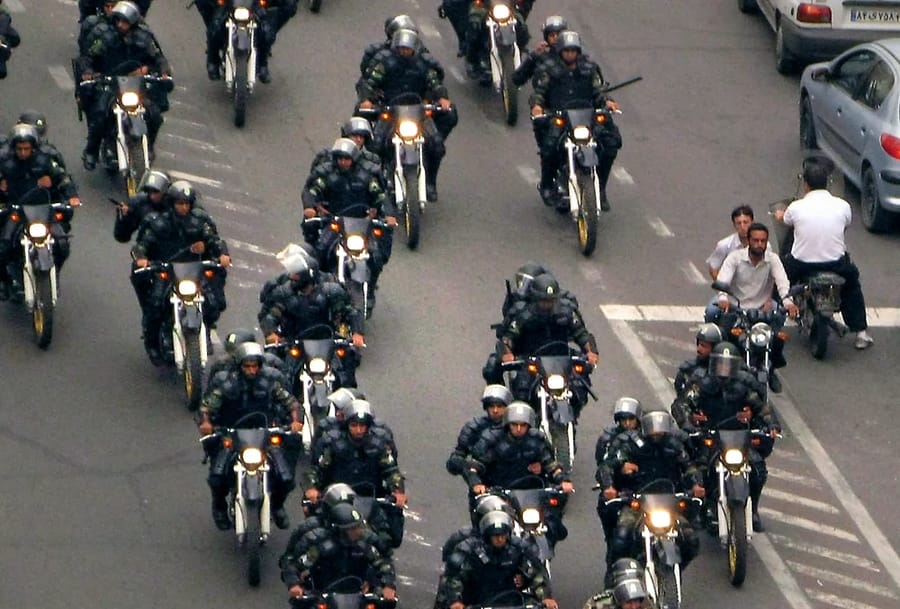
Today, inside Iran, the ruling establishment is paralyzed, and the regime’s nightmare is a nationwide uprising by the Iranian people against the current system. In practical terms, the regime has been brought to its knees, while society is waiting for a spark to begin a nationwide uprising against a repressive, plundering, occupying regime that has put the country up for sale. That spark has nothing to do with America or Israel. The Iranian people are not asleep; Iranian society is awake and intelligent. And that is precisely the regime’s nightmare. If such an uprising occurs, Iran could enter a civil war because the religious forces and supporters of the regime would transform themselves into underground terrorist cells operating out of mosques, unwilling to surrender power peacefully. But this will undoubtedly happen. What we are witnessing now is the calm before the storm. Severe poverty, public discontent, and shortages are tightening their grip around Iran’s throat.
The first stage is the transition away from the sinister mafia of the Shiite mullahs, who are the root of the promotion of ignorance and superstition in Iran. Naturally, no society reaches prosperity, freedom, or democracy through the Shiite mullah. Nor will the Iranian people climb down into a well on a rope held by people in Washington such as JD Vance, placing their hopes in endless and exhausting negotiations. Iranians understand the nature and institutional character of the Shiite mullah, but someone like Vance speaks as though, during the past forty-eight years, he has neither read a newspaper nor listened to the radio. Yet his ear is open to the Islamic Republic’s notorious lobby in Washington. Naturally, along this difficult and winding road, if Israel and the United States help the Iranian people achieve freedom, so much the better, and they deserve gratitude for it. But America and Israel will not be the variables that determine this equation.
It must also be said that a strange kind of disintegration and fragmentation has emerged within Iran’s ruling establishment. The Iranian regime is deeply confused and no longer possesses the power to control an enraged society. Gradually, the world is beginning to understand that the regime in Iran is on its way out and that it must begin thinking about an alternative. But if there is no one other than Prince Reza Pahlavi to whom responsibility for Iran can be entrusted after the collapse—someone capable of preserving security during the transition, holding free elections afterward, and allowing Iranian society to vote, choose, and reclaim sovereignty over its own country—then why is the U.S. intelligence community not preparing and training cadres for the period of collapse and transition in Iran? A counterterrorism center or an intelligence community cannot be established inside Iran overnight.
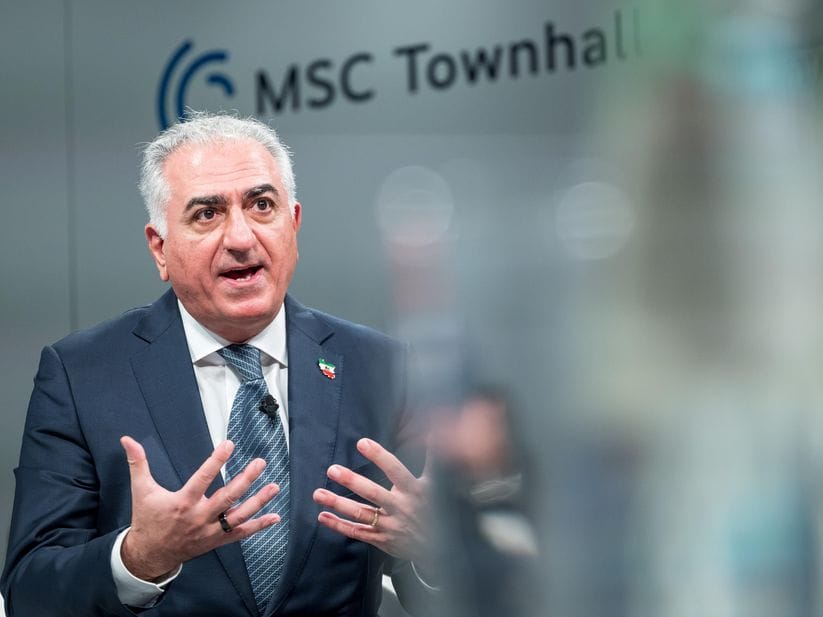
If the U.S. intelligence community believes that Reza Pahlavi is the only credible figure in the Iranian opposition and the only serious figure opposing the Iranian regime, then why conceal that reality? Unfortunately, organizations such as the CIA still do not understand the destructive mind of the Shiite mullah, and they still have not read the mullah’s book. They do not want to believe that until the final moment of this regime’s existence, destruction, terrorism, and subversion will continue. Tehran continues to move in the orbit of Moscow, Pyongyang, and Beijing, and America will have the upper hand only when it respects the wishes, needs, and thinking of Iranian society. Yet the CIA still lacks the will for regime change. Nor can an accurate analysis of Iran’s boiling society be produced from behind a desk in Langley. The cancerous tumor of the Iranian regime requires chemotherapy and surgery; such pain cannot be cured with a baby aspirin.
But serious work can still be done. There is still time to think about the future. And there is still time to rid the world of a cancerous tumor.