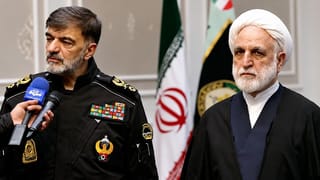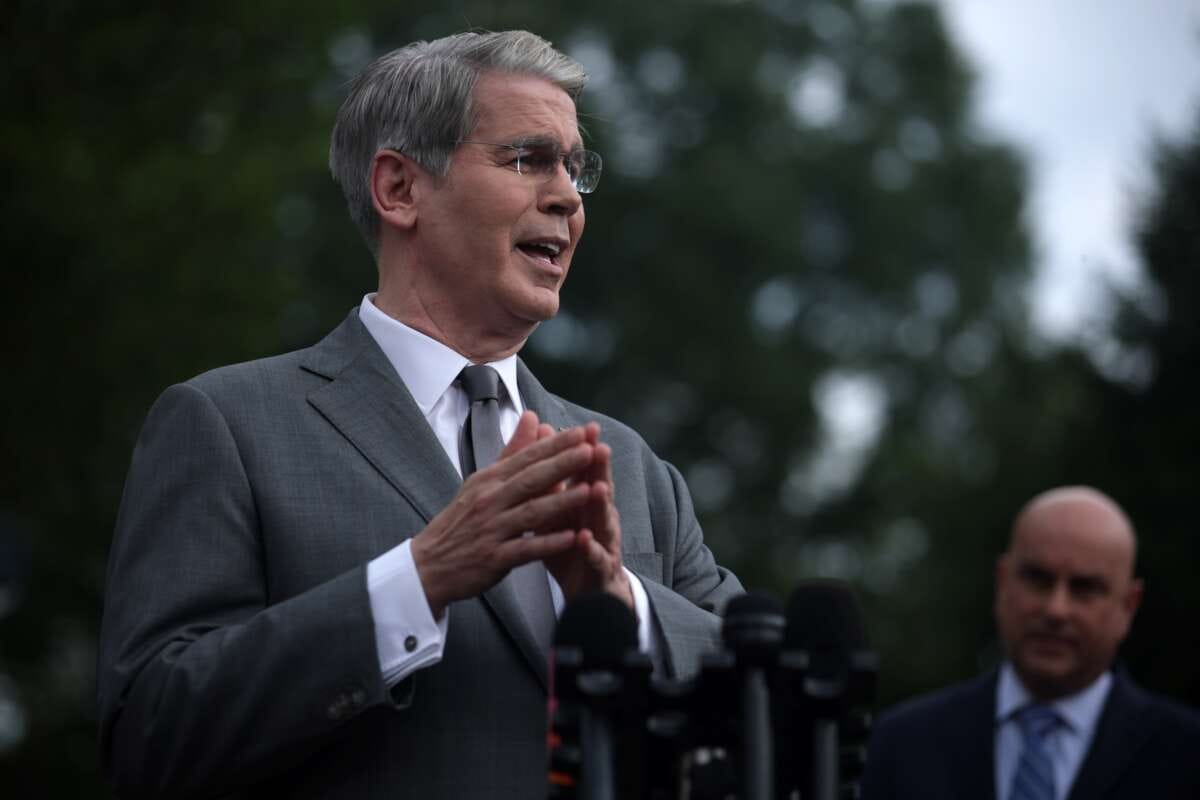
That may be changing quickly. As the conflict with Iran approaches the six-month mark, Bessent has moved into the center of the administration’s strategy. Washington is now promising what Trump has called an “Economic D-Day,” while Bessent says the United States intends to impose unprecedented economic pressure on Iran and those continuing to support its economy. Reuters reported Thursday that Bessent described the coming measures as potentially the “toughest sanctions in history,” with the stated goal of increasing pressure without requiring another major round of military action.
For service members sitting on bases across the Middle East, that raises a much more practical question:
Does this mean the war is beginning to change?
Who is Scott Bessent?
Bessent is not a career politician. Before entering government, he spent roughly four decades in global investment management, specializing in currencies, bonds and macroeconomic trends. He founded Key Square Capital Management and previously served as Chief Investment Officer at Soros Fund Management. He also managed Soros Fund Management’s London office and taught economic history at Yale.
That background matters because the Treasury Department is not simply responsible for taxes and government finances. It is also one of Washington’s most powerful national-security weapons.
Through the Office of Foreign Assets Control, Treasury can freeze assets, blacklist companies, isolate banks, target shipping networks, disrupt cryptocurrency exchanges and threaten foreign companies with losing access to the U.S. financial system.

In other words, Bessent does not command bombers.
He commands access to money.
What Could “Economic D-Day” Actually Mean?
Iran is already one of the most heavily sanctioned countries on Earth, so simply adding another list of Iranian officials would probably accomplish little.
The real escalation would come from attacking the networks that allow Iran to work around those sanctions.
Treasury has already been moving in that direction under its “Economic Fury” campaign. Since May, OFAC actions have targeted Iranian oil revenue, LPG-smuggling operations, weapons procurement networks, shadow banks, shipping companies, vessels and cryptocurrency exchanges. In July, Treasury sanctioned more than 50 individuals, entities and vessels connected to a major Iranian shipping network. On August 7, Treasury targeted clandestine currency networks responsible for moving hundreds of millions of dollars and separately sanctioned digital-asset exchanges accused of helping Iran move billions.
The next step could be much larger.
Bessent has suggested Washington could target countries, banks and companies that continue transferring money to Iran, purchasing Iranian oil or assisting ship-to-ship transfers. That means the pressure would no longer stop at Iran’s borders.
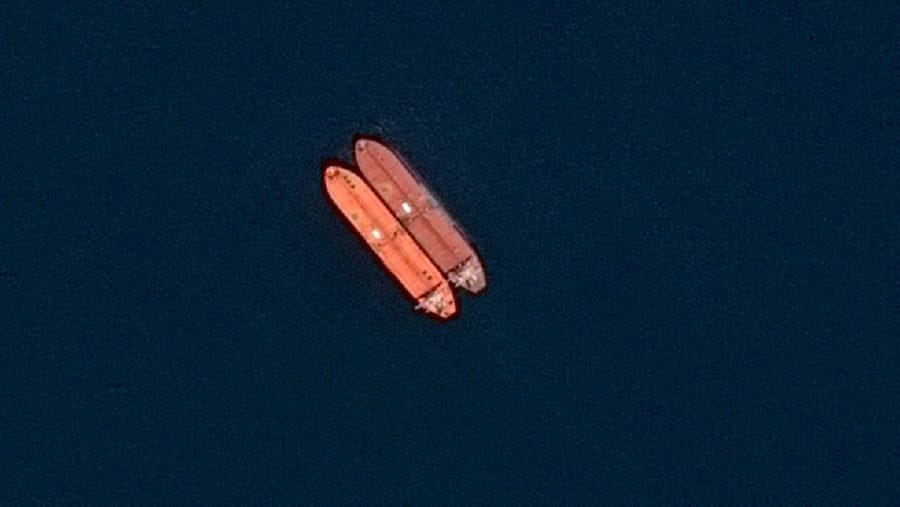
A Chinese refinery buying Iranian crude, a foreign bank clearing payments, a shipping company carrying Iranian petroleum or a middleman helping disguise the origin of cargo could face a choice: continue doing business with Iran or maintain access to the American financial system.
That is where U.S. economic power becomes formidable.
The dollar remains central to global finance, and access to American markets is extremely valuable. Secondary sanctions therefore allow Washington to pressure companies that may have no presence in the United States but cannot afford to become financially isolated.
There are risks. Aggressively targeting companies in China, India or allied countries could provoke retaliation and disrupt global oil markets. Analysts also question whether another sanctions campaign can force political concessions from a country that has lived under economic restrictions for decades.
Does This Mean the Military Phase Is Ending?
This is probably the question many deployed service members care about most.
There is not enough evidence to say that yet.
The United States has reduced large-scale strikes in recent weeks, while the administration increasingly emphasizes economic pressure. Germany’s Deutschlandfunk reported on August 14 that U.S. strikes against Iran had been paused for weeks while Bessent prepared additional financial measures.
But that should not be confused with a military withdrawal.
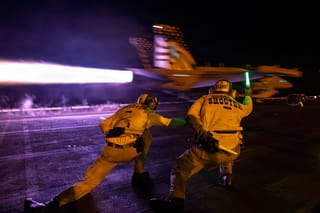
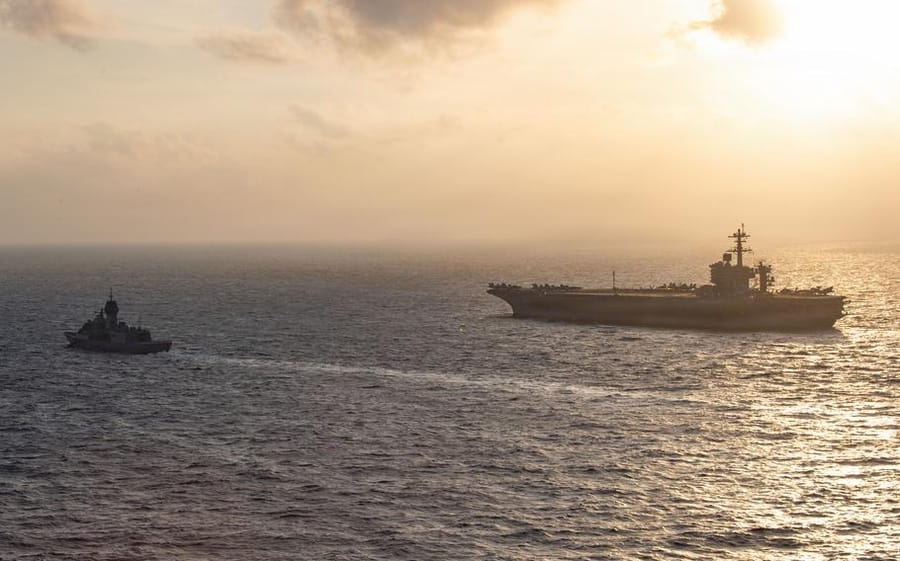
Defense Secretary Pete Hegseth said only days ago that the U.S. Navy could maintain its blockade of Iran “indefinitely” by rotating ships through the region. Meanwhile, Reuters reported this week that the USS George Washington and other defense assets were being redirected toward the Middle East.
Iran is also continuing to threaten escalation. On August 17, an Iranian official told Reuters that Tehran could shift toward a “fully offensive” posture and potentially attack to break the American naval blockade if diplomacy fails.
So if individual units are beginning to redeploy home, that alone does not prove Washington has decided the military danger is over. Some departures may simply be normal rotations, while naval, air-defense or aviation assets remain in theater.
The better indicator will be what replaces those forces.
If major combat formations leave without equivalent replacements, air-defense requirements decrease, naval forces begin moving elsewhere and Treasury increasingly becomes the administration’s primary instrument against Tehran, then it would become reasonable to argue that Washington is transitioning away from sustained kinetic operations.
We are not clearly there yet.
My Prediction
My prediction is that the United States is gradually moving toward exactly that transition.
I do not believe the conflict suddenly ends next week, and I certainly would not tell anyone deployed in the region that the missile threat has disappeared. Iran still has the capability to retaliate, negotiations remain stalled and Washington intends to maintain its naval pressure.
But the pattern is becoming difficult to ignore.
For months, both sides have attacked, threatened retaliation, paused, negotiated, watched negotiations fail and then repeated the process. That cycle has produced enormous costs without creating a decisive outcome.
“Economic D-Day” may be Washington’s attempt to break that cycle without beginning another massive round of strikes.
I expect the military presence to remain strong enough to deter Iran and enforce the blockade, while Treasury increasingly becomes the main weapon. If Bessent can significantly restrict Iranian oil revenue, shadow banking, shipping and access to foreign currency, Washington may eventually gain more leverage at the negotiating table than another bombing campaign would provide.
That does not mean everyone packs their bags tomorrow.
But if the next several weeks bring fewer strikes, more Treasury actions and U.S. units leaving without comparable replacements arriving, I would view that as one of the strongest signs yet that this conflict is slowly moving away from the battlefield.
And for thousands of American service members across the Middle East, that may be the development that matters most.