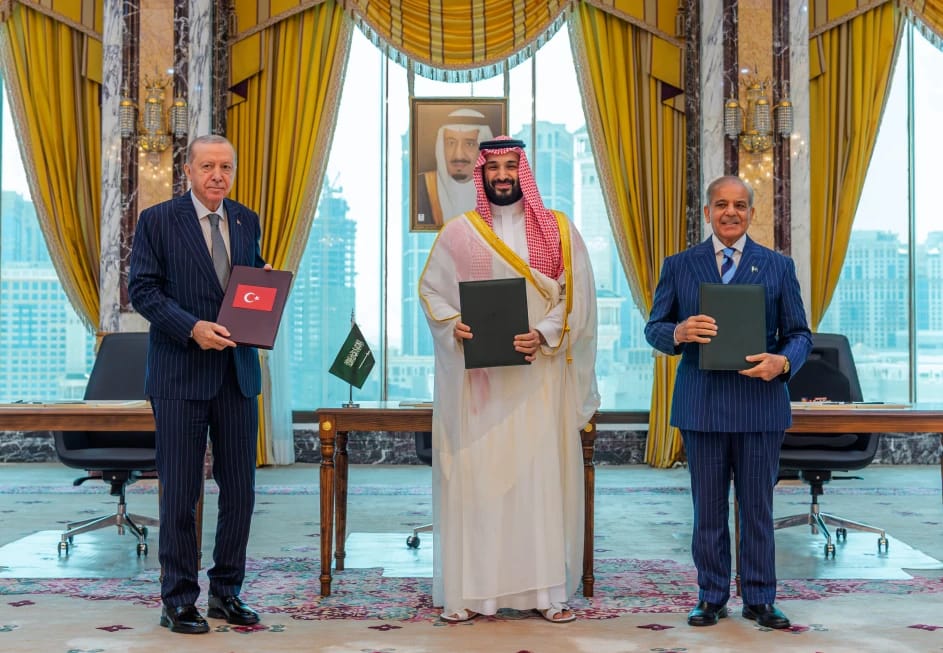
Saudi Arabia, Turkey and Pakistan signed a landmark trilateral defense pact in Mecca on Friday, expanding a bilateral Saudi-Pakistani agreement from September 2025 into a collective security alliance with a mutual-defense clause.
The agreement is intended to strengthen collective deterrence against any act of aggression and stipulates that an armed attack against any of the three would be regarded as an attack on all, the three countries said in a joint statement. “The pact includes a collective defense clause. It is purely defensive in nature, pledging mutual support only for defense,” a Turkish official said.
Iran has responded to the agreement, with Ebrahim Rezaei, a member of Iran's Parliament, saying on the social media platform X: “Saudis must know that a paper agreement with Turkey and Pakistan will not bring them security, just as years of one-sided nursing to the Americans did not bring them security.”
“Reform your policies so that you do not need to beg for security from others,” said Rezaei, who is also a member of Parliament’s National Security and Foreign Policy Commission.
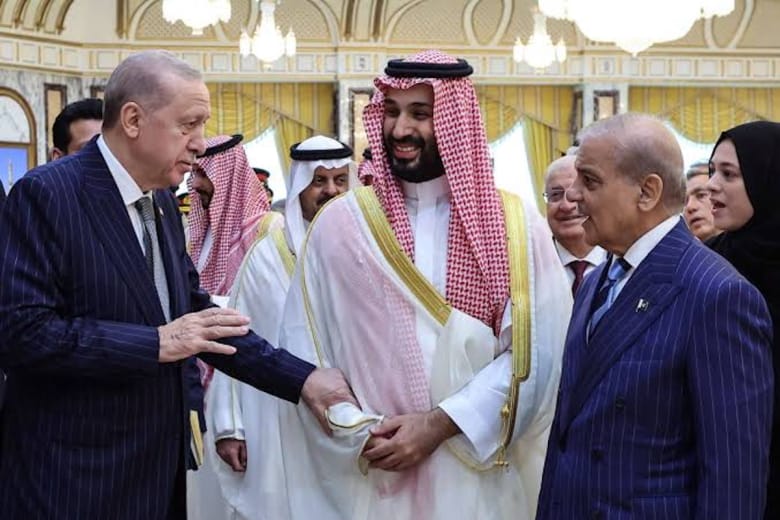
The new agreement is already being put to the test with the Iranian-backed Houthis in Yemen claiming responsibility for strikes on a gas facility in Jubail, eastern Saudi Arabia on Saturday. The agreement does not specify what military, logistical, or other responses are required. It is a framework for cooperation rather than a strict NATO-style automatic mutual-defense commitment and may not trigger immediate action.
Tensions in the Middle East continue to escalate as Iran persists in targeting commercial shipping in the region, with repeated attacks on vessels—including a recent missile strike on a United Arab Emirates-affiliated tanker—further disrupting traffic through one of the world’s most critical energy corridors. Although Iran and Oman have edged closer to a provisional agreement on temporary shipping routes, Washington and Tehran remain unable to agree on a broader deal that would fully reopen the Strait of Hormuz. Iranian officials have made clear that any permanent restoration of free passage depends on a series of U.S. concessions, including war reparations, the lifting of the naval blockade and sanctions, the release of frozen assets, and the withdrawal of American forces from the region, leaving the waterway’s status unresolved and prolonging uncertainty for global oil and gas markets.