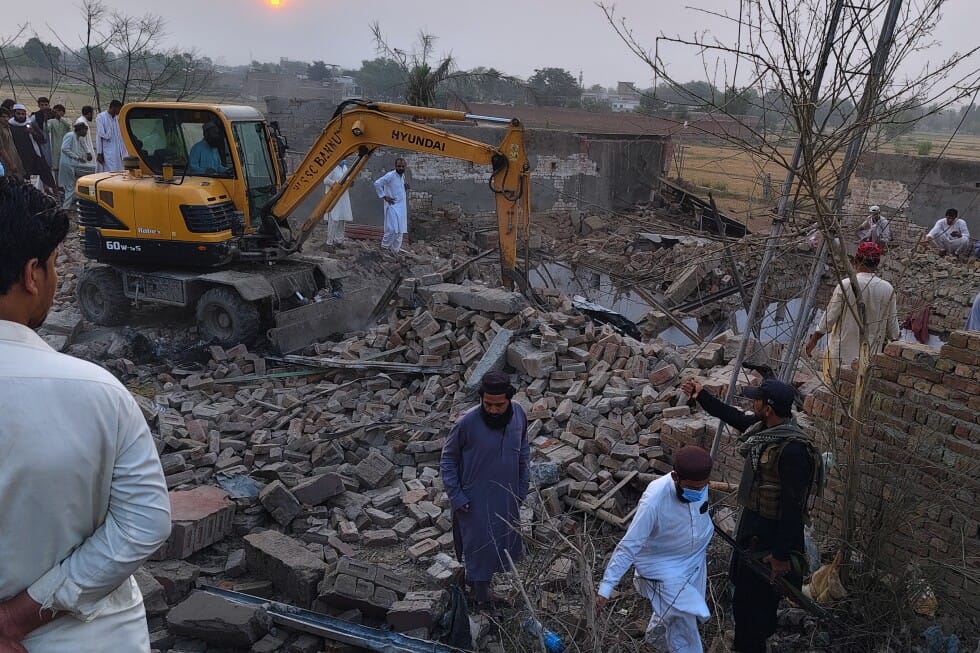
A Pakistani Taliban splinter group killed 14 people in a suicide bombing at a security post in Fatah Khel, Bannu district on Sunday morning, highlighting the persistent terrorist threat along Pakistan's 1,640-mile border with Afghanistan. The blast destroyed the checkpoint structure and damaged nearby buildings in the remote outpost.
The attack targeted a fortified security checkpoint in Pakistan's Khyber Pakhtunkhwa province, which directly borders Afghanistan's Paktika province. Workers used excavators to clear rubble from the blast site as police and local residents gathered to assess the damage. Provincial police chief Akhtar Hayat Khan confirmed the death toll and said the bomber approached the checkpoint on foot before detonating explosives.
The Tehrik-e-Taliban Pakistan (TTP) splinter faction Jamaat-ul-Ahrar claimed responsibility for the attack through social media channels. The group has conducted 47 attacks against Pakistani security forces since January 2024, according to data from the Pakistan Institute for Peace Studies.
Border Violence Escalates After Taliban Victory
The bombing reflects escalating violence along the Pakistan-Afghanistan frontier since the Afghan Taliban's takeover in August 2021. Pakistani militant groups have launched 312 attacks in Khyber Pakhtunkhwa province over the past 18 months, killing 189 security personnel and 267 civilians, according to the Center for Research and Security Studies in Islamabad.
Bannu district sits in a strategically sensitive corridor where Pakistani forces maintain 23 permanent checkpoints to monitor cross-border movement. The province has experienced a 73% increase in militant attacks since the Afghan Taliban's return to power in Kabul, which emboldened Pakistani extremist groups operating from safe havens across the border.
Pakistani military officials estimate that 4,000 to 6,000 TTP fighters operate from Afghan territory, launching cross-border raids before retreating to sanctuary areas. The Pakistani Army's 11th Corps based in Peshawar has requested additional resources to counter the growing threat, military sources told local media.
Counterterrorism Operations Show Mixed Results
Pakistani security forces have conducted Operation Azm-e-Istehkam across Khyber Pakhtunkhwa since June 2024, targeting militant hideouts and weapons caches. The military claims to have killed 128 militants and arrested 89 suspects during the ongoing campaign, though attacks continue.
The Pakistani Air Force has carried out 17 airstrikes against TTP positions inside Afghanistan since March 2024, drawing protests from the Taliban government in Kabul. Afghanistan's foreign ministry called the strikes violations of sovereignty, while Pakistan maintains its right to self-defense against cross-border terrorism.
Prime Minister Shehbaz Sharif allocated an additional $2.1 billion for border security operations during the 2024-2025 budget, including funds for surveillance technology and troop reinforcements along the western frontier.
Regional Instability Affects US Interests
The attack comes as American policymakers monitor Afghanistan's role as a platform for regional terrorism. U.S. Central Command estimates that Pakistan-based militant groups could develop external attack capabilities within 12 to 18 months if current trends continue.
Pakistan's inability to secure its western border creates safe havens for militants who maintain connections to international terrorist networks. Intelligence assessments show some TTP factions coordinate with Islamic State Khorasan Province and remnant al-Qaeda cells operating from Afghan territory.
Sunday's bombing demonstrates that despite sustained military pressure, Pakistani Taliban factions retain the operational capacity to conduct sophisticated attacks on hardened security positions. The use of suicide tactics shows these groups maintain both weapons access and ideological commitment necessary for sustained insurgency operations.
What Comes Next
Pakistani military commanders are expected to authorize retaliatory strikes against TTP positions across the border within 48 to 72 hours, following established response patterns. The next major test will come during the National Security Committee meeting scheduled for Thursday, where officials will review border security protocols and potential escalation options against Afghan-based militant sanctuaries.