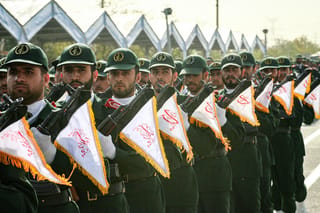
The Iranian regime is now at the weakest point in its vicious history. It no longer survives because it commands genuine legitimacy, inspires ideological loyalty, or offers Iranians a credible vision of their future.
It survives primarily through its machinery of terror and repression, an enormous propaganda apparatus, and networks of operatives and loyalists beyond Iran’s borders. A Shia regime that once claimed to represent a revolutionary Islamic Terrorist model for the Islamic world has been reduced to defending its own existence through coercion, intimidation, disinformation, and the intelligence institutions that protect the ruling clerical establishment. If Washington is ever going to take regime change in Iran seriously, this is the moment to do so. The opportunity should not be wasted through another cycle of hesitation, containment, and strategic ambiguity.
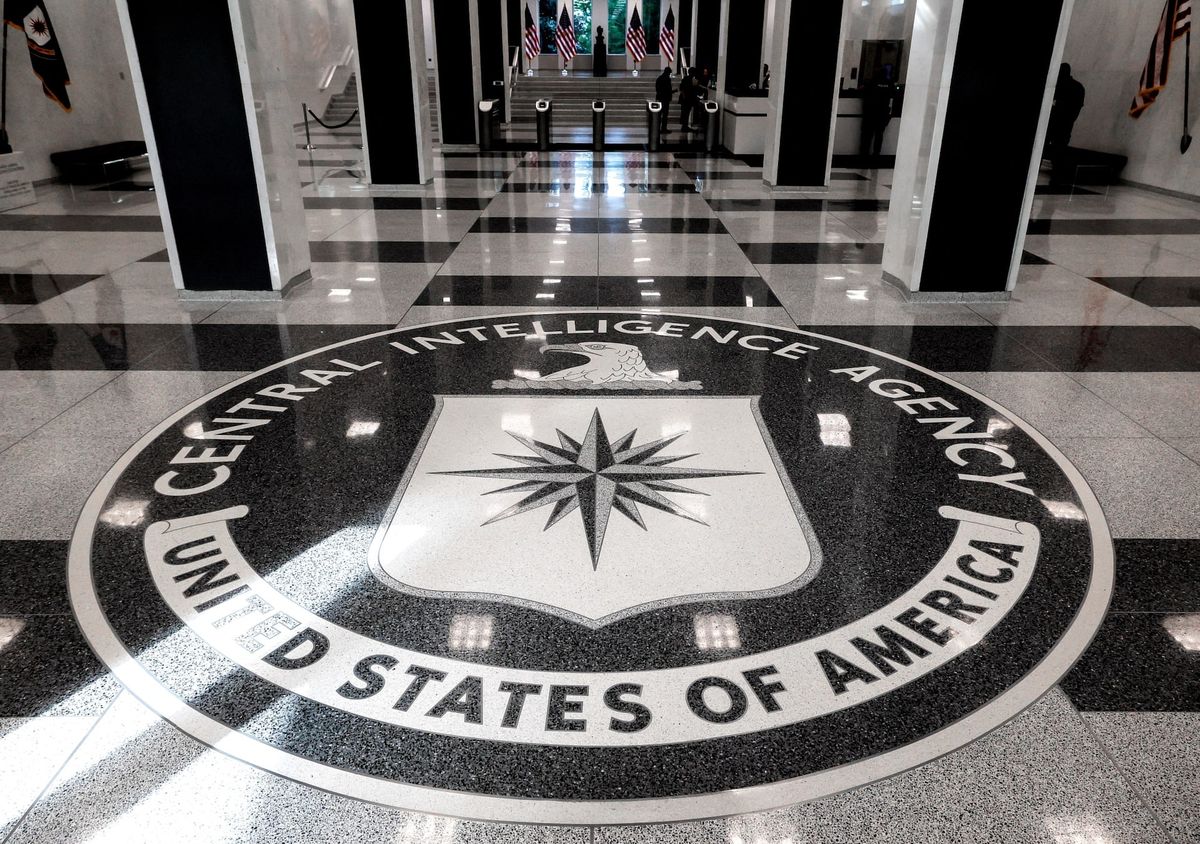
The United States, and particularly the CIA, should therefore begin thinking seriously about a sustained strategy aimed at regime change. The purpose should not be nation-building. The CIA does not need to build a nation in Iran because Iran is already an ancient and cohesive nation with a powerful historical identity, a sophisticated society, and a deeply rooted conception of statehood. Nor should Washington attempt to manufacture another fake and corrupt opposition abroad and then persuade itself that such groups represent Iranian society. What is required now is political will. The determination to pursue the end of the Islamic Republic must be heard clearly in Washington and in Langley, because without that determination every other element of American policy will remain another exercise in managing the same problem rather than resolving it.
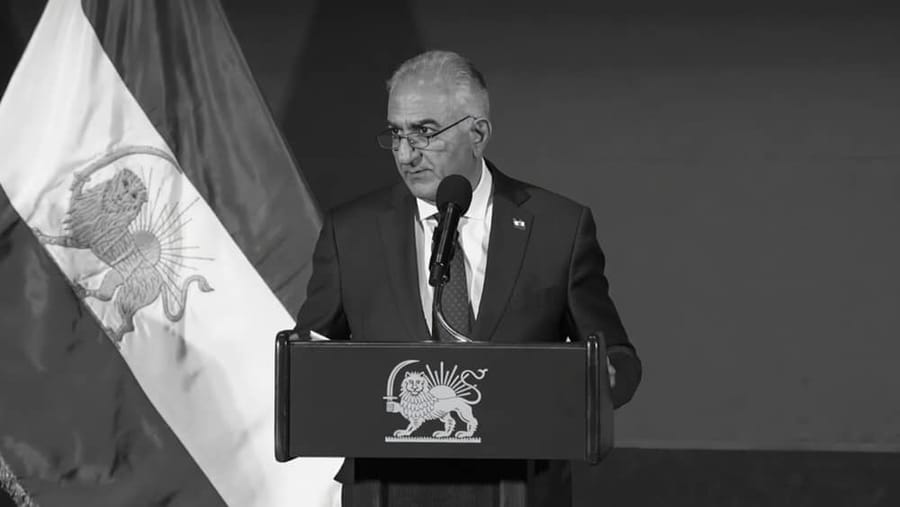
Any serious strategy must also begin with an honest assessment of the Iranian opposition. Among the collection of manufactured, artificial, discredited, and self-appointed opposition groups that have emerged over the years, only one political figure possesses the potential to bring significant numbers of Iranians together beneath a national banner: The HRH Crown Prince Reza Pahlavi. Washington may choose to ignore that reality because acknowledging it complicates old assumptions about Iran, but ignoring it will not make it disappear. Iran's future cannot be built around political organizations that exist principally abroad, factions whose relevance is amplified by foreign funding and media exposure, or ideological remnants of movements that have little meaningful constituency inside the country. A transition requires a national center of gravity, and among the existing opposition forces, Reza Pahlavi remains uniquely positioned to provide one.
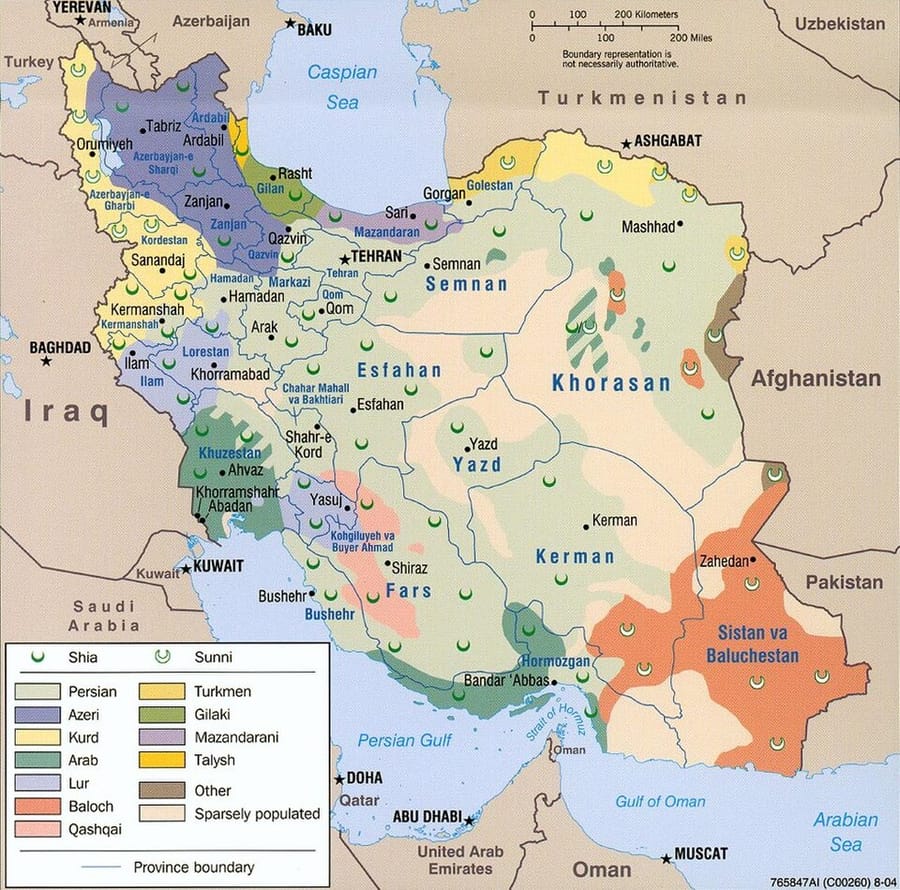
For the same reason, investment in notorious separatist movements and armed ethnic organizations will lead nowhere. Iran is a multiethnic country, and every Iranian citizen—Kurd, Baluch, Azeri, Arab, or otherwise—must have equal rights in the political order that follows the Islamic Republic. But equal citizenship is entirely different from empowering separatist organizations whose political ambitions threaten the territorial integrity of the country. The CIA understands that it is not in America's interest to replace a hostile Islamic Republic with a fragmented Iran consumed by ethnic warfare and competing militias. It should naturally have no interest in supporting terrorist or separatist organizations whose activities could accelerate the disintegration of the Iranian state rather than the collapse of the regime that controls it.
The experience of American involvement with corrupt and notoriously unreliable Kurdish organizations in Iraqi Kurdistan should have provided a particularly useful lesson. The Trump administration's experience with supplying weapons to such crooked organizations demonstrated how easily resources intended for supposed partners can ultimately intersect with networks connected to the Quds Force and Tehran's intelligence establishment, such as MOIS or IRGC intelligence organization. Some of these organizations have proved far more comfortable maintaining relationships with the Quds Force and Iran's Supreme National Security Council than their advocates in Washington care to acknowledge, while simultaneously treating the United States as a cash cow from which money, weapons, and political support can be extracted. President Trump deserves credit for recognizing relatively quickly that the story being sold to Washington was false. America cannot develop a serious strategy for penetrating Iran by relying on a collection of bandits, smugglers, Marxist-Leninists, separatists, and individuals compromised by relationships with the IRGC and MEK thugs. That road does not lead to Tehran; it leads to another American intelligence and policy failure.
Nor should Washington place its hopes in the political descendants of the groups that participated in Khomeini's upheaval in 1979. Many of these movements are profoundly unpopular precisely because Iranians remember where their revolutionary romanticism led. Organizations and personalities that helped destroy the previous political order, embraced Khomeini, or contributed intellectually and politically to the catastrophe of 1979 cannot simply rebrand themselves decades later as the natural custodians of Iranian democracy. Their historical associations with the revolutionary politics represented by figures such as Yasser Arafat, Fidel Castro, and Muammar Qaddafi are not irrelevant footnotes. They belong to the political genealogy of the disaster from which Iran is still trying to escape. Washington should stop confusing the ability to speak the language of Western political institutions with the possession of an authentic constituency inside Iran.
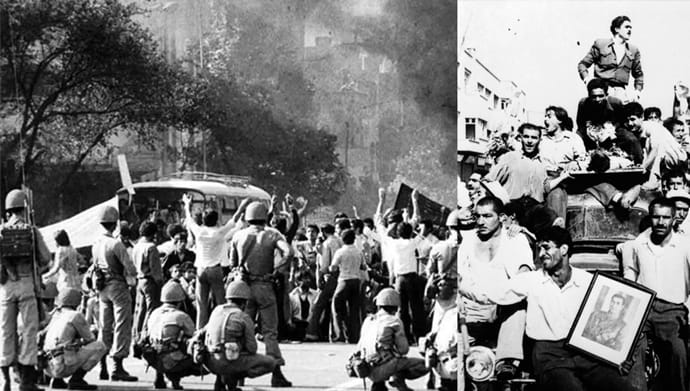
This is also the time to put aside the endlessly repeated mythology surrounding 1953. American policy toward Iran in 2026 cannot remain psychologically imprisoned by a seventy-three-year-old narrative in which Mohammad Mossadegh is perpetually presented as an innocent democratic saint overthrown by an omnipotent CIA. Mossadegh was a demagogic, erratic, disreputable, and power-hungry prime minister who challenged the late patriotic Shah and sought to accumulate extraordinary political authority. Many of the political currents that subsequently transformed him into an icon eventually supported Khomeini, participated in the terrorist revolutionary revolt that produced the Islamic Republic, and found ideological companionship among the radical movements associated with Arafat, Castro, and Qaddafi. Whatever arguments historians wish to continue having about 1953, Langley should not allow that old political mythology to paralyze American thinking about the Iran that exists today.
The central question is therefore not whether America should manufacture a new Iran, but whether it is prepared for the Iran that may emerge when the Islamic Republic finally collapses. Around Crown Prince Reza Pahlavi there should gradually emerge a serious cadre of Iranians who believe in Iranian nationalism, territorial integrity, secular democracy, and the absolute necessity of preventing a security vacuum. Washington and the American intelligence community should develop deep institutional familiarity with credible figures capable of contributing to the preservation of order and continuity after the regime falls. The purpose is not to create another security dictatorship, nor to select Iran's future rulers in Langley. It is to ensure that the collapse of the Islamic Republic does not become the collapse of Iran itself.
That distinction is critical. Regime collapse and state collapse are two entirely different events. The first would end a political system that has inflicted enormous damage upon Iran and destabilized the Middle East for decades; the second could plunge a nation of more than 90 million people into chaos. A serious transition strategy must therefore be built around the preservation of Iran's territorial integrity, the prevention of a security vacuum, the continuity of essential state institutions, and the emergence of a secular and democratic political order. Iran must remain Iran after the Islamic Republic is gone. The objective cannot be to replace clerical tyranny with civil war, competing militias, separatist enclaves, or another ideological experiment imposed upon the Iranian people.
Regime collapse and state collapse are two entirely different events.
This is precisely why Washington should begin distinguishing now between national forces and political opportunists, between those committed to preserving Iran and those interested in fragmenting it, and between people who may contribute to an orderly transition and groups that view the United States primarily as a source of money and patronage. Waiting until the Islamic Republic collapses to begin asking these questions would be strategic negligence. By that point, the competition for power, control of institutions, and preservation of public order may already have begun. The United States does not have to decide Iran's future, but it should certainly understand the forces that will compete to shape that future.
The Islamic Republic's weakness should not be mistaken for its inevitable disappearance. A regime can lose its legitimacy and still survive through terror, propaganda, intelligence penetration, and the organized use of violence. Tehran still possesses all of these instruments, including a security establishment that has spent decades learning how to suppress dissent and protect the clerical system. That is exactly why the present moment matters. The regime is weaker, but the machinery that keeps it alive has not vanished. If Washington merely waits for history to solve the Iranian problem on its own, it may discover that another historic opportunity has been lost.
The time for half-measures, artificial opposition projects, unreliable armed factions, and endless guilt over a fictionalized version of 1953 should therefore be over. The CIA is not supposed to build an Iranian nation; the Iranian nation already exists. Nor should America determine the political future of the Iranian people. What Washington can do is recognize the historic opportunity before it, respect Iran's territorial integrity, identify the national forces capable of preventing chaos, and stop wasting time and resources on groups with neither credibility nor meaningful support inside the country.
Now is the time for serious work. The Islamic Republic is weak, its legitimacy is shattered, and much of what keeps it alive is its apparatus of terror, propaganda, and coercion. Opportunities of this magnitude do not remain open indefinitely. If the United States genuinely believes that the Islamic Republic represents a strategic threat and that a free, secular, democratic, and territorially intact Iran would fundamentally change the Middle East, then it should finally act intellectually and strategically on that belief. The will for regime change must no longer be whispered around Washington as an uncomfortable possibility. It should be heard clearly in Langley.