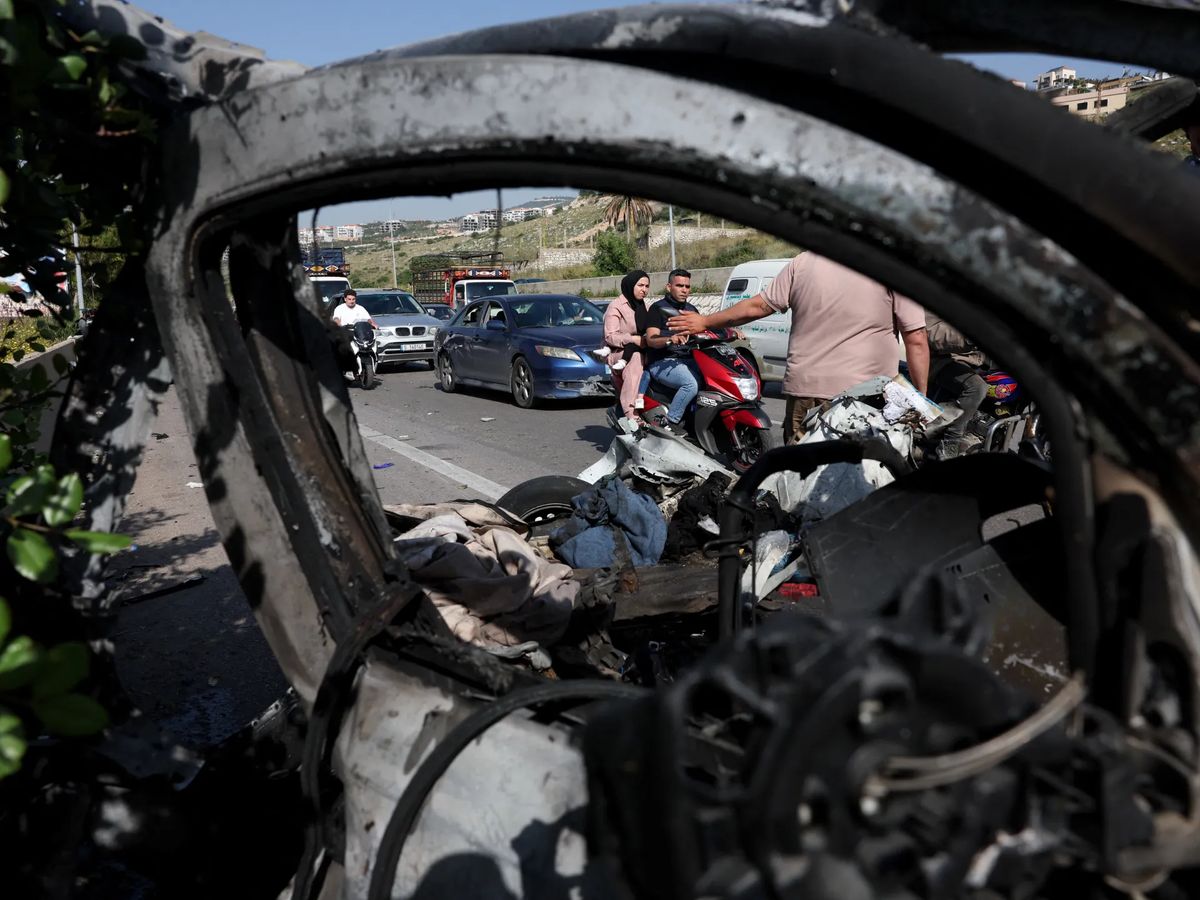
Israeli forces killed at least 19 people across Lebanon on Saturday despite a US-brokered ceasefire now in its third week, raising fresh questions about American diplomatic leverage in the region. The strikes targeted six separate locations across southern Lebanon, marking one of the deadliest days since the November 27 ceasefire agreement took effect.
The deadliest strike hit the town of al-Saksakieh in the southern Sidon district at approximately 2:30 PM local time, killing seven people including a child and wounding 15 others, according to Lebanon's Ministry of Public Health. Israeli attacks elsewhere killed a Syrian man and his daughter in Nabatieh, three people each in Nahrain, Saadiyat, and Haboush, plus one in Mefdoun. The attacks used a combination of airstrikes and artillery fire, targeting both residential areas and suspected Hezbollah positions.
Ceasefire Exists Only on Paper
The violence exposes the hollow nature of last month's ceasefire agreement meant to halt fighting between Israel and Hezbollah. Since April 16, Israeli forces have killed nearly 500 people, bringing the total death toll since Israel's invasion began March 2 to more than 2,750 people, Lebanese health officials report. The 60-day ceasefire deal, brokered by the Biden administration, required Israeli forces to withdraw from southern Lebanon within two months while Lebanese Army units deployed south of the Litani River.
Israeli forces continue occupying parts of southern Lebanon, maintaining a buffer zone extending up to 5 kilometers into Lebanese territory that prevents hundreds of thousands of displaced Lebanese from returning home while systematically demolishing houses. The Israeli army issued new forced displacement orders for several towns Saturday, including Kfar Kila, Adaisseh, and Meiss al-Jabal, expanding rather than reducing its footprint.
Al Jazeera correspondent Obaida Hitto, reporting from Tyre in southern Lebanon, said there were no signs of a ceasefire on the ground as casualties from Israel's strikes kept mounting throughout the day. The United Nations Interim Force in Lebanon reported 847 ceasefire violations by Israeli forces since November 27, compared to 43 violations attributed to Hezbollah.
Pattern of Failed US Mediation
Saturday's escalation follows a familiar pattern of Middle Eastern ceasefires that collapse under international indifference and selective enforcement. The Biden administration's November deal mirrored the failed 2006 UN Security Council Resolution 1701, which ended that year's Israel-Hezbollah war but never fully implemented its terms. Both agreements called for Hezbollah's withdrawal north of the Litani River and deployment of Lebanese Army forces in the south—conditions that remain unfulfilled.
The current crisis also echoes Washington's unsuccessful attempts to broker lasting ceasefires in Gaza, where multiple humanitarian pauses collapsed within days. American officials privately acknowledge that Israel's interpretation of "defensive operations" under the ceasefire terms differs substantially from Lebanese and US expectations, creating a diplomatic loophole that renders the agreement meaningless.
Washington Plans New Talks Despite Violations
The escalating attacks came one day after the US announced it would mediate a second round of negotiations between Israel and Lebanon on May 14 and 15 in Washington, DC. The State Department said the talks would advance "a comprehensive peace and security agreement" addressing both countries' core concerns. The negotiations will take place at the State Department's Harry S. Truman Building, with separate bilateral meetings planned before joint sessions.
Lebanese authorities have demanded Israeli forces cease strikes before any talks begin—a condition Israel appears to be ignoring. Lebanon's President Joseph Aoun met Friday with former Ambassador Simon Karam, who leads Lebanon's delegation, to provide directives ahead of the Washington trip. The Lebanese delegation will also include Foreign Ministry officials and military advisers.
Hezbollah—the primary combatant—remains excluded from the US-mediated talks, potentially undermining any agreement's effectiveness. The group continued attacking Israeli positions Saturday, launching artillery strikes on Biyyada and Rachaf and a drone attack on Misgav Am. Hezbollah claimed to have targeted an Israeli D9 bulldozer in al-Abbad town using guided missiles.
What Comes Next
Next week's Washington talks will test whether US mediation can produce anything more durable than the current paper ceasefire. The January 20 deadline for Israeli withdrawal from southern Lebanon approaches with no signs of compliance, while Lebanese officials threaten to withdraw from negotiations if strikes continue. Key indicators to watch include whether Israel reduces its buffer zone operations before May 14 and whether Lebanese negotiators receive new authority to address Hezbollah's role in any future agreement.