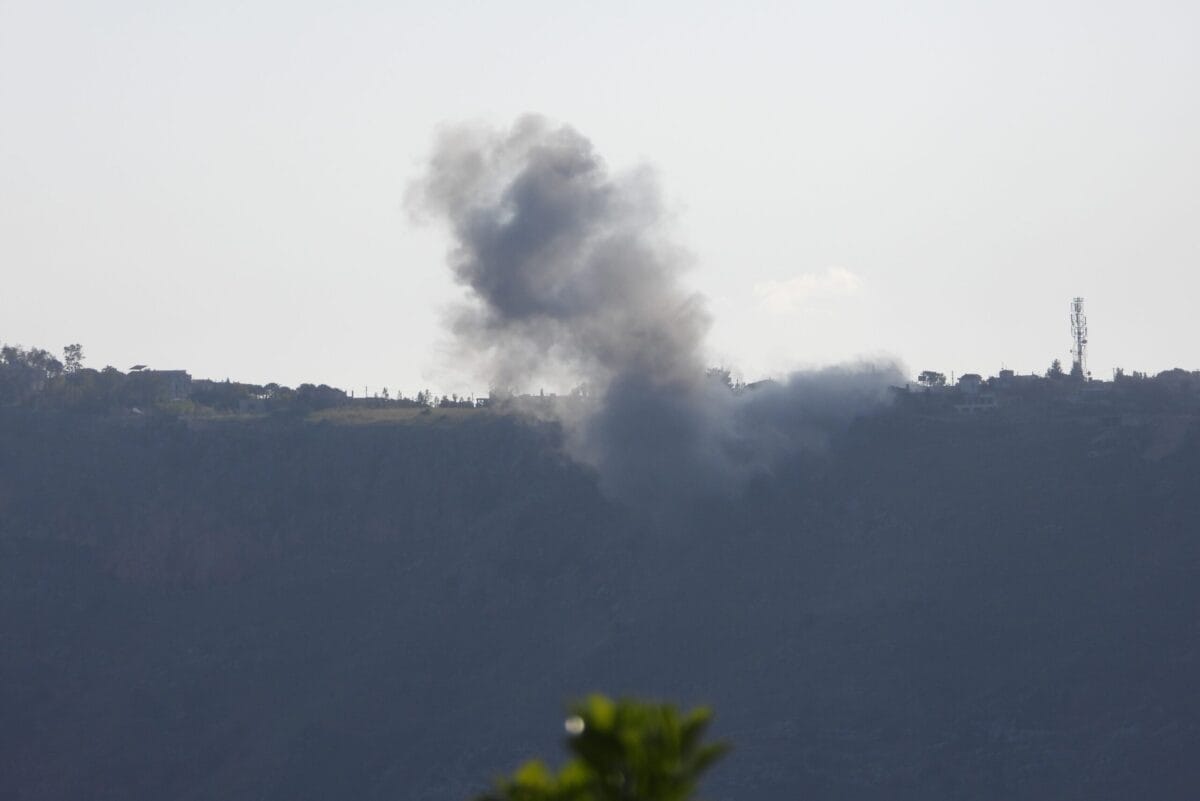
Israel killed two Syrian nationals in a drone strike on a motorcycle in southern Lebanon Sunday, violating the temporary ceasefire that has been in place since April 17. The attack occurred at approximately 11:30 AM local time on a road between the towns of Qlaileh and Deir Qanoun in the Tyre district, Lebanon's state news agency NNA reported.
Lebanese civil defense teams worked with the army to recover the victims' bodies from the strike zone. The drone strike destroyed the motorcycle completely, leaving debris scattered across a 50-meter radius. The targeted killing comes as Israeli warplanes conducted nine separate airstrikes across southern Lebanon since dawn Sunday, hitting locations in Nabatieh province and the border villages of Khiam and Maroun al-Ras, according to Lebanese media reports.
Israeli military officials have not commented on the specific drone strike, maintaining their standard policy of not discussing operational details. The Syrian victims were identified as civilians traveling between villages, though Israeli intelligence sources have previously claimed that Syrian nationals in the border region maintain ties to Hezbollah logistics networks.
Ceasefire Collapses Despite Extension
The April ceasefire, which was extended through mid-May, has failed to stop daily exchanges of fire between Israeli forces and Hezbollah. Israel continues conducting strikes in Lebanese territory while maintaining what it calls a "buffer zone" extending three kilometers into Lebanese soil, as Insider Wire previously reported. This buffer zone encompasses 28 Lebanese villages and covers approximately 450 square kilometers of sovereign Lebanese territory.
Hezbollah has responded to the ceasefire violations with rocket and drone attacks targeting Israeli military positions along the border. Sunday's Israeli airstrikes followed three Hezbollah rocket attacks on Israeli positions near Metulla and Kiryat Shmona that wounded four Israeli soldiers Saturday evening. The cycle of retaliation has made the ceasefire meaningless in practice, with both sides conducting operations while technically remaining committed to the agreement on paper.
Since launching operations in Lebanon on March 2 following the Iran war that began in late February, Israel's attacks have killed more than 2,700 people and displaced over 1 million Lebanese civilians. The escalation has created a humanitarian crisis that threatens regional stability and strains America's diplomatic efforts in the Middle East.
Pattern of Failed Diplomacy
Sunday's violations follow a familiar pattern that has defined Middle East ceasefires for decades. The current Lebanon ceasefire represents the fourth attempt since 2006 to establish lasting calm along the Israeli-Lebanese border. Previous agreements in 2006, 2014, and 2019 collapsed within weeks due to violations by both sides and the absence of effective monitoring mechanisms.
The Lebanese government, weakened by economic collapse and political paralysis, lacks the military capacity to enforce ceasefire terms in areas controlled by Hezbollah. Lebanon's army numbers only 85,000 troops compared to Hezbollah's estimated 100,000 fighters, making any attempt to disarm the group practically impossible. This imbalance has left international mediators dependent on goodwill from both Israel and Hezbollah to maintain calm.
Washington Scrambles for Solution
The United States will host peace talks between Israel and Lebanon on May 14-15 in Washington, attempting to salvage a ceasefire that exists only on paper. Secretary of State Antony Blinken will lead the American delegation, with support from Pentagon officials and National Security Council staff. The timing puts pressure on American negotiators to produce results as both sides continue military operations despite the supposed truce.
For American interests, the collapsed ceasefire represents a failure of U.S. diplomatic leverage in a region where Washington has committed significant military and economic resources. The continued violence threatens to draw in more regional actors and complicate ongoing efforts to contain the broader Iran conflict that has already strained American naval forces in the Persian Gulf.
The Washington talks will focus on establishing a monitoring mechanism with international observers and creating economic incentives for compliance. American officials are preparing a $2.8 billion aid package for Lebanon tied to ceasefire implementation, though congressional approval remains uncertain given Lebanon's ties to Hezbollah.
The talks will test whether American diplomacy can restore calm to Lebanon's border or if the ceasefire framework will completely collapse, potentially triggering a wider regional war that could demand direct U.S. military intervention. The next critical deadline comes May 20, when the current ceasefire extension expires and both sides must decide whether to commit to a longer-term agreement or abandon diplomatic efforts entirely.