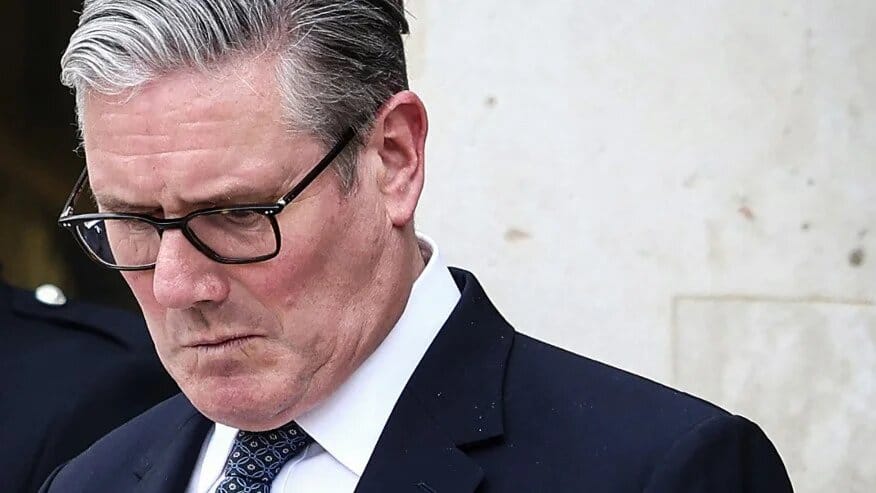
British Prime Minister Keir Starmer's Labour Party faces collapse after a disastrous electoral performance, with critics arguing that only a united left-wing coalition can prevent Nigel Farage from seizing power. Labour membership has plummeted from a peak of 532,046 members at the end of 2019 to just 333,235 in 2024 — a devastating 37% decline that accelerated under Starmer's leadership.
The hemorrhaging stems from Starmer's aggressive party purges that echoed the dark arts of Tony Blair's New Labour era. Starmer told party members who opposed his changes that "the door is open, and you can leave," prompting over 200,000 members to do exactly that. The same tactics used to bring down Jeremy Corbyn's leadership were deployed to block Greater Manchester Mayor Andy Burnham's path back into parliament.
Purge Strategy Backfires Spectacularly
Labour's membership crisis represents the steepest decline in party history outside of electoral defeats. Under Corbyn's leadership from 2015 to 2019, membership had swelled to historic highs, making Labour the largest political party in Western Europe. The exodus began immediately after Starmer's victory in the April 2020 leadership contest, when he systematically removed left-wing candidates from parliamentary selections.
Internal party documents show that 183 constituency parties reported membership losses exceeding 40% between January 2021 and December 2023. The purges extended beyond rank-and-file members to include 27 sitting MPs who were denied reselection for opposing Starmer's rightward shift.
Gaza Support Mirrors Iraq War Blunder
Starmer's unwavering support for Israel during the Gaza conflict has drawn direct comparisons to Blair's decision to join the US invasion of Iraq in 2003. Both leaders prioritized aligning with Washington over domestic concerns, with Starmer initially refusing to call for a ceasefire in Gaza or allow Labour officials to attend protests. His support for Israel's restriction of water and electricity to Gaza became emblematic of broader policy failures.
The Gaza stance cost Labour dearly in constituencies with large Muslim populations. In the October 2023 Tamworth and Mid Bedfordshire by-elections, Labour's vote share dropped 12 percentage points compared to the 2019 general election in areas with significant Muslim populations. 56 Muslim councillors resigned from Labour between October 2023 and March 2024 over the Gaza position.
The parallels extend beyond foreign policy. Former ambassador Peter Mandelson was recently photographed leaning over President Donald Trump's shoulder at his desk, echoing Blair's famous boast about using the same toothpaste as President George W. Bush.
Policy Reversals Deepen Crisis
In a Monday reset speech that failed to stem the crisis, Starmer claimed he had made the right "big political decisions." Critics pointed to a series of policy reversals that deepened Labour's credibility gap:
- Abandoning the £28 billion Green New Deal commitment made during his leadership campaign
- Refusing to bring water into public ownership despite £2.8 billion in annual water company dividends
- Keeping 4.3 million children in poverty until forced to scrap the two-child benefit cap
- Scapegoating migrants and refugees to distract from policy failures
"All the wrong ones," Jeremy Corbyn posted in response to Starmer's speech about his political decisions.
The government chose to deepen domestic financial holes while alienating its traditional base through what critics describe as performative centrism. Labour's approval rating dropped to 18% in the most recent YouGov poll, the lowest for any governing party since John Major's Conservative government in 1995.
Historical Precedent for Party Collapse
The article argues that New Labour's approach has proven "uniquely toxic to Labour's brand" because it gained power through systematic purges rather than ideological debate. Unlike previous Labour crises such as the Gang of Four defection in 1981 or the Brexit vote in 2016, New Labour's method of ousting anyone in its path regardless of ideology has left lasting damage.
With Labour looking like a "bombed-out shell" where "no one knew what it stood for," the urgent task now is selecting a new leader capable of rallying progressive forces before Farage capitalizes on the political vacuum.
What Happens Next
The next test comes with the February 27 party conference vote on leadership confidence. 147 constituency parties have already submitted no-confidence motions. If the vote fails, Labour MPs plan to trigger a leadership contest under party rules requiring 20% of parliamentary party support — currently 81 MPs from Labour's 404-member parliamentary party.