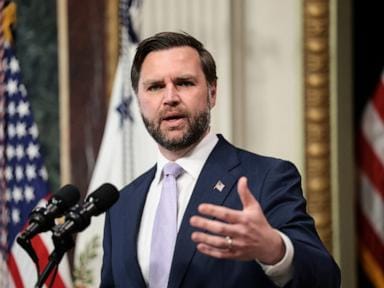
Vice President JD Vance admitted Wednesday that the Trump administration has a "lot of work to do" on the economy, one day after President Donald Trump sparked controversy by saying he doesn't think about Americans' financial situation during Iran negotiations.
The admission came during a 47-minute press conference in the Indian Treaty Room on May 13, 2026, as the administration faces mounting pressure over soaring energy costs and the highest inflation report in three years. The latest Bureau of Labor Statistics data showed consumer prices jumped 4.8% year-over-year in April, driven by gasoline prices that have surged $1.23 per gallon since the Iran conflict escalated in March.
Trump's Controversial Comments
Trump drew sharp criticism Tuesday while departing Joint Base Andrews for China, telling reporters: "I don't think about Americans' financial situation. I don't think about anybody. I think about one thing: We cannot let Iran have a nuclear weapon. That's all." The president was responding to questions about whether domestic economic pain was motivating him to strike a deal with Iran.
The remarks came after White House Press Secretary Sarah Huckabee Sanders had spent weeks insisting the administration was balancing economic concerns with national security priorities. Trump's blunt dismissal contradicted his own economic advisers, who have privately urged faster diplomatic resolution to stabilize energy markets.
Vance attempted damage control during Wednesday's briefing, claiming Trump's comments were "mischaracterized" while simultaneously acknowledging the administration "care about how the American people are doing economically." The mixed messaging underscores the political challenge facing Republicans as 70% of Americans disapprove of Trump's economic handling, according to a CNN poll released Monday with a margin of error of plus or minus 3.1 percentage points.
Broader Economic Context
The current crisis represents the administration's steepest economic challenge since taking office in January. Trump inherited a 2.1% inflation rate and $3.42 average gas prices from the Biden presidency. Energy costs now consume 18.3% of median household income, the highest share since the 2008 financial crisis.
The Iran conflict has disrupted roughly 15% of global oil supplies as Tehran threatened to close the Strait of Hormuz following U.S. airstrikes on Iranian nuclear facilities in late March. Oil futures have jumped $31 per barrel since the crisis began, with West Texas Intermediate crude trading at $89.45 Wednesday afternoon.
Republican governors in key swing states have begun distancing themselves from the administration's approach. Florida Governor Ron DeSantis told reporters Monday that "families in my state are hurting," while Ohio Governor Mike DeWine called for "immediate diplomatic solutions."
GOP Cleanup Effort
House Speaker Mike Johnson also worked to clean up Trump's remarks Wednesday during his weekly Capitol Hill press conference, insisting the president "thinks about Americans' financial situations" and that they discuss economic issues "constantly." Johnson emphasized Trump is "laser-focused on trying to resolve the conflict in Iran" to reopen the Strait of Hormuz and ease gas price pressure.
The cleanup effort involved at least six senior Republicans across both chambers of Congress, according to sources familiar with the coordinated response. Senate Majority Leader John Thune postponed a planned vote on Iran war powers to avoid further fractures within the party.
Despite the cleanup efforts, Vance continued blaming the Biden administration for current economic woes while acknowledging the Trump team's struggles. The contradictory approach highlights the administration's difficulty navigating between growing congressional opposition to the Iran conflict and rising domestic economic pressure.
What's Next
The political fallout could complicate Trump's ongoing summit preparations with Chinese President Xi Jinping, scheduled to conclude Friday in Beijing. Economic concerns intersect with foreign policy challenges as Trump seeks Chinese cooperation on Iran sanctions while managing bilateral trade tensions.
Key dates ahead include the May 28 Federal Reserve meeting where policymakers will decide whether to raise interest rates to combat inflation, and June 3 congressional hearings on Iran war authorization. Watch whether more Republicans break ranks on Iran policy as inflation continues climbing and Trump's poll numbers on the economy remain underwater heading into the 2026 midterm election cycle.