President Trump declared the U.S. Navy will "clean out" Iran's blockade of the Strait of Hormuz after 21 hours of nuclear negotiations collapsed over Tehran's refusal to abandon its atomic weapons program.
"It won't take long to clean it out. So we're going to clean out the strait, and they'll be able to use the strait," Trump told Fox News Channel's "Sunday Morning Futures." The president said the blockade operation "will take a little while, but it'll be effective pretty soon."
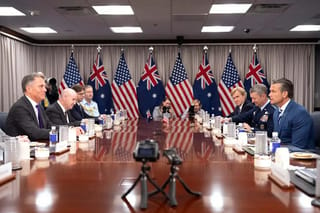
The talks involved Vice President JD Vance, Treasury Secretary Steve Mnuchin, and senior advisor Jared Kushner in what Trump described as marathon negotiations with Iranian representatives. Trump said the administration secured "just about every point we needed, except for the fact that they refused to give up their nuclear ambition."
"They want to have nuclear weapons, they're not going to have nuclear weapons," Trump stated flatly. "I've been saying that for 30 years. I would never allow that to happen before I was in politics, and that country will not have nuclear weapons."
The breakdown marks the latest escalation in Trump's maximum pressure campaign against Iran, following the collapse of marathon talks that had raised hopes for a diplomatic solution. Iran's continued blockade of the strategic waterway threatens global energy supplies, with roughly 20% of the world's oil passing through the narrow channel between Iran and Oman.
Trump emphasized the nuclear issue remained the central sticking point. "Frankly, to me, that was the most important point by far," he said of Iran's atomic ambitions. The president noted the negotiations "got very friendly" toward the end but ultimately foundered on Tehran's unwillingness to dismantle its nuclear program entirely.
The promised naval action would represent a major military escalation in the Persian Gulf, where U.S. and Iranian forces have engaged in a tense standoff for weeks. Any attempt to forcibly clear Iranian naval assets from the strait could trigger broader conflict in the region.
For American consumers, success in reopening the waterway could provide relief from rising gas prices that have climbed steadily during the blockade. Energy markets have remained volatile as traders weigh the potential for both military action and diplomatic breakthrough.
The president's 30-year opposition to Iranian nuclear weapons dates to his business career, when he repeatedly warned about the dangers of nuclear proliferation in the Middle East. His administration withdrew from the Obama-era Iran nuclear deal in his first term, reimposing harsh economic sanctions.
Trump faces growing pressure from congressional Republicans to take decisive military action, while also managing concerns from allies about regional stability. The timing of any naval operation will likely depend on final preparations and coordination with Gulf partners who support keeping the strait open to international shipping.