An Unexpected Reversal
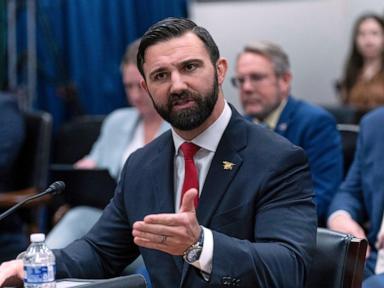
President Donald Trump nominated Cameron Hamilton Monday to permanently lead the Federal Emergency Management Agency, a striking reversal for the former Navy SEAL who was fired from his temporary leadership role in May 2025 after publicly defending FEMA's existence against Trump's threats to abolish it.
The nomination represents a sharp departure from Trump's campaign rhetoric, where he repeatedly promised to eliminate FEMA and transfer disaster response duties to state governments. Hamilton's selection comes after the agency burned through three temporary leaders during Trump's second term and lost approximately 40% of its senior staff following mass resignations under former DHS Secretary Kristi Noem's leadership.
If confirmed by the Senate, Hamilton would take control of FEMA's $28.6 billion annual budget and oversee 20,000 employees across 10 regional offices. The timing is critical: hurricane season begins June 1, and FEMA's operational capacity remains severely compromised following 75 consecutive days of Department of Homeland Security shutdowns that ended April 30.
The Confrontation That Led to His Firing
Hamilton's four-month tenure as acting administrator from January 20 to May 8, 2025 ended in a dramatic confrontation with Trump administration officials at DHS headquarters in Washington. The breaking point came during a March 15 meeting where White House advisers Stephen Miller and Russell Vought outlined plans to transfer FEMA's disaster response functions to state emergency management agencies.
Once the conversation shifted to, 'Now we're going to abolish,' I immediately expressed concern
The clash escalated when Hamilton refused to prepare a transition plan for FEMA's dissolution. DHS officials, suspecting Hamilton of leaking meeting details to congressional Democrats, subjected him to a 90-minute polygraph examination on May 6 at the Federal Protective Service facility in downtown Washington. Hamilton passed the test but understood his days were numbered.
The final straw came during a May 7 House Appropriations subcommittee hearing on disaster preparedness. When Rep. Rosa DeLauro (D-Conn.) asked directly whether FEMA should be abolished, Hamilton's response was unequivocal: "I do not believe it is in the best interest of the American people to eliminate the Federal Emergency Management Agency." Trump fired him via tweet at 6:23 AM the following morning.
Agency in Operational Crisis
Hamilton would inherit an agency facing its worst staffing crisis since Hurricane Katrina in 2005. FEMA's 10 regional administrators all resigned between February and April, and the agency's disaster relief fund dropped to $4.2 billion following emergency spending during California's wildfire season. The agency has been unable to conduct full-scale disaster response exercises since January due to leadership instability.
Michael Coen, FEMA's chief of staff under the Obama and Biden administrations, sees Hamilton's nomination as crucial timing: "Now is the opportunity to stabilize FEMA." Coen noted that the agency typically requires six months to fully staff regional positions before peak hurricane season.
The operational challenges extend beyond staffing. FEMA's coordination agreements with 26 state emergency management agencies expired during the DHS shutdowns and have not been renewed. The agency's mobile emergency response units remain stationed at federal facilities rather than pre-positioned for rapid deployment.
Political Context and Reform Pressure
Hamilton's nomination comes against the backdrop of decades-long conservative criticism of federal disaster response. The Heritage Foundation and American Enterprise Institute have long argued that state and local governments should handle disaster response, viewing FEMA as federal overreach that creates moral hazard for communities in disaster-prone areas.
The nomination also follows recommendations from Trump's newly created Government Efficiency Council, which released a 340-page report last Friday calling for FEMA to focus exclusively on catastrophic disasters exceeding $1 billion in damages. The council, led by Vivek Ramaswamy, recommended eliminating FEMA's individual assistance programs and transferring flood insurance responsibilities to private markets.
What Comes Next
Hamilton faces Senate confirmation hearings expected to begin in early June, with the Homeland Security and Governmental Affairs Committee scheduling initial proceedings for June 8. Republican senators Rand Paul (Ky.) and Mike Lee (Utah) have already signaled opposition, citing Hamilton's previous criticism of administration policy.
If confirmed, Hamilton will report directly to Homeland Security Secretary Markwayne Mullin and face immediate pressure to implement the efficiency council's recommendations while preparing for what meteorologists predict will be an active Atlantic hurricane season with 15-20 named storms. His first major test will likely come within weeks of confirmation, as the National Weather Service forecasts above-average severe weather activity through August.