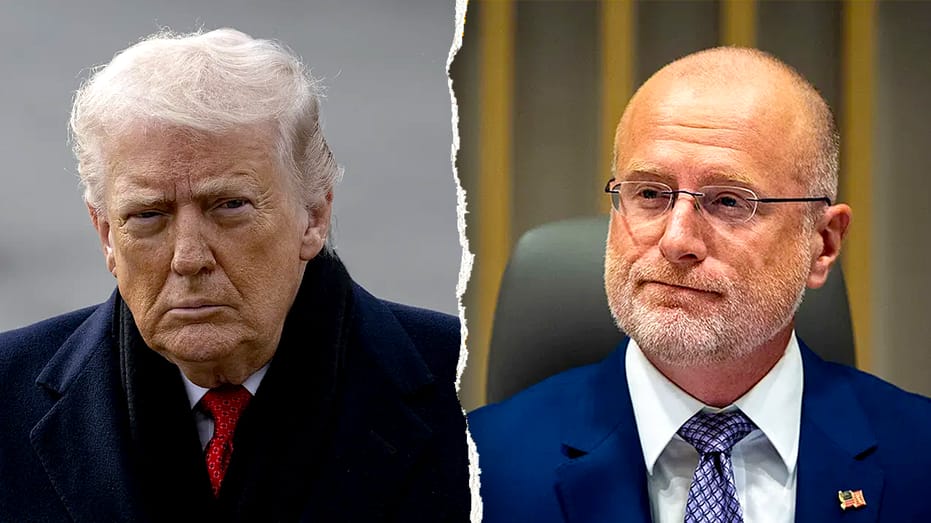
FCC Chairman Brendan Carr launched a sweeping review of ABC's local station licenses in January 2025, forcing the Disney-owned network to produce 11,000 documents in a regulatory battle over content disputes involving Jimmy Kimmel and daytime talk show "The View." The document production, completed over six weeks, represents one of the largest forced disclosures in modern broadcasting history.
The federal inquiry targets ABC-owned stations in major markets including New York's WABC-TV, Chicago's WLS-TV and Los Angeles' KABC-TV — not over local programming but because federal officials dislike network content. Trump and Carr have both demanded Kimmel's firing over his late-night commentary, with Trump posting 47 social media attacks on the comedian since October 2024.
Massive Document Dump Reveals Network Operations
The 11,000-page document cache includes internal ABC programming emails, advertising revenue reports showing $2.3 billion in annual network income, and communications between Disney executives and local station managers. The FCC demanded materials dating back to September 2023, covering editorial decisions, advertiser communications, and corporate oversight of political content.
ABC's legal team, led by former solicitor general Paul Clement, characterized the document request as a "fishing expedition designed to intimidate." Clement's $1,850-per-hour legal fees signal Disney expects a protracted court battle that could cost the company $15-20 million in defense costs.
ABC Fights Back on First Amendment Grounds
The network fired back in legal filings submitted to the U.S. Court of Appeals for the D.C. Circuit on February 12, 2025, arguing the commission threatens to "upend decades of settled law and practice and chill critical protected speech." As Insider Wire previously reported, ABC claims the FCC seeks to silence protected political commentary.
The regulatory war centers partly on "The View," the all-female talk show founded by Barbara Walters in 1997 that features liberal hosts Whoopi Goldberg and Joy Behar. Even the show's conservative panelists now take strongly anti-Trump positions, making the program a prime target. The show averages 2.6 million daily viewers and generates $180 million annually in advertising revenue.
The initial complaint stems from ABC's Houston station KTRK over a minor dispute with "The View" involving a November 2024 segment where hosts criticized Trump's cabinet appointments. Local Houston viewers filed 23 formal complaints with the FCC, triggering the broader investigation.
The commission's actions threaten to upend decades of settled law and practice and chill critical protected speech, both with respect to 'The View' and more broadly.
Historical Context: Breaking Broadcasting Precedent
This marks the most aggressive federal action against broadcast networks since the 1973 revocation of WXUR-AM's license in Pennsylvania — the only successful license revocation in FCC history. That case involved a religious broadcaster who violated equal-time rules, not content disagreements with entertainment programming.
The Trump administration escalated beyond traditional rhetorical attacks on CNN and The New York Times to deploy federal regulatory muscle against media critics. Previous presidents criticized coverage but stopped short of using licensing authority as political leverage. The FCC traditionally reviews licenses during routine eight-year renewal cycles, not mid-term investigations over content disputes.
Regulatory Power as Political Weapon
The investigation represents a new phase in Trump's media strategy, using government power to punish outlets over coverage disputes. Disney's stock dropped 3.2% following news of the license review, as investors worry about regulatory uncertainty affecting the company's eight owned-and-operated television stations.
Networks now face the choice of moderating criticism or burning millions in legal fees fighting federal regulators. NBC and CBS executives have privately discussed contingency plans if the FCC expands investigations to their operations, according to industry sources.
What Comes Next
The FCC must rule on ABC's license renewal applications by June 30, 2025, creating a hard deadline for the dispute. ABC's appeal challenging the investigation's scope faces oral arguments at the D.C. Circuit on April 15, 2025. Industry observers expect the Supreme Court will ultimately decide whether content disagreements justify license reviews, a case that could reshape federal media regulation for decades.