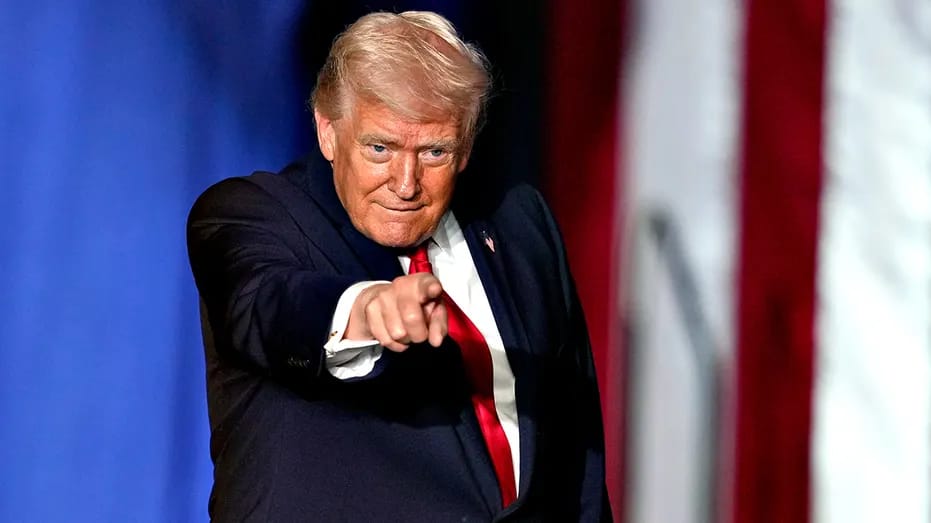
The Virginia Supreme Court delivered Republicans a major victory in the nationwide redistricting battle Friday, striking down a Democrat-backed congressional map in a 4-3 decision that would have handed the party four additional House seats in 2026. The ruling came from the Richmond courthouse at 3:47 PM EST, immediately triggering celebrations from GOP leadership. President Donald Trump hailed the decision as a "huge win for the Republican Party" in a Truth Social post within minutes of the announcement.
The overturned map, narrowly approved by Virginia voters in a November 7, 2024 special election by a margin of 51.3% to 48.7%, would have shifted Virginia's congressional delegation from the current 6-5 Democratic advantage to a lopsided 10-1 split favoring Democrats. The rejected redistricting would have pumped an estimated $12.4 million in additional Democratic campaign funds into Virginia races. Instead, the 2024 election map remains in place for the next midterm cycle.
Supreme Court Rulings Reshape Voting Rights
The Virginia decision comes alongside a broader U.S. Supreme Court opinion issued Thursday that gutted key Voting Rights Act protections, ruling in Milligan v. Allen that race cannot dictate congressional district boundaries. The 6-3 conservative majority decision, authored by Justice Samuel Alito, reversed decades of precedent. The high court also struck down Louisiana's congressional map as unconstitutional in the same ruling, breaking with usual procedure by ordering immediate implementation rather than allowing states time to redraw lines.
Chief Justice John Roberts wrote in the majority opinion that "electoral districts must reflect communities of interest, not demographic targeting." The Louisiana ruling alone could flip two House seats from Democratic to Republican control, affecting districts currently held by Representatives Troy Carter and Julia Letlow.
These twin legal victories give Trump and congressional Republicans critical momentum as they defend their razor-thin 222-213 House majority during the final two years of his second term. Control of the chamber will determine whether the president can advance his legislative agenda or face constant Democratic obstruction on key priorities including immigration enforcement and tax policy.
Democratic Leadership Vows Fight
Huge win for the Republican Party
House Democratic Leader Hakeem Jeffries of New York quickly signaled his party won't accept defeat quietly. Speaking to reporters at the Capitol Friday evening, Jeffries declared: "We are exploring all options to overturn this shocking decision." He vowed that "House Democrats will win in November so we can help rescue this nation from the extremism being unleashed by Donald Trump and Republicans."
Virginia Democratic Party Chair Susan Swecker announced the party would seek emergency intervention from federal courts, potentially filing appeals in the Fourth Circuit Court of Appeals by Monday's 5 PM deadline. The Democratic Congressional Campaign Committee has already redirected $2.8 million in previously allocated Virginia spending to other battleground states.
The redistricting wars reflect the high stakes of congressional control. Both parties understand that district boundaries often matter more than campaign spending or candidate quality in determining election outcomes. Virginia's 11 House seats represent crucial swing-state territory, with five districts decided by fewer than three percentage points in 2024.
Historical Context and Broader Implications
Virginia's redistricting battle follows a decade-long pattern of legal warfare over congressional maps. The state's 2021 redistricting commission deadlocked along partisan lines, sending map-drawing authority to the courts. Friday's decision marks the third time since 2011 that Virginia's congressional boundaries have faced Supreme Court review.
The ruling fits a broader conservative legal strategy targeting Democratic-controlled redistricting processes. Similar challenges are pending in New York, Illinois, and Maryland, potentially affecting 27 additional House seats before the 2026 midterms.
What's Next
Democrats face a January 15 deadline to file federal appeals, while the Virginia General Assembly reconvenes January 8 for its regular session. Republican Governor Glenn Youngkin has signaled he would veto any legislative attempt to override the court decision.
The immediate impact helps Trump's party maintain competitive positions in swing districts while Democrats scramble to find alternative paths to a House majority. The next major test comes with North Carolina's redistricting case, scheduled for Supreme Court arguments on February 23, which could determine control of three additional House seats.