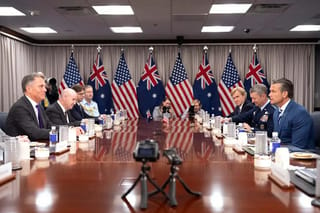
President Trump rejected Iran's latest peace proposal Friday while his administration added Nick Stewart, a former defense lobbying executive with hawkish Iran views, to the negotiating team led by Special Envoy Steve Witkoff.
The White House confirmed Stewart's appointment as Iran continues targeting Qatari infrastructure to pressure the U.S. and Israel. Tehran struck a natural gas facility and Hamad International Airport over the weekend, escalating tensions as the Strait of Hormuz standoff drives up global energy costs.
Kushner Brings In Defense Hawk
Jared Kushner recruited Stewart for the role, U.S. officials told CBS News. Stewart previously worked for the lobbying arm of the Foundation for the Defense of Democracy, a group known for supporting military action against Iran.
Nick Stewart is a sharp, seasoned policy expert who is a valuable asset to Special Envoy Steve Witkoff's talented team
Wales emphasized Stewart brings "a wealth of leadership and Iran policy experience" from his time at the State Department during Trump's first term and on Capitol Hill. The addition signals Trump may be hardening his negotiating stance as Iran's power structure fractures under economic pressure.
Qatar Caught in Crossfire
Iran's attacks on Qatar represent a dangerous escalation. Qatari Prime Minister Mohammed bin Abdulrahman bin Jassim Al-Thani spoke with Iranian Foreign Minister Abbas Araghchi Saturday about ongoing peace negotiations, even as Iranian forces targeted Qatari infrastructure.
The strikes on Qatar's airport and energy facilities aim to pressure Israel and the U.S. by hitting a key regional ally. Qatar hosts the largest U.S. military base in the Middle East and serves as a diplomatic intermediary with Iran.
For American taxpayers, the continued standoff means higher gas prices and increased military spending to protect shipping lanes. The Strait of Hormuz handles roughly 20 percent of global oil traffic, making any disruption costly for U.S. consumers already facing inflation pressures.
Stewart's appointment suggests Trump plans to take a tougher line in negotiations. His background with hawkish defense groups contrasts with traditional diplomatic approaches, potentially signaling the administration will demand more from Iran before agreeing to any deal.
Watch for Iran's response to Stewart's addition to the team and whether Tehran escalates further attacks on Gulf allies to force concessions. The next round of talks will test whether Trump's harder line produces results or pushes the region closer to wider conflict.