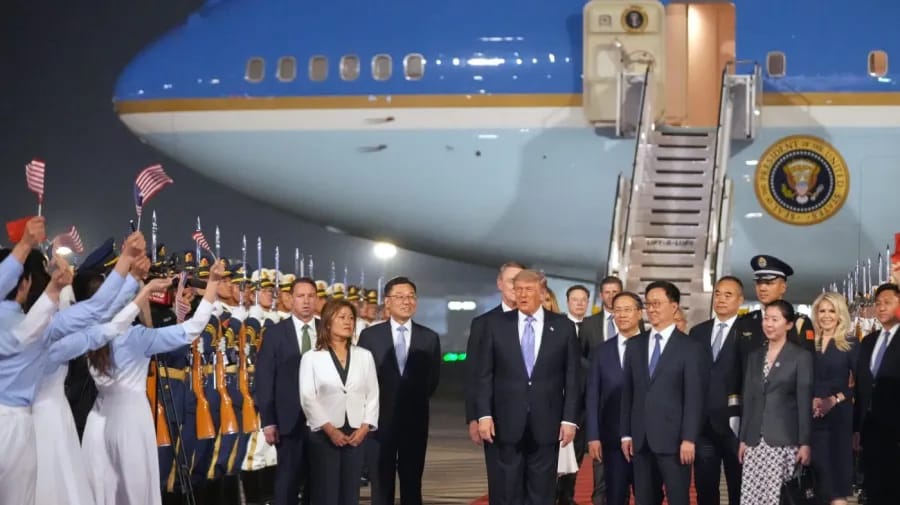
The Senate confirmed Kevin Warsh as Federal Reserve Chairman on Wednesday in a 54-45 vote along mostly party lines, replacing Jerome Powell and giving President Trump direct control over the nation's monetary policy. The confirmation vote concluded at 3:47 PM after six hours of floor debate, with three moderate Democrats joining all Republicans in support.
Hours later, Trump's Air Force One touched down at Beijing Capital International Airport at 11:23 PM local time for a high-stakes meeting with Chinese President Xi Jinping, marking the most consequential 24 hours of Trump's second-term economic agenda.
Warsh Brings Wall Street Experience to Fed Leadership
The Fed confirmation hands Trump a key economic ally as he pushes for lower interest rates and a more aggressive pro-growth stance. Warsh, 54, who previously served on the Fed Board from 2006 to 2011, has publicly criticized the central bank's pandemic-era policies and supports Trump's view that rates should fall faster to boost American manufacturing and employment.
During his February 12 confirmation hearing before the Senate Banking Committee, Warsh testified that current interest rates of 4.75-5.00% remain "too restrictive for an economy seeking to regain its competitive edge." He indicated support for cutting rates to 3.5% by year-end, a more aggressive timeline than Powell's Federal Open Market Committee had pursued.
Senate Democrats opposed Warsh's nomination by a 42-3 margin, arguing his Goldman Sachs background and criticism of Dodd-Frank financial regulations could harm working families. Senator Elizabeth Warren of Massachusetts led opposition efforts, citing Warsh's $47 million net worth and previous statements questioning bank stress tests.
First China Visit Since 2017 Trade War
Trump's arrival in Beijing marks his first state visit to China since November 2017, coming as trade tensions and national security concerns have reached new heights. The three-day summit carries enormous stakes for American workers and businesses, with both leaders expected to discuss tariffs on $400 billion in Chinese goods, technology transfers, and China's military buildup in the South China Sea.
Taiwan's security remains a central concern, as Insider Wire previously reported on the island's fears that Trump might trade away their security for better trade deals. American military officials worry that any concessions to Beijing could embolden Chinese aggression against the democratic ally, particularly given China's 183 military flights near Taiwan in January alone.
The Trump administration imposed tariffs on Chinese imports worth $370 billion annually during his first term, while China retaliated with duties on $185 billion in American products. Those measures remain in effect, creating pressure for resolution that could reshape global trade flows.
Economic Policy Coordination Takes Center Stage
The timing of both developments signals Trump's determination to reshape America's economic and foreign policy apparatus simultaneously. Warsh's confirmation gives the White House direct influence over interest rate decisions that affect everything from mortgage costs to business investment, while the China summit could determine whether trade wars escalate or economic cooperation resumes.
Republicans praised Warsh's Morgan Stanley experience and commitment to ending what they called Powell's overly cautious approach to rate cuts. Senator Tim Scott of South Carolina, who chairs the Banking Committee, cited Warsh's role during the 2008 financial crisis as evidence of his crisis management abilities.
The Beijing summit agenda remains classified, but trade officials expect discussions on Chinese purchases of American agricultural products, technology restrictions on semiconductor exports, and military activities near Taiwan. Both leaders face domestic pressure to appear strong while avoiding economic disruption that could affect global markets.
What Comes Next
Warsh will be sworn in as Fed Chair on Monday, March 3, with his first Federal Open Market Committee meeting scheduled for March 19-20. Market analysts expect rate cut discussions to dominate that session, given Warsh's public statements favoring monetary easing.
The Trump-Xi summit concludes Friday with a joint press conference at 2:00 PM Beijing time. Any trade agreements reached will require Congressional approval within 60 days under fast-track authority rules, setting up another high-stakes vote before the April recess.