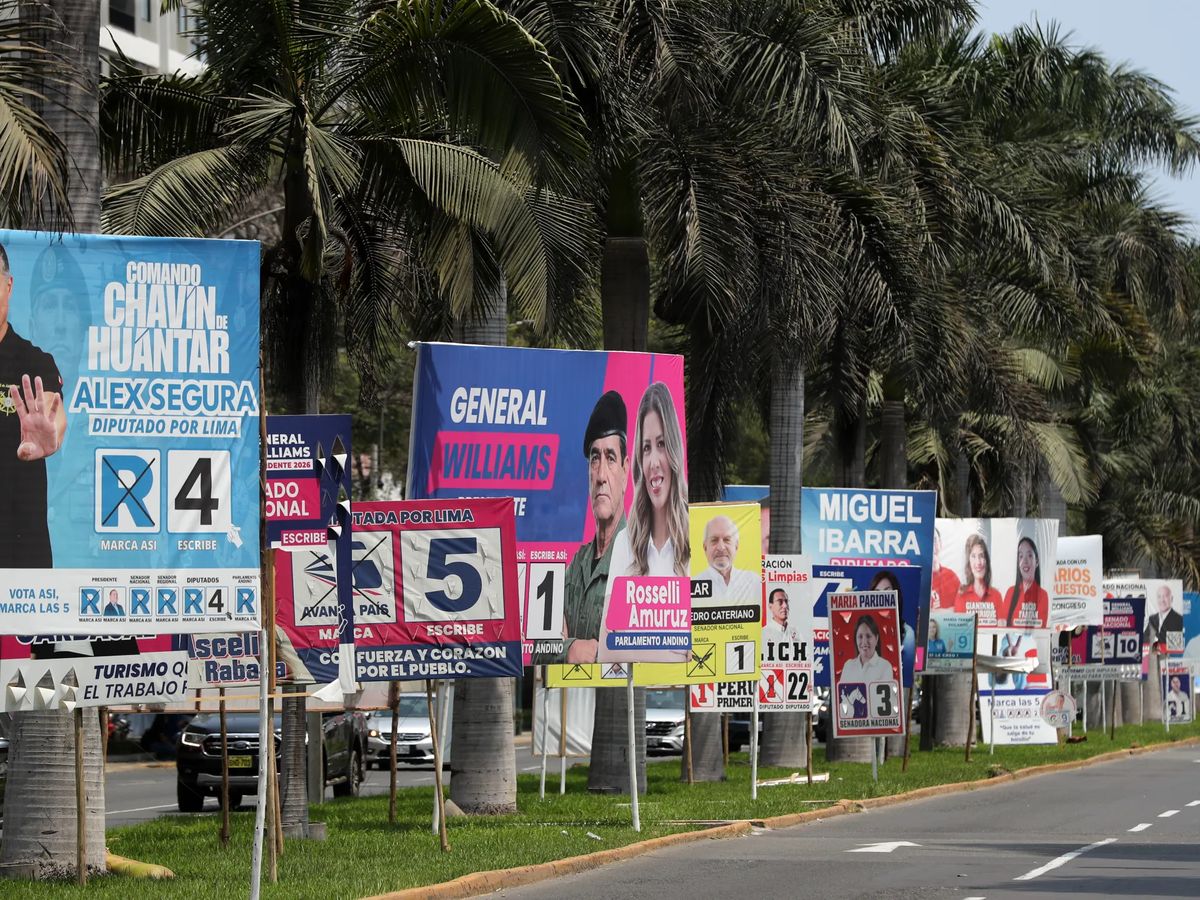
Peru holds the first round of presidential voting Sunday with a record-breaking 35 candidates on the ballot, a staggering field that reflects the country's deep political instability and fractured electorate.
Keiko Fujimori, daughter of former dictator Alberto Fujimori, leads polls in her fourth presidential bid. The right-wing candidate has reached the runoff in all three previous attempts and is expected to do so again on April 12, when voters also select a new Congress and Senate.
No candidate has broken decisively ahead in the fragmented race. Large numbers of voters remain undecided as crime and corruption dominate campaign discussions. The massive candidate field — originally 36 before Napoleon Becerra died in a traffic accident last month — represents the largest in Peruvian electoral history.
Political experts view the crowded ballot as evidence of Peru's inability to build broad coalitions or unify around shared leadership. The sheer number of choices threatens voter confusion and virtually guarantees a June 7 runoff between the top two finishers.
This election marks a historic shift in Peru's legislative structure. Voters will select Senate candidates for the first time since 1992, when Alberto Fujimori dissolved the bicameral legislature during what experts widely describe as his military dictatorship. Fujimori dismantled both Congress and the Supreme Court after facing opposition to his policies, then reorganized the legislature as a single-chamber body that persisted for over 25 years.
Electoral reforms passed in 2024 restore the bicameral system, ending the institutional legacy of Fujimori's authoritarian rule. His daughter Keiko served as his first lady from 1994 to 2000 and now leads the right-wing Popular Force party.
The fragmented political landscape reflects Peru's broader governance crisis. The country has cycled through multiple presidents in recent years, with corruption scandals and institutional weakness defining the political system. Voters face a choice between dozens of candidates representing various ideological positions, but polls show no clear favorite beyond Fujimori's narrow lead.
Crime rates have surged across Peru, making security a top voter priority alongside persistent corruption concerns. The issues resonate particularly strongly in urban areas where violence has disrupted daily life and economic activity.
The massive candidate field complicates traditional polling and campaign strategies. With support spread thin across dozens of options, predicting outcomes becomes nearly impossible. The situation mirrors broader trends across Latin America where traditional party structures have weakened and populist outsiders gain traction.
Sunday's results will determine whether Peru can begin stabilizing its political system or faces continued fragmentation. A decisive runoff in June could provide clearer direction, but the underlying institutional weaknesses that produced this fractured field remain unresolved.