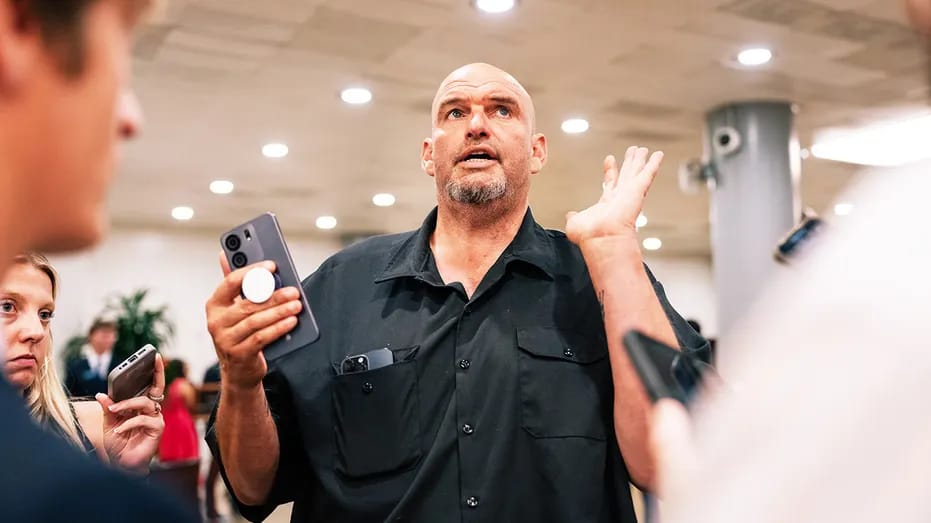
Sen. John Fetterman, D-Pa., delivered a scathing critique of his own party Monday, telling comedian Bill Maher that Democrats suffer from such reflexive opposition to President Trump that they would hate him even if he endorsed ice cream and lazy Sundays. The appearance on Maher's "Club Random" podcast marked Fetterman's latest break from Democratic orthodoxy as party leaders grapple with their crushing November defeats.
During the wide-ranging conversation, Fetterman argued that the Democratic Party's knee-jerk resistance prevents it from focusing on substantive issues that actually impact Americans' lives. The Pennsylvania senator warned that his party cannot "resist our worst impulses" and criticized attempts to nationalize California's progressive policies across all 50 states.
If he came out for ice cream and lazy Sundays, we would f---ing hate it.
Fetterman questioned why politicians feel compelled to weigh in on every minor controversy instead of concentrating their limited political capital on major concerns. The criticism comes as Democrats face internal recriminations over their messaging strategy following losses in the presidential race, Senate control, and House seats across suburban districts that Biden carried in 2020.
Strategic Miscalculations and Electoral Losses
The senator's comments build on months of public criticism of his own party's approach. Last Friday on Maher's HBO show "Real Time," Fetterman blamed Democrats for alienating young male voters by increasingly portraying men as "part of the problem" with "toxic traits." He directly connected this messaging failure to Democrats' 2024 election losses, particularly among working-class voters in Pennsylvania and other swing states.
Democratic losses in November were particularly stark in Fetterman's home state. Trump won Pennsylvania by 2.1 percentage points, flipping a state Biden carried by 1.2 points in 2020. Rep. Susan Wild, D-Pa., lost her Lehigh Valley House seat, and Democrats failed to flip competitive suburban Philadelphia districts they had targeted.
Maher echoed Fetterman's frustration during Monday's podcast, suggesting Democrats should let trivial issues "pass like a cloud" and instead target serious problems like Justice Department politicization and election integrity threats. The comedian argued that politicians who chase every small controversy reveal more about themselves than the issues they claim to address.
Growing Internal Democratic Divisions
Fetterman's willingness to publicly challenge party talking points reflects deeper divisions within Democratic ranks. Progressive House members like Rep. Alexandria Ocasio-Cortez, D-N.Y., have pushed back against criticism of left-wing messaging, arguing that moderation cost Democrats key voter blocs. Meanwhile, moderate senators like Joe Manchin, I-W.Va., who left the Democratic Party in May, have echoed Fetterman's concerns about ideological overreach.
The Pennsylvania senator won his 2022 race by 4.9 percentage points against Dr. Mehmet Oz in a campaign that focused heavily on economic populism and kitchen-table issues. His victory helped Democrats maintain Senate control that cycle, making his current criticism of party strategy particularly stinging for leadership.
Democratic Senate leaders have largely avoided public responses to Fetterman's critiques. Senate Minority Leader Chuck Schumer, D-N.Y., has focused on procedural battles over Trump's Cabinet nominees, while Sen. Elizabeth Warren, D-Mass., continues pushing progressive priorities on corporate regulation and wealth taxes.
What Comes Next
Fetterman's comments signal potential friction within Democratic ranks as the party reassesses its approach to the Trump presidency. The senator faces a key test of his influence during upcoming Senate confirmation hearings for Trump nominees, where Democrats must decide whether to mount blanket opposition or pick targeted fights on nominees with serious ethics or qualification concerns.
The party's next major decision point comes during the February 7 Democratic National Committee chair election, where candidates will present competing visions for rebuilding after November's losses. Whether Fetterman's call for tactical restraint gains traction among party leaders will determine if Democrats pursue his selective opposition strategy or maintain their traditional resistance approach.
Maher praised Fetterman's willingness to challenge conventional Democratic wisdom, noting that critics attack them for "picking fights with the left" when they're simply scrutinizing questionable strategies. Both men argued that effective opposition requires choosing battles wisely rather than opposing everything reflexively—a message that could reshape Democratic strategy if other party leaders embrace it.