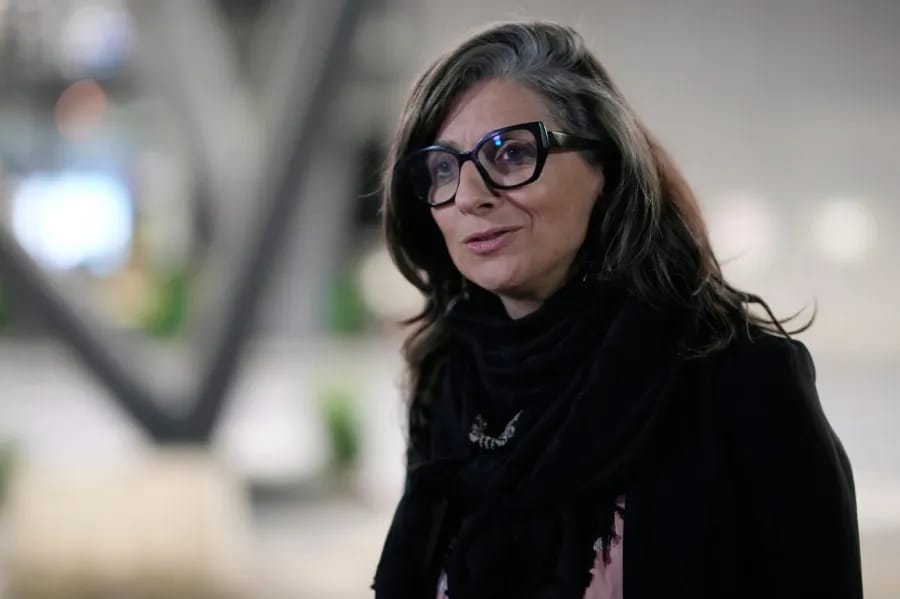
U.S. District Judge Richard Leon temporarily blocked the Trump administration Wednesday from enforcing sanctions against Francesca Albanese, a United Nations human rights investigator whose recent work has focused on Israel's military campaign against Hamas in Gaza. The judge ruled that Secretary of State Marco Rubio's sanctions violate the First Amendment in a 47-page decision issued from the U.S. District Court for the District of Columbia.
Leon's ruling represents a direct challenge to the administration's efforts to punish international officials critical of U.S. allies. The sanctions, announced January 15 under Executive Order 13224, targeted Albanese for her public statements and reports documenting alleged human rights violations during Israel's Gaza operations. The measures froze approximately $125,000 in U.S.-based assets and prohibited American entities from conducting business with the UN official.
Sanctions Target UN Special Rapporteur
The Trump administration imposed the sanctions under executive authority typically reserved for terrorists and hostile foreign actors, citing Albanese's December 2024 report to the UN General Assembly that accused Israel of implementing policies of "systematic destruction" in Gaza. State Department officials argued that Albanese's reports constitute anti-Semitic propaganda that undermines America's strategic partnership with Israel and threatens regional stability.
Albanese, who has served as the UN Special Rapporteur on the situation of human rights in the Palestinian territories since May 2022, has published six reports criticizing Israeli military tactics in Gaza. Her work has focused on civilian casualties exceeding 45,000 Palestinians killed and infrastructure damage during the ongoing conflict that escalated after Hamas's October 7, 2023 attacks that killed 1,200 Israelis.
The sanctions marked the first time any U.S. administration has targeted a UN special rapporteur with financial penalties, breaking decades of diplomatic precedent even during periods of strained U.S.-UN relations.
Constitutional Challenge to Foreign Policy Tool
The case breaks new ground by applying First Amendment protections to foreign nationals working for international organizations. Leon's preliminary injunction prevents the State Department from enforcing asset freezes or business prohibitions against Albanese while the case proceeds through federal court. The judge found that Albanese's reports fall under protected speech, even when critical of U.S. foreign policy positions.
Legal experts note that Leon's decision could set precedent for how First Amendment protections apply to foreign officials working for international organizations on American soil. The ruling builds on the Supreme Court's 2010 decision in Holder v. Humanitarian Law Project, which established limits on government power to restrict speech in national security contexts.
This constitutional challenge emerges against a broader pattern of Trump administration confrontations with international institutions. Since taking office January 20, the administration has withdrawn from three UN human rights mechanisms, cut $2.3 billion in UN funding, and threatened sanctions against International Criminal Court officials investigating Israeli actions in Gaza.
Escalating Tensions with International Bodies
The ruling comes as the Trump administration has taken increasingly aggressive stances toward international organizations and officials who challenge U.S. foreign policy positions. Beyond targeting Albanese, the administration has threatened similar sanctions against UN Secretary-General António Guterres and European officials who support ICC investigations.
Congressional Republicans have largely backed the administration's confrontational approach. The House passed a resolution 247-178 on January 9 condemning UN investigations of Israeli conduct, though three GOP senators broke ranks to oppose broader sanctions legislation in a 49-50 vote last week.
The case also highlights tensions between executive branch foreign policy powers and constitutional free speech guarantees. Previous administrations have typically relied on diplomatic pressure rather than financial sanctions when disagreeing with UN officials, making the Trump approach a departure from established practice.
What Comes Next
The State Department has until February 14 to file an appeal with the D.C. Circuit Court of Appeals. Department spokesperson Matthew Miller said Wednesday that officials are reviewing the decision but declined to commit to an appeal timeline.
Both sides are preparing for extended litigation as the case moves through federal courts. The next hearing is scheduled for March 3, where Judge Leon will consider whether to convert his temporary restraining order into a longer-term preliminary injunction pending final resolution.
Watch for the administration's response by mid-February and potential Supreme Court involvement if appeals courts split on First Amendment protections for foreign UN officials. The outcome will determine whether future administrations can use terrorism-related sanctions to silence international critics of U.S. foreign policy.