Thirty-four House Democrats sent a letter Wednesday to Trump's defense, state, and homeland security secretaries demanding they abandon plans to use Guantánamo Bay for migrant detention and rule out military action against Cuba. The letter, dated January 22, was delivered to Secretary of Defense Pete Hegseth, Secretary of State Marco Rubio, and Homeland Security Secretary Kristi Noem.
Rep. Delia Ramirez of Illinois led the effort, arguing in the letter reviewed by the Guardian that escalating U.S. aggression toward the island nation directly fuels the migration crisis Trump claims to want to solve. The Illinois Democrat organized the bipartisan coalition after reports emerged that the Trump administration was considering expanding Guantánamo's role in immigration enforcement.
Democrats Link Cuba Policy to Border Crisis
The lawmakers connected America's hardline Cuba stance to increased migration flows, citing U.S. Customs and Border Protection data showing Cuban encounters at the southern border jumped from 38,139 in fiscal year 2021 to 224,607 in fiscal year 2022 following tightened sanctions. They argue that military threats and economic pressure drive more Cubans to attempt the dangerous journey to U.S. shores, putting Trump in a policy bind where his tough-on-Cuba approach may worsen the border situation he's promised to fix.
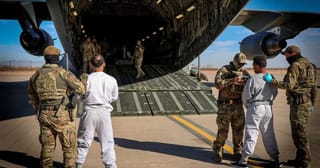
The letter specifically warns that using the 45-square-mile naval base for immigration detention would violate the 1951 Refugee Convention and could cost taxpayers an estimated $13 million per month based on previous Guantánamo detention operations. Democrats argue such expansion would be "unlawful" and worsen "mass suffering" on the island while creating new legal complications for an already complex facility.
Using Guantánamo Bay for migrant detention would mark the facility's third major incarnation since 1991. The base first housed Haitian and Cuban refugees during the 1990s migration crisis, holding up to 45,000 people at its peak in 1994. It later became synonymous with the war on terror, housing 780 terrorism suspects since 2002, with 30 detainees remaining today.
Escalating Pressure on Key Cabinet Members
The Democratic letter targets the three cabinet members who would coordinate any Cuba operations. Rubio, the Florida senator who built his career on anti-Castro positions, now faces pressure from House Democrats to moderate his approach as the nation's top diplomat. Hegseth would oversee any military action against the communist government, while Noem would manage expanded immigration detention operations.
The timing reflects broader Democratic strategy to constrain Trump's Cuba policy early in his second term. During his first presidency from 2017-2021, Trump reversed nearly all of President Barack Obama's diplomatic opening to Cuba, reimposing travel restrictions, closing embassy services, and adding 243 new sanctions. The policy shift contributed to Cuba's worst economic crisis in decades, with GDP shrinking 11% in 2020 and food shortages affecting millions.
Strategic Implications for Trump
The Democratic pressure comes as Trump weighs how aggressively to confront Cuba's communist government while managing competing political demands. Cuban-American voters in Miami-Dade County delivered Trump a 13-point victory margin in 2024, up from 7 points in 2020, partly on promises of tougher Cuba action. However, military escalation could drain resources from Trump's promised focus on China and his border security initiatives.
Legal experts predict using Guantánamo for migrant detention would trigger immediate court challenges, given federal judges' previous rulings on immigration detention limits and the base's unique legal status outside normal U.S. jurisdiction. The facility operates under a 1903 lease agreement that Cuba's government has considered invalid since 1959, creating additional diplomatic complications for any expansion.
What's Next
Trump's cabinet members have 30 days to respond to the Democratic letter under House oversight rules, though they could decline to provide substantive answers. The next key decision point comes February 15, when Trump must decide whether to extend temporary protected status for 2,800 Cuban nationals already in the United States.
Congressional Democrats plan to monitor Pentagon and Homeland Security budgets for any Guantánamo expansion funding requests. Rep. Alexandria Ocasio-Cortez of New York, who signed the letter, has threatened to introduce legislation blocking such funding if the administration moves forward with detention plans. Trump's response will signal whether his second-term Cuba strategy emphasizes confrontation or seeks alternative approaches to Caribbean migration pressures.