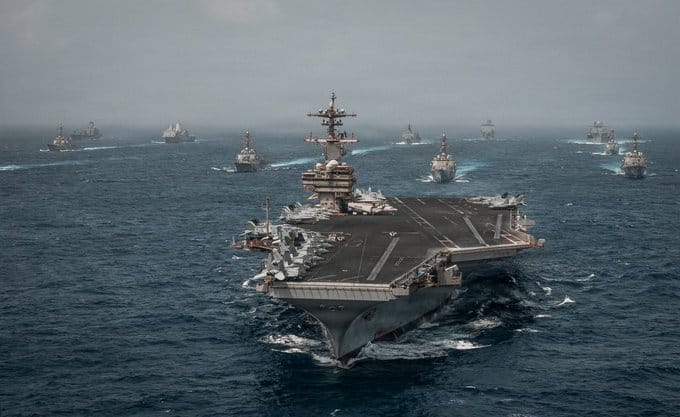
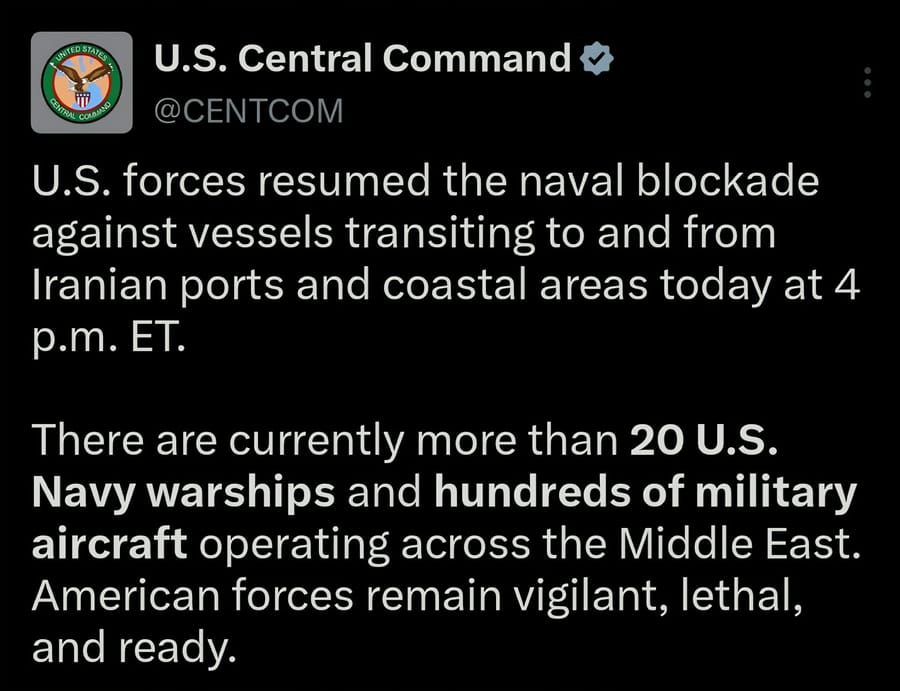
The U.S. resumed a naval blockade Tuesday on vessels transiting Iranian ports, deploying more than 20 warships and hundreds of military aircraft across the Middle East, U.S. Central Command said.
The move ends a brief pause following the June 2026 Islamabad Memorandum ceasefire, which had lifted an earlier blockade in place since April 2026. Iran’s Foreign Ministry condemned the blockade and maintained that Iran will control the Strait of Hormuz. Iranian naval forces have targeted multiple vessels attempting to transit the Strait in recent days.
The Strait of Hormuz is the world’s most critical maritime chokepoint for energy supplies. Under normal conditions, the narrow waterway carries roughly 20% of global oil trade—equivalent to about 20 million barrels per day of crude oil and refined products—along with substantial volumes of liquefied natural gas from Qatar and other Gulf producers. Disruptions to transit through the strait amid the ongoing conflict have triggered significant economic ripple effects across global markets.
President Trump said that the vital waterway remains open and that ships will be allowed to traverse it in coordination with the U.S. Navy. U.S. Central Command said in a statement that strikes would continue as long as Iranian forces threaten commercial mariners. Iranian officials accused the United States of violating the earlier understanding and warned of broader retaliation if attacks persist.
U.S. forces and Iran's Islamic Revolutionary Guard Corps continued exchanging strikes on Tuesday night, with new reports of explosions in the Persian Gulf, the Sea of Oman and the Strait of Hormuz as the conflict entered its fourth night.