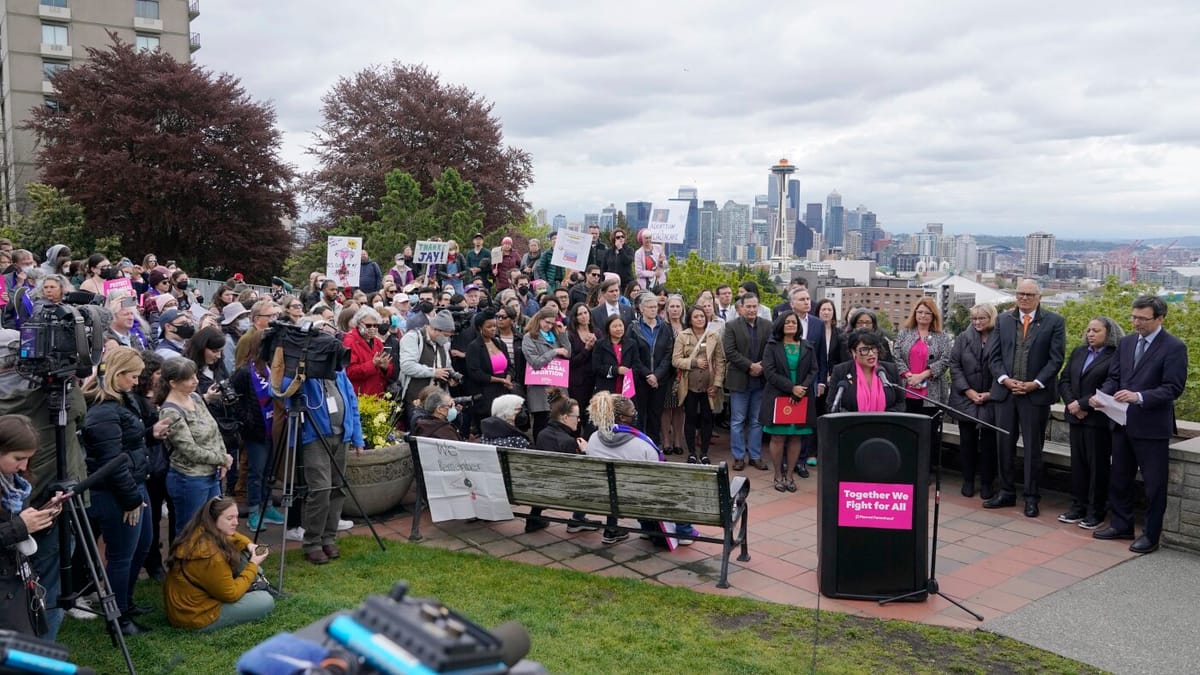
Planned Parenthood Great Northwest, Hawai'i, Alaska, Indiana and Kentucky launched a new program Thursday allowing residents in Washington state and Hawaii to obtain abortion medications mifepristone and misoprostol in advance for potential future use. The initiative, called "Just In Case Abortion Pills," marks the first time a Planned Parenthood affiliate has offered advance provision of abortion medication.
The program allows people to stock the two-drug combination on their shelves before they become pregnant, providing immediate access if they later decide to end an early pregnancy. Patients can obtain the medications through telehealth appointments or in person at any of 16 health centers across the two states.
Policy Environment Drives Expansion
Rebecca Gibron, president and CEO of the Planned Parenthood affiliate, said the timing reflects both growing evidence supporting the care model and supportive state policies. Research shows Americans often seek to stock up on abortion medications when abortion restrictions dominate news cycles, even when not pregnant.
As evidence supporting this model of care has continued to grow, and with supportive policy environments in Washington and in Hawai'i, this really is the right time for us to step into this space
Several telehealth organizations have offered advance abortion pill prescriptions for years, but Elisa Wells, co-founder of medication abortion website Plan C, called Planned Parenthood's entry into the space significant due to the organization's established trust and name recognition.
Geographic Challenges Drive Need
Wells highlighted how the geography of both states creates challenges for accessing care quickly. In Hawaii's island setting and Washington's vast rural areas, getting to medical facilities can take considerable time. Since timing matters critically during early pregnancy, advance provision could prove especially valuable.
The safety profile of the two medications is well-established, and it remains legal for patients to possess abortion medication in 49 states. Louisiana stands as the sole exception after classifying the medications as controlled substances in 2024.
Dr. Colleen McNicholas, chief of medical affairs at the affiliate, emphasized the program provides ongoing provider support. Patients who obtain pills and use them months later still have access to their original provider for questions and follow-up care.
Unlike exclusively telehealth providers, Planned Parenthood patients can choose between virtual consultations and in-person visits at physical health centers. This hybrid approach expands access options while maintaining the provider relationship throughout the process.
The program's launch comes as abortion access remains a contentious political issue nationwide, with state-by-state variations in legal restrictions creating a patchwork of availability. Watch for potential expansion to other states with favorable policy environments and geographic challenges similar to Washington and Hawaii.