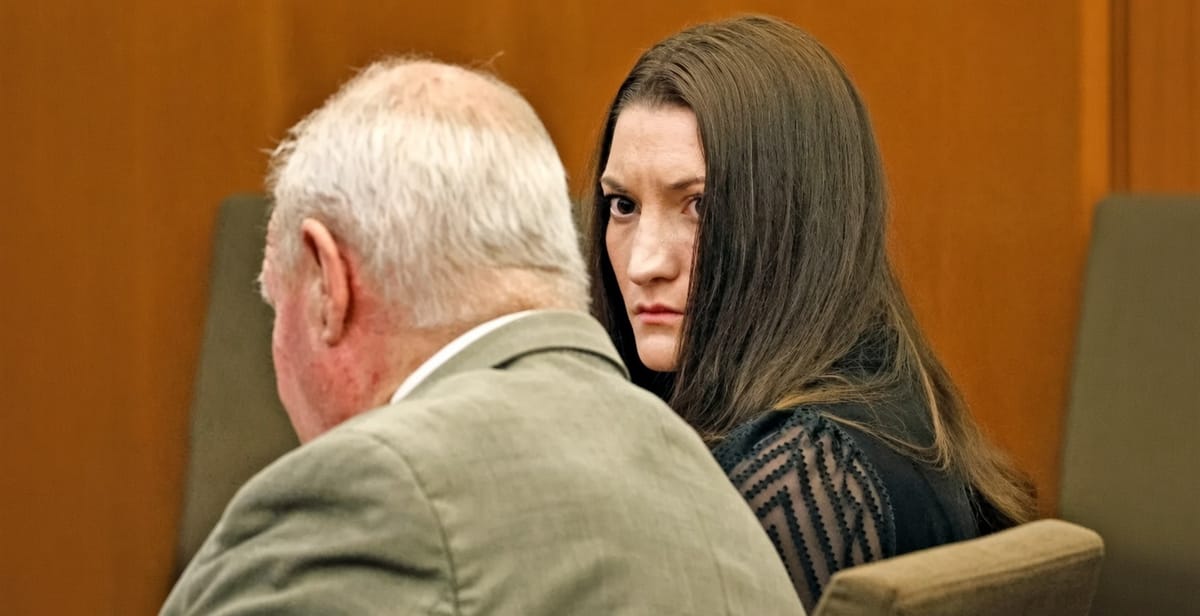
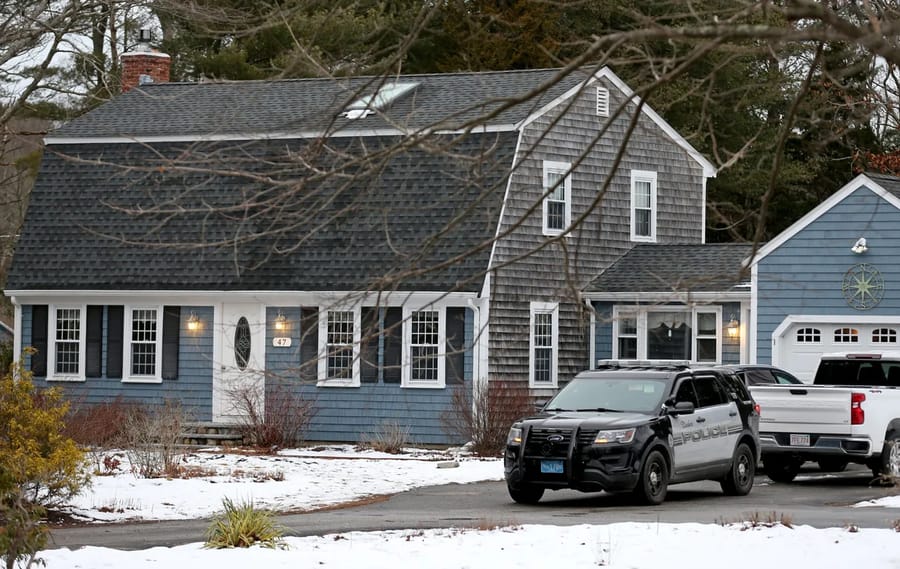
Jurors began deliberating Thursday in the murder trial of Lindsay Clancy, the Duxbury mother accused of strangling her three young children in January 2023. Clancy, who has pleaded not guilty to three counts of first-degree murder in the deaths of Cora, 5, Dawson, 3, and Callan, 8 months old, is claiming acute postpartum psychosis left her unable to understand the wrongfulness of her actions.
Clancy now uses a wheelchair after suffering a burst fracture and Jefferson fracture that left her paralyzed from the waist down after she jumped from a second-story window in a suicide attempt following the killings. If convicted, she faces a mandatory sentence of life in prison without the possibility of parole. Prosecutors say the acts were planned and deliberate, noting she intentionally sent her husband out on errands before the killings. Prosecution experts testified that Clancy possessed "moral awareness" and is criminally liable.
Defense attorney Kevin Reddington questioned forensic psychiatrist Dr. Kirk Heilbrun, one of the prosecution's expert witnesses, about his lack of experience treating postpartum psychosis, seeking to undermine Heilbrun's conclusion that Clancy was aware of her actions during the killings and her subsequent suicide attempt.
Dr. Avram Mack a psychiatrist for the prosecution, testified that Clancy retained the ability to understand right from wrong and control her actions when she killed her children. He diagnosed her with major depressive disorder but found no evidence of psychosis or mania.
The last witness in the defense's case, forensic psychiatrist Dr. Phillip Resnick said Clancy suffered from severe depression and bipolar II disorder, with postpartum onset, and that a command hallucination drove her actions. Resnick stated that in his opinion, Clancy was unable to tell the difference between right and wrong and lacked control at that time.

Forensic psychiatrist Dr. Gregory Saathoff, the prosecution's final rebuttal witness, testified that Clancy made a series of decisions the night of the killings. "It indicated that she had control, control of the sequence of what she was doing throughout," said Saathoff, who also works with the FBI's Behavioral Analysis Unit. He added that while Clancy was suffering from bipolar II disorder when she strangled her children on Jan. 24, 2023, she had the capacity to know right from wrong and is therefore criminally responsible. Judge William Sullivan sent jurors home following Saathoff's testimony Wednesday afternoon.
In their closing arguments, defense attorney Kevin Reddington said, "This young lady is not guilty of the killing of her young children because she was suffering from a disease and defect." Prosecutor Jennifer Sprague said in her closing: "You know she killed those kids as soon as she left, and when she got the call from him, she had already strangled them. And she didn't tell him, she didn't ask for help, she didn't say, 'Oh my God, what have I done?'"
"She lied, she stayed calm, she presented herself as normal," Sprague continued, "so she could finish the plan — to kill herself."
The trial has drawn international attention, with hundreds of demonstrators — mostly women — gathering outside the Plymouth courthouse wearing pink in a show of support for Clancy and to raise awareness about postpartum mental health care.
The jury must now decide whether Lindsay Clancy was criminally responsible for the killings of her three children, or whether her postpartum psychosis was so severe she was unable to appreciate the wrongfulness of her actions — a defense the prosecution's experts flatly rejected.
This is a developing story.