President Donald Trump announced on Friday that a Memorandum of Understanding (MOU) between the U.S. and Iran to end the current war is in its final stages. Trump said a “great settlement" had been reached by all parties and the signing is possible in the coming days, possibly in Europe. He canceled planned strikes, citing progress in negotiations.
Pakistani Prime Minister Shehbaz Sharif, who has acted as mediator between the two countries during negotiations, recently stated that the "final agreed upon text of a peace deal has been reached. Pakistan is now working with both sides to finalize next steps, peace has never been this close."
Initial details include:
1. Iran commits to no nuclear weapons and dismantles key aspects of its program; highly enriched uranium to be destroyed or removed
2. Strait of Hormuz reopens to normal shipping, US ends naval blockade of Iranian ports
3. Performance-based sanctions relief and release of frozen Iranian assets only upon compliance
4. End active hostilities and create framework for broader talks
5. No immediate release of frozen Iranian assets
The precise details of the deal have yet to be officially released, with significant gaps remaining on nuclear enrichment limits, missile program, and support for proxies such as Hezbollah in Lebanon and Hamas. Iranian officials have recently stated that they expect simultaneous sanctions relief and guarantees, while the U.S. has emphasized "performance-based" compliance first.
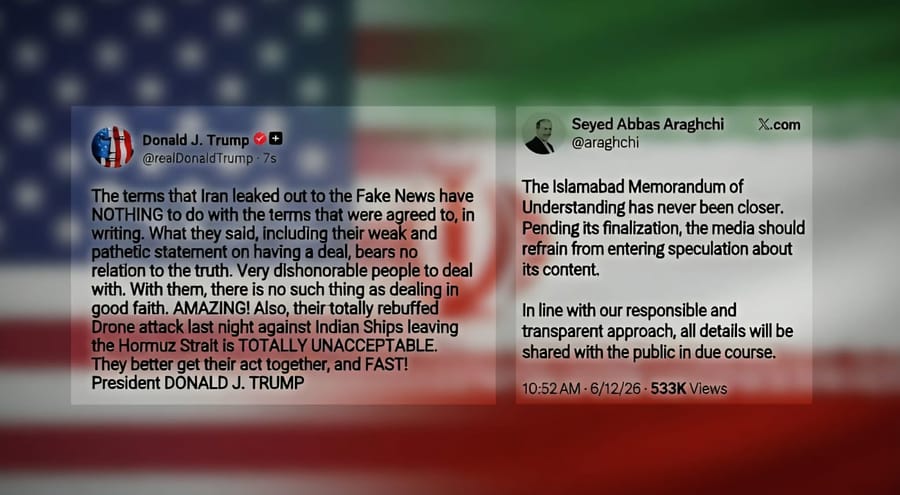
Iranian Foreign Minister Abbas Araghchi sounded optimistic, stating in a recent post on X that “Memorandum of Understanding has never been closer." Araghchi urged media to avoid speculation on the contents of the deal after alleged Iranian terms circulated on social media on Saturday. President Trump dismissed the leaked terms as "fake news" unrelated to the written agreement. Iranian officials described the reports as premature and speculative. Following the signing of the MOU, there will reportedly be a 60-day period of "technical talks."
Despite Iran launching multiple one-way attack drones at commercial shipping in the Strait of Hormuz over the past two days, President Trump remains optimistic the signing will take place soon. However, according to military analysts, continued acts of aggression by Iran's military potentially reveal disputes between military and government officials over current U.S. negotiations.
While President Trump, Iranian government officials, and Pakistani mediators appear to be urging for a finalized deal, widespread skepticism remains on both sides that a lasting peace agreement can be achieved.