The International Football Association Board unanimously approved a new rule Tuesday that allows referees to issue red cards to players who cover their mouths while verbally confronting opponents. The measure takes effect at this summer's World Cup starting June 11.
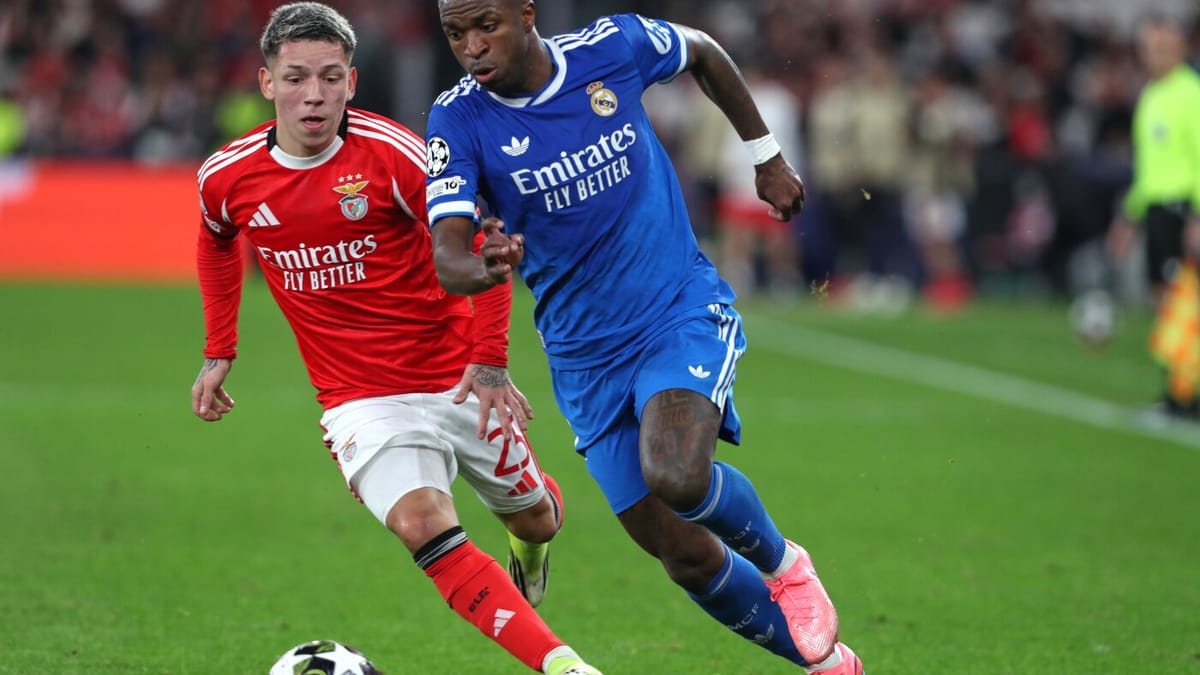
IFAB voted on the rule change during a meeting in Vancouver, British Columbia. FIFA proposed the amendment after Real Madrid's Vinícius Júnior accused Benfica's Gianluca Prestianni of making racially charged comments while covering his mouth during a February Champions League match in Lisbon.
"At the discretion of the competition organiser, any player covering their mouth in a confrontational situation with an opponent may be sanctioned with a red card," IFAB announced. UEFA already handed Prestianni a six-game ban for what it determined were homophobic insults. If Argentina selects him for their World Cup squad, the defending champions could lose him for their opening two matches.
The rule targets a growing problem in international soccer where players shield their words from cameras and lip readers while engaging in verbal abuse. By covering their mouths, players previously made it nearly impossible for officials to determine what was said or gather evidence for disciplinary action.
IFAB also approved a second rule change that penalizes players or team officials who leave the field in protest of referee decisions. Any player who walks off in disagreement with a call can now receive a red card, as can coaches or staff members who encourage players to abandon the match.
The changes will apply to all 48 teams competing in the 2026 World Cup, hosted jointly by the United States, Canada and Mexico. American soccer fans attending matches can expect stricter enforcement of verbal conduct rules as FIFA attempts to crack down on discriminatory language that has plagued international competition.
For U.S. players and coaches, the new rules mean adjusting tactics for handling controversial calls. The American squad will need to train players on proper conduct protocols to avoid costly ejections during the tournament on home soil.
IFAB plans to communicate the rule changes to all World Cup participants before the tournament begins. Watch for how referees implement these standards during early matches, as their enforcement could significantly impact team strategies and player behavior throughout the competition.